Editor’s Note: This story was originally published in Volume 101, Issue 4 of the Herald magazine.
A bill proposed in the Kentucky Senate in January would require state and local law enforcement to work with U.S. Immigration and Customs Enforcement.
Kentucky Senate Bill 86, sponsored by Senator Phillip Wheeler, R-Pikeville, would integrate Kentucky law enforcement agencies into ICE’s Section 287(g) Program, derived from the Immigration and Nationality Act.
Section 287(g), created in 1996, authorizes local law enforcement to essentially act as immigration officers under ICE supervision. On President Donald Trump’s first day of his second term, he signed Executive Order 14159, “Protecting The American People Against Invasion,” which encourages ICE to promote the program to various law enforcement agencies.
ICE has signed 1,381 agreements with law enforcement agencies, 31 of which are in Kentucky, as of Feb. 4. So far, Warren County law enforcement has not agreed to participate in the 287(g) program.
Wheeler said it was too early in the legislative process to provide a comment on Senate Bill 86.
WKU Police Department Chief Mitch Walker doesn’t believe the potential law would significantly change the department’s day-to-day operations because the department lacks staffing for immigration enforcement.
Walker said WKUPD and the Department of Homeland Security have an ongoing relationship, mostly to identify suspects in child exploitation cases or terror threats to university campuses.
Warren County Sheriff Brett Hightower is concerned that the legislation may detract from the mission of the Sheriff’s Office.
“We don’t have time to necessarily devote to going out here and knocking on people’s doors and checking their immigration status,” Hightower said. “We have a lot of other things that will take a higher precedence from this office.”
Public Information Officer for BGPD Ronnie Ward declined to comment on Senate Bill 86.

In addition to law enforcement’s existing duties, the bill would mandate law enforcement to participate in three models under Section 287(g): the Jail Enforcement Model, the Warrant Service Officer Model and the Task Force Model.
In each model, law enforcement agencies would nominate specific officers to receive training funded, organized and overseen by ICE. Certain models would allow agencies to fulfill the following duties:
Jail Enforcement Model
Identify and process “removable aliens” in jails or detention facilities that have pending/active criminal charges
Issue immigration detainers
An immigration detainer is a request that asks law enforcement agencies, as well as any detention facility, to notify ICE before they release a “removable alien.” The agency or detainment facility would hold them for up to 48 hours beyond their initial release so that DHS can assume custody.
Warrant Service Officer Model
Serve and execute administrative warrants
Unlike judicial warrants, administrative warrants do not require the approval of a judge or magistrate and do not give law enforcement the right to enter private property. An administrative warrant is a supporting arrest document signed by an agent, according to immigration law firm Motion Law.
Task Force Model
Give “limited immigration authority” under ICE supervision
Arrest “aliens” they believe are entering or attempting to enter the United States without a warrant
Arrest “aliens” for a felony without a warrant
The Herald reached out to the ICE media email and to ICE Public Affairs Officer Christopher Meares for clarification on the models and their implementation but did not receive comment by the time of publication.
Price Wilborn, communications adviser for the Office of the Secretary for Kentucky’s Justice and Public Safety Cabinet, said the decision to enter the agreements should be left to the Executive Branch and the Commissioner so that Kentucky State Police resources are allocated according to its capabilities and the needs of the Commonwealth.
“Diverting them from their current duties to undergo such training would deplete resources — meaning there would be less Troopers assigned to the important work that keeps Kentuckians safe like pursuing violent criminals, child predators and removing drugs from our communities,” Wilborn said.
Wilborn is a former editor-in-chief of the Herald.
Additionally, the bill would require law enforcement to “identify, process, and hold non-citizens in local jails.” Thirty-three of Kentucky’s 116 jail facilities are already overcrowded, according to the Kentucky Department of Corrections’ Jan. 22 weekly report.
Kentucky facilities that already hold ICE detainees, according to the ICE website, include:
- Boone County Jail
- Campbell County Detention Center
- Christian County Jail
- Daviess County Detention Center
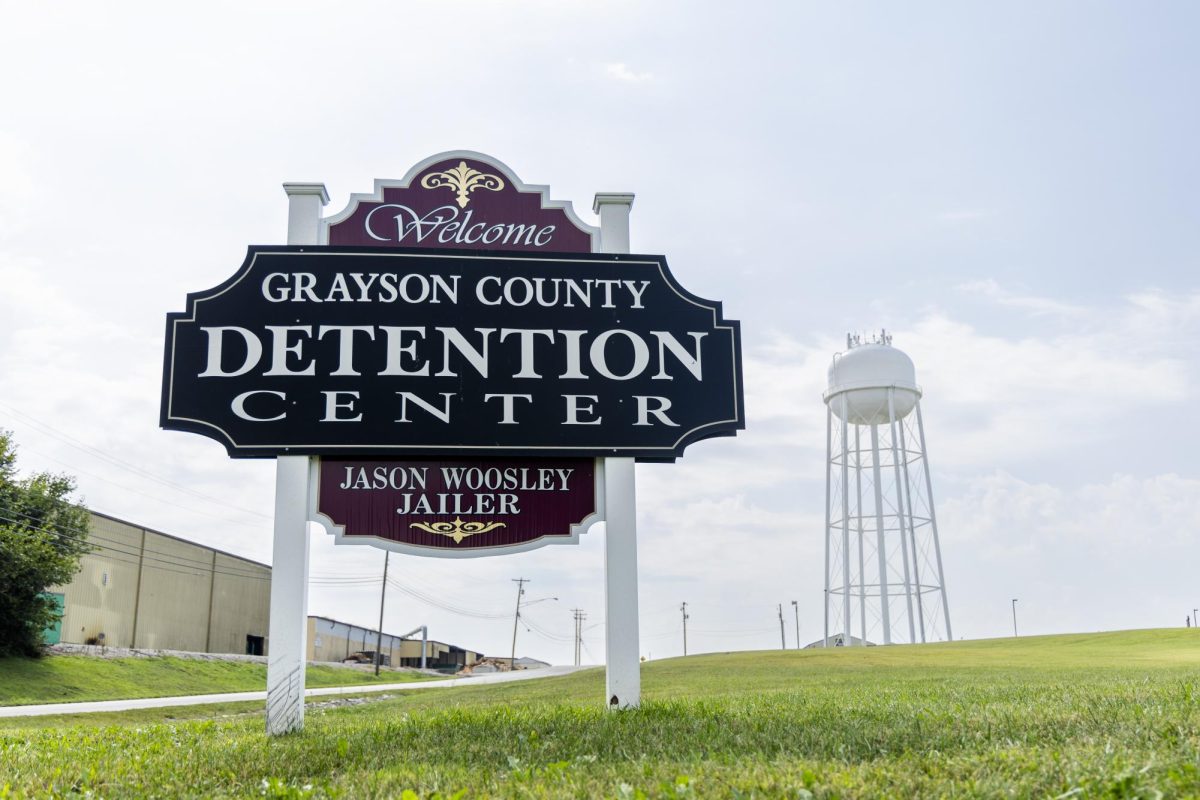
- Grayson County Detention Center
- Hopkins County Jail
- Kenton County Detention Center
- Oldham County Detention Center
As of Feb. 4, Bullitt County Detention Center, Grayson County Detention Center and Oldham County Detention Center participated in the 287(g) Program through the Jail Enforcement Model.
Warren County Jailer Stephen Harmon declined to comment on Senate Bill 86 or its potential impact on overcrowding. The Warren County Regional Jail was overcrowded by 87 inmates as of Jan. 22.
According to the bill, “The fiscal impact of SB (Senate Bill) 86 is indeterminable, but expected to be negative.” But Hightower said that as an officer of a growing community like Bowling Green, the city would likely require more funding to accommodate additional duties.
On Sep. 2, 2025, DHS announced reimbursement opportunities for full salaries and benefits for trained officers, partial overtime coverage and “quarterly monetary performance awards” for agencies participating in the Task Force Model. The funding for this reimbursement comes from Public Law 119-21, also known as the “One Big Beautiful Bill.”
However, the model agreements state that participating law enforcement agencies would be responsible for all additional expenses, including salaries, overtime for training, local transportation and administrative supplies.
“There’s money, there’s manpower, there’s resources, there’s other vehicles, there’s equipment, there’s radios, there’s a whole lot of expense that sometimes goes into things like that,” Hightower said.
Hightower also worries the bill could discourage community members from reporting crimes.
“My belief is we have to stay in good, close communication with our community,” Hightower said. “If people feel fearful, whether they’re here legally or not legally, we don’t want somebody here not to report a crime when a crime occurred, if they were fearful of reporting that for local law enforcement.”
Walker said he thinks the strength of the WKU and Bowling Green community would prevent any issues that could come from the bill.
“In this country, over the last 10 years, we have been through a lot, and we just haven’t seen (issues) here, and I would say (this bill) would be pretty much the same,” Walker said. “We understand each other, we have great relationships and I think that’s key.”
While he doubts the law would significantly affect campus, Walker understands the anxiety around increased immigration enforcement. In response, he is planning a training between students, faculty, staff and agents from DHS. In the training, he hopes to discuss what ICE agents would be looking for and how to respond if they operate on campus.
Walker said there will be more information about the training in the coming weeks.
If ICE comes on campus, which Walker believes would be “very rare,” he suggests students cooperate and call WKUPD to help the situation.
Wyatt Southerland, media liaison for Bowling Green Community Defense, said that the activist organization anticipates a more antagonistic relationship with law enforcement, like the Bowling Green Police Department, if the bill were to pass.
“We also know that the Bowling Green Police Department so far has not been very amicable to working with ICE, and they have been very, very friendly to our protest efforts,” Southerland said. “So far, they’ve made that very easy for us, but we don’t know how far that’s going to last.”