Editor’s Note: This story was originally published in Volume 101, Issue 4 of the Herald magazine.
For the first time in three decades, the WKU president will not sit down with the College Heights Herald editorial board for a wide-ranging meeting about campus issues to start the semester.
Former Director of Student Publications Robert Adams said the tradition dates back to as early as 1997 under former President Gary Ransdell. It has survived as a kickstarter for the Herald each semester, and an avenue for student journalists to ask the most pressing questions about campus.
Recently, the meeting has served as one of the only opportunities for Herald staff to ask President Timothy Caboni questions directly. Most of the Herald’s communication with Caboni is mediated through email by University Spokesperson Jace Lux.
Tessa Duvall is a journalist who serves as the public affairs and politics editor at the Lexington Herald-Leader. She served as Herald editor-in-chief in the fall semester of 2012 and remembers participating in multiple sit-down interviews with Ransdell.
Duvall said the opportunity to interview one-on-one with university higher-ups as a young journalist was “huge.” She said it isn’t often that students of a university have the opportunity to sit down with administrators. In the meetings, Duvall was treated like an actual journalist, not a student.
Duvall believed there was a “commitment to the educational component” from Ransdell in his meetings with the Herald.
“WKU is an institution of higher learning, and the Herald and the journalism program are some of the most important on this campus,” Duvall said. “I think sitting for that interview was also probably in some part a recognition that this was an important, hands-on learning experience for the students involved.”
The meetings with Ransdell developed a good working relationship, Duvall said, and created respect between administration and reporters. She said covering WKU is the Herald’s purpose, and providing that sit-down is “a recognition that we’re going to be working together a lot.”
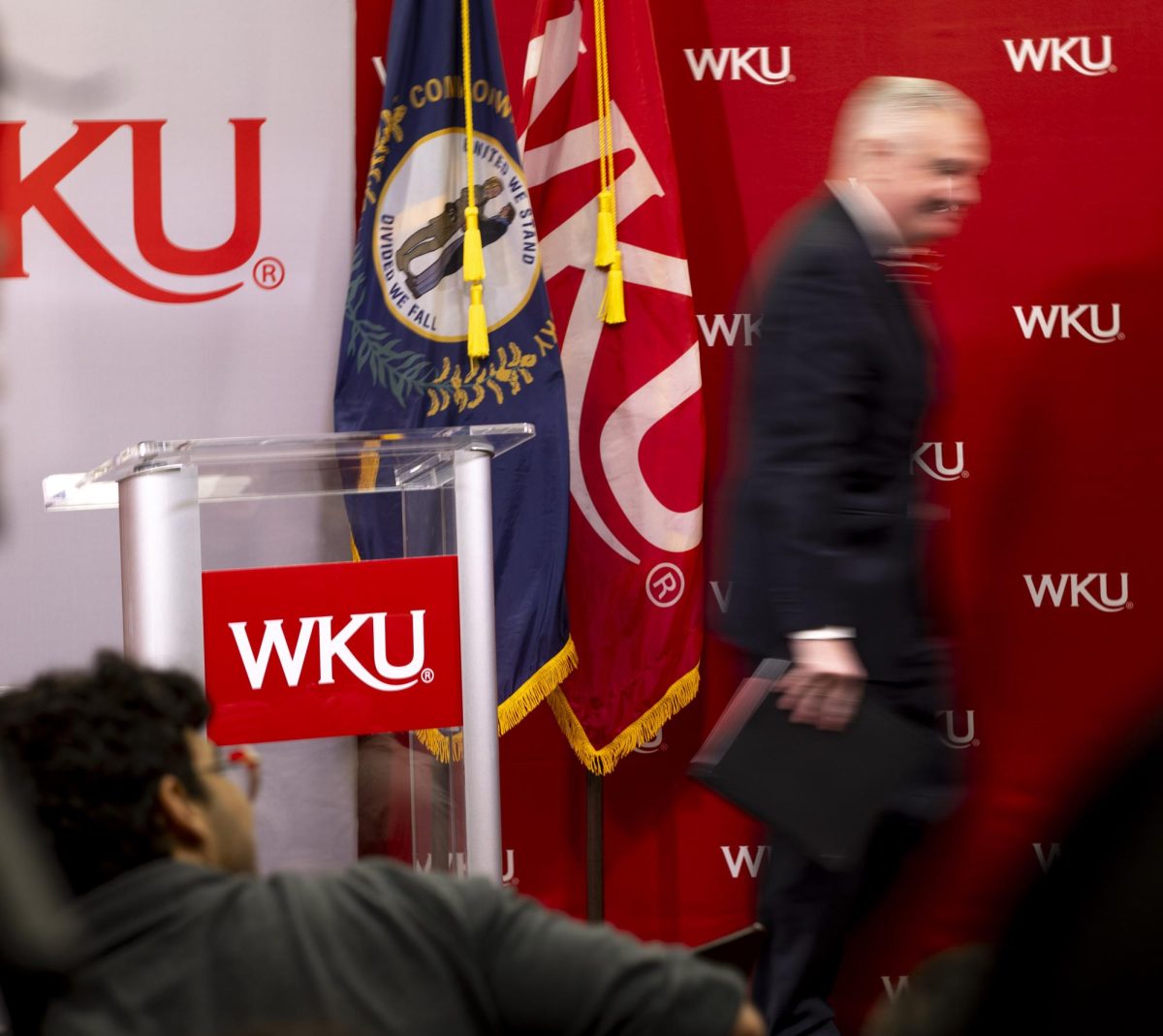
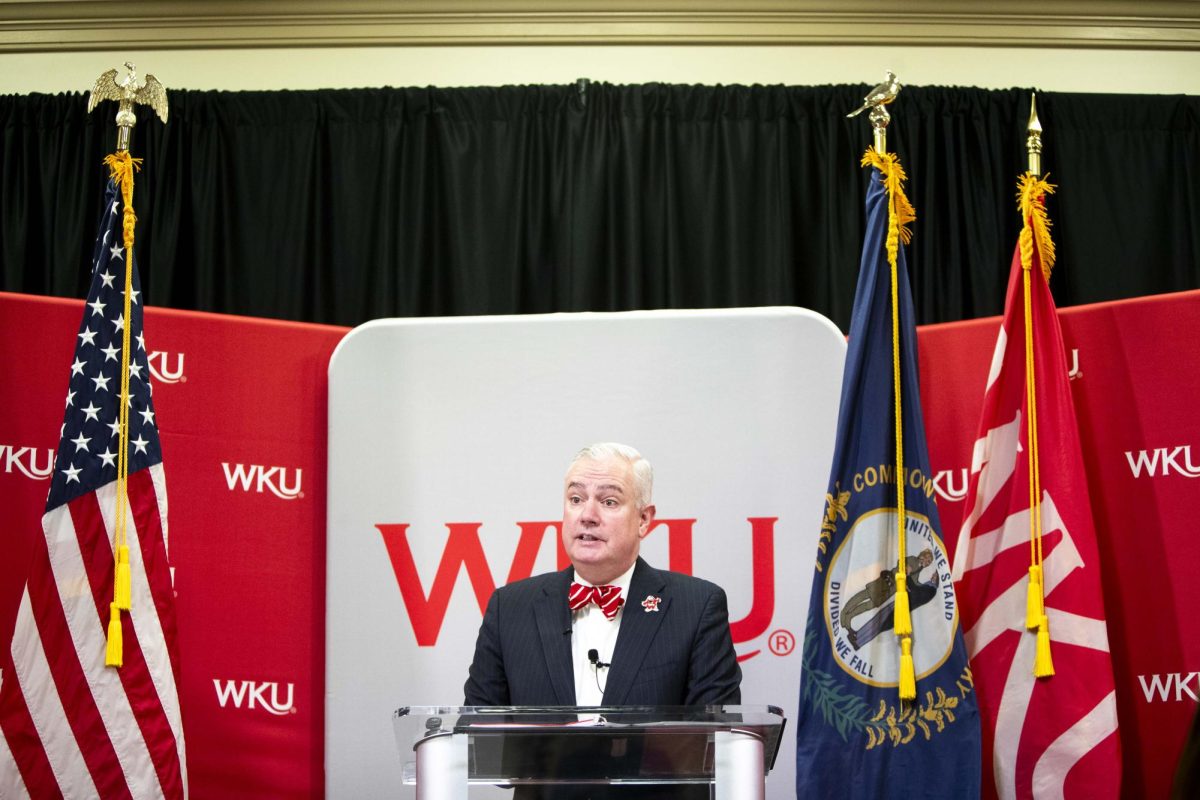
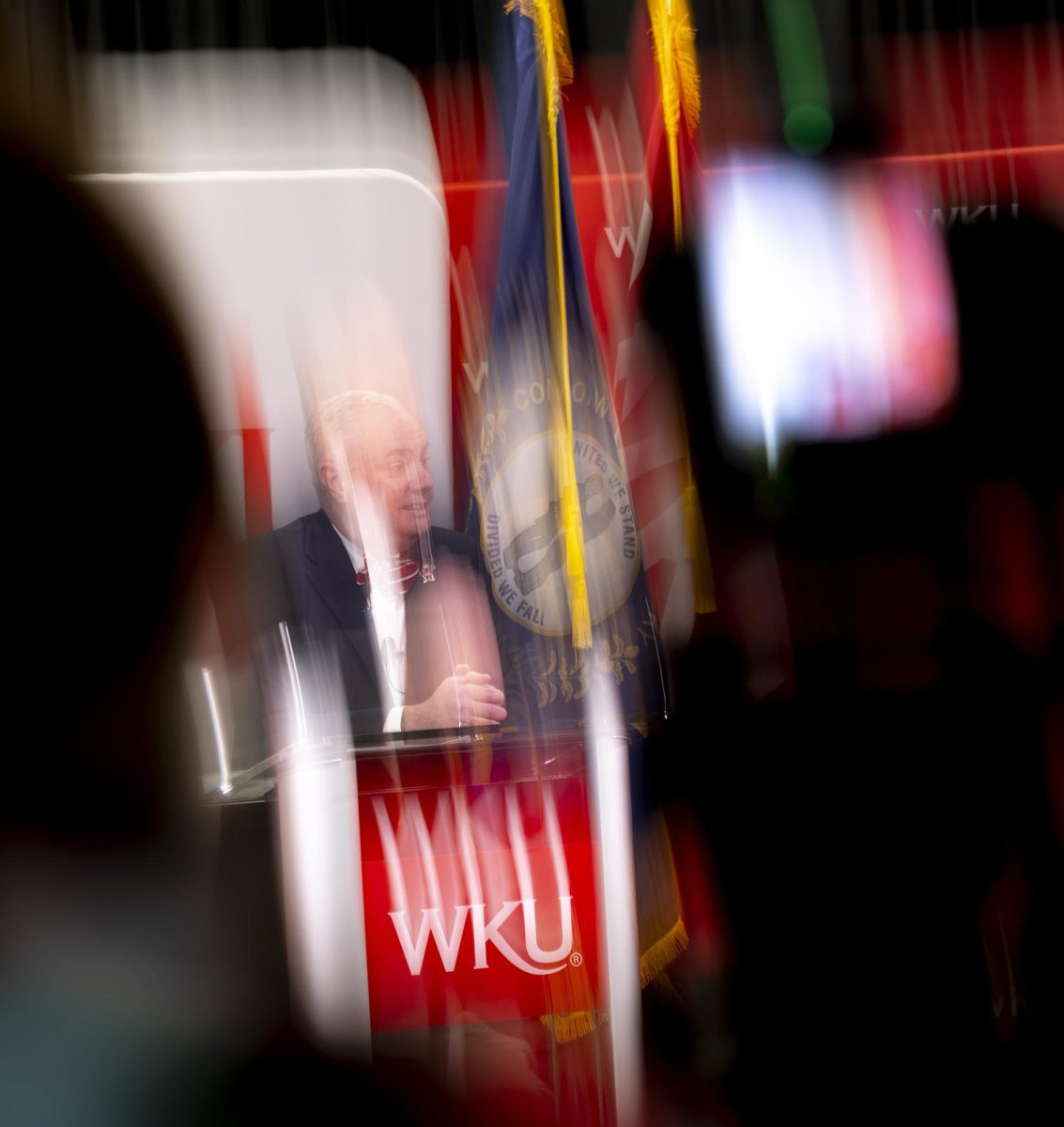
The Herald still had an opportunity to ask questions, just not in its usual one-on-one format. On Tuesday, Feb. 3, Caboni held a press conference with members of local media to address university affairs and take questions.
The press conference lasted 35 minutes, with around 28 minutes of questions. Last fall’s semesterly meeting went for more than 50 minutes.
Caboni opened his press conference and said that he was going to continue to spend time with the Herald at the beginning of every semester.
“The Herald and I would spend some time together at the beginning of the semester. We’re going to continue to do that,” Caboni said. “But I thought this was an interesting, different kind of format for us to start off.”
The first mention of switching the format to a press conference came in an August email from Lux. The Herald had already scheduled its fall meeting with Caboni, but in the email, Lux said the possible change to a press conference would “take place of the traditional fall semester interview with the Herald.”
After the switch to a press conference in the spring had already been made official, the Herald reached out to Lux on Jan. 22, asking the administration to reconsider.
“We believe the meeting provides great value for our audience, especially students, who can get a better grasp of the university’s goals ahead of each semester, but also a fantastic experience for young journalists to get to interview the president of the university,” the Herald said in its email to Lux.
Lux denied the request to reconsider the semesterly meeting in a follow-up email.
“While we realize it represents a change from previous years, this approach will allow us to address media requests for time with President Caboni more efficiently and equitably at the start of each semester while ensuring that the president’s key messages are shared as broadly and comprehensively as possible,” Lux said.
However, after Caboni said that he would continue to spend time with the Herald at the beginning of the semester at his press conference, the Herald reached out for clarification.
Lux responded and said, “The press conference will continue to be the format each semester.” Lux followed up around an hour later with a clarifying email.
“The press conference we hosted today will remain the format for media’s engagement with President Caboni at the start of each semester, as it increases access and broadens our reach,” Lux said. “However, we are continuing to explore other ways to get the editorial boards of all of WKU’s student media outlets engaged with President Caboni and other members of campus leadership. I anticipate something at some point next academic year.”
The Herald responded to that email requesting a definitive standing for its semesterly meeting with the President. Lux said WKU will continue to “explore opportunities for all WKU student media editorial/leadership boards – not just the Herald.”
“Nothing definitive is planned,” Lux responded. “At this point, it is just an idea based on ongoing internal conversations about ways to provide more opportunities for students who are pursuing careers in media.”
Former Herald Editor-inChief Jeremy Chisenhall, the executive editor of the Lexington Herald-Leader, said his meetings with Caboni in 2018 and 2019 gave him a “really good experience.”
“There was a lot of magnitude to the conversation,” Chisenhall said.
While these meetings exist to help the Herald’s reporting, and are beneficial for the “entire campus community,” Chisenhall said the meetings are also great for young journalists.
“Getting that opportunity for a one-on-one sitdown with a very prominent person in that community is a really great learning experience, and the type of thing that can go a long way to prepare you for real-world journalism,” Chisenhall said.