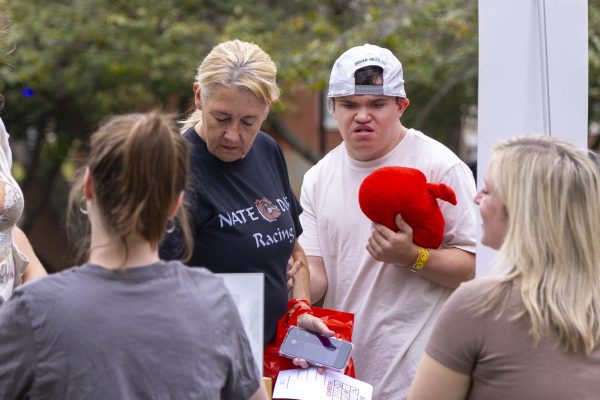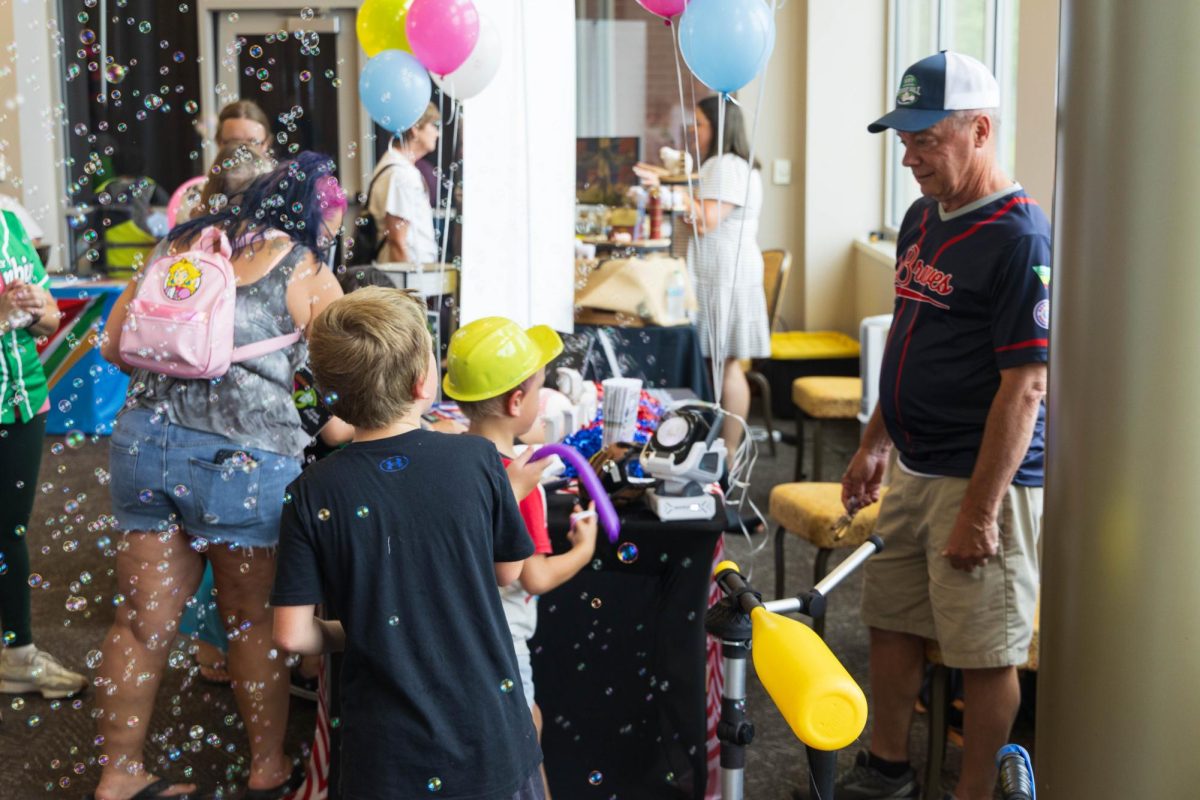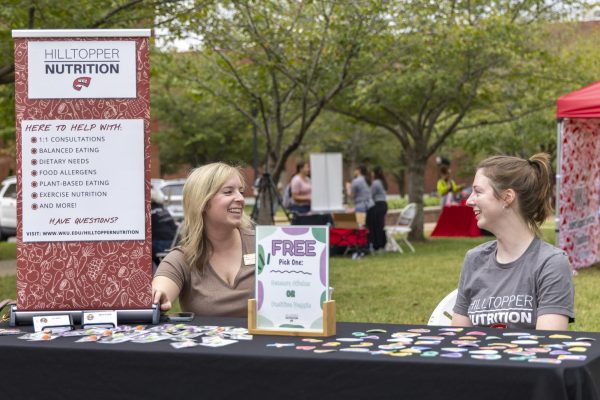
Tables lined the sidewalks of Centennial Mall as organizations gathered to connect attendees to campus accessibility resources and organizations.
WKU hosted an “Accessibility Awareness Fair” from 11 a.m. to 2 p.m., Wednesday, organized by the Raising Awareness of Disability and Neurodiversity at WKU Project, or the RADAR Project.
The event marked the first annual event in the RADAR Project’s ongoing accessibility awareness series that will continue with additional events throughout the year, according to a WKU press release.
The RADAR Project, developed to address the growing need for visibility and awareness around accessibility and disability resources at WKU, is a collaborative initiative designed to enhance accessibility, advocacy and student success across campus, according to another WKU press release.
“The project brings together Student Support Services – Disability (SSS-D), the Student Accessibility Resource Center (SARC), the Kelly Autism Program (KAP), and the Faculty/Staff Neurodiversity Alliance (F/S NDA) to create a united front in promoting a supportive environment for our students,” the press release states.
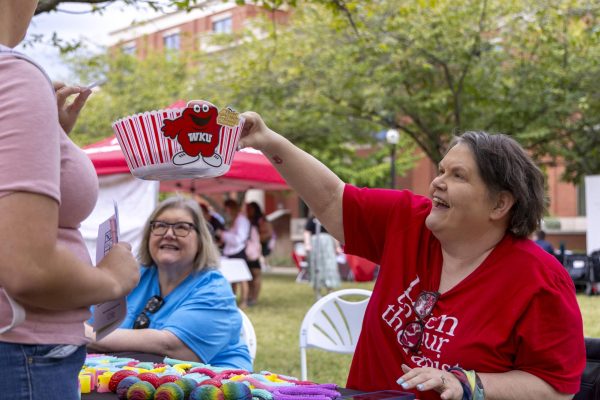
Attendees were given bingo cards, where they could get a sweet treat if every table at the event marked their card. Each table had information about their organization, resources, prizes and activities for attendees.
Campus support services like the Counseling Center, Advising and Career Development and the College of Health and Human Services tabled at the event.
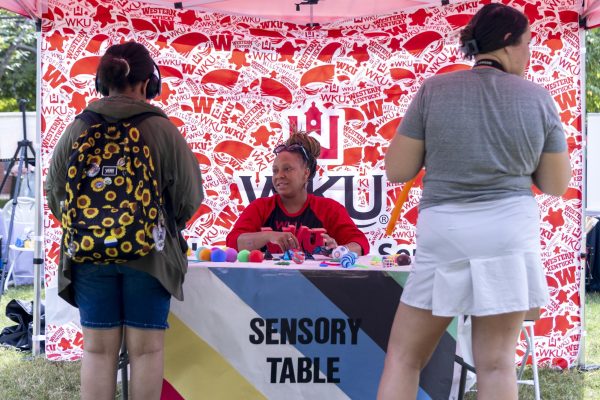
Rina Lewis, Office Coordinator for SSS-D, brought out several sensory toys for attendees to play with. Lewis said she loves sensory toys, and so did some of the attendees who visited her table. While they couldn’t take the sensory toys home, Lewis said they were welcome to play with them as much as they wanted.
“My first person that came out here, she stayed with me for a while,” Lewis said. “And she was so excited and squeezing everything, and it was fun.”
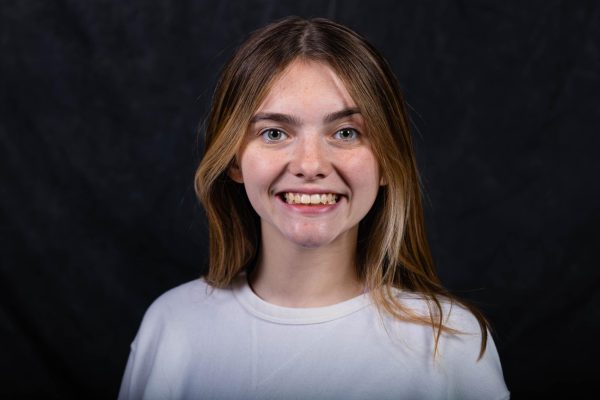
Ella Galvin, senior social media and marketing major, is the student media manager for SSS-D. Galvin said they wanted to do the event at the beginning of the year so that everyone could learn about different resources at WKU sooner.
“I just think it’s really important to learn all the ways that you can get help if you’re struggling with a disability or need any type of help with something in general that’s stopping you from getting through four years of college,” Galvin said. “And so as SSS-D, that’s our main thing. We just want to get you to graduation. So a lot of these resources people just don’t know about, and they don’t find out until it’s too late.”
Off-campus organizations like the Kentucky School for the Deaf (KSD), Kentucky School for the Blind (KSB) and Arts for All Kentucky also had tables with resources and activities incorporating American Sign Language, braille and spirographics.
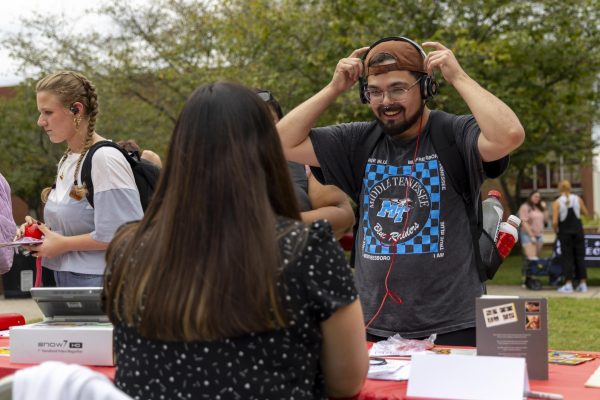
Summer Atteberry, KSD Outreach Consultant, said her job involves helping support students with hearing loss in the public school system. Atteberry said KSD sends out consultants across the state to support local school districts, and KSD attended the event to build and share awareness about ASL and assistive technology that helps those who are deaf or hard of hearing network and connect.
“When I first learned sign language, I started with the alphabet and then got to meet deaf people who helped me build my language,” Atteberry said. “So, same thing for them (attendees), it’ll be neat if they learn the alphabet and then one day, they meet a deaf person and start learning from them because of this, because they made that initial connection.”
Atteberry tabled at the event with Angela Powell, KSB Outreach Consultant. Powell said she also partners with the University of Kentucky to train any teacher who’s going through their visual impairment program.
Powell had a variety of resources for those who are blind or visually-impaired, like Braille Uno, Braille Legos, Braille books and Braille learning technology. There were also “simulation glasses” for attendees to try on to see how things look from the perspective of those with different types of vision impairments, Powell said.
Powell said the simulation glasses help educators better understand and empathize more with their students. By putting on the different glasses, educators can see and experience what their students live with every day, and then they can better assess what accommodations need to be made and why.
“They can take these off, and that’s what I tell them,” Powell said.
Other organizations like the F/S NDA, the Student Accessibility Ambassadors (SAA) and the Deaf and Hard of Hearing club (DHH) attended the event.
Caroline Coorssen, senior English major, is the president of the WKU DHH club. Coorssen had a few goodies at her table, and said the club is always happy to have new members, including students who don’t know ASL, aren’t hard of hearing or aren’t deaf.
Coorssen said one of the benefits of the club is the captioning and interpreter services. Coorssen said she wants to work on some “gray spaces” where people who are hearing, deaf or hard of hearing can mix and mingle in a casual setting.
The club will meet on Thursday from 5 to 7 p.m. in DSU, and there’s free pizza at every meeting, Coorssen said.
“I really just want to work on normalizing deafness, hearing and just make people aware,” Coorssen said.
Neema Angelique and Ngun Sui, sophomore business majors, attended the event together, making their way around the tables with marked bingo cards.
Angelique said her favorite table was the DHH club because it was her first time hearing about and seeing a cochlear implant for hearing.
Angelique said people should attend events like this because students should know more about the people they are surrounded by. When she had anxiety as a freshman, Angelique said it would have been nice to have known more about the resources WKU had available.
“You learn more about your environment,” Angelique said. “And WKU is a really big campus, and you never know what’s there and what’s not there to offer.”