WHAT WENT WRONG? What happened to WKU’s 3 newest dorms?

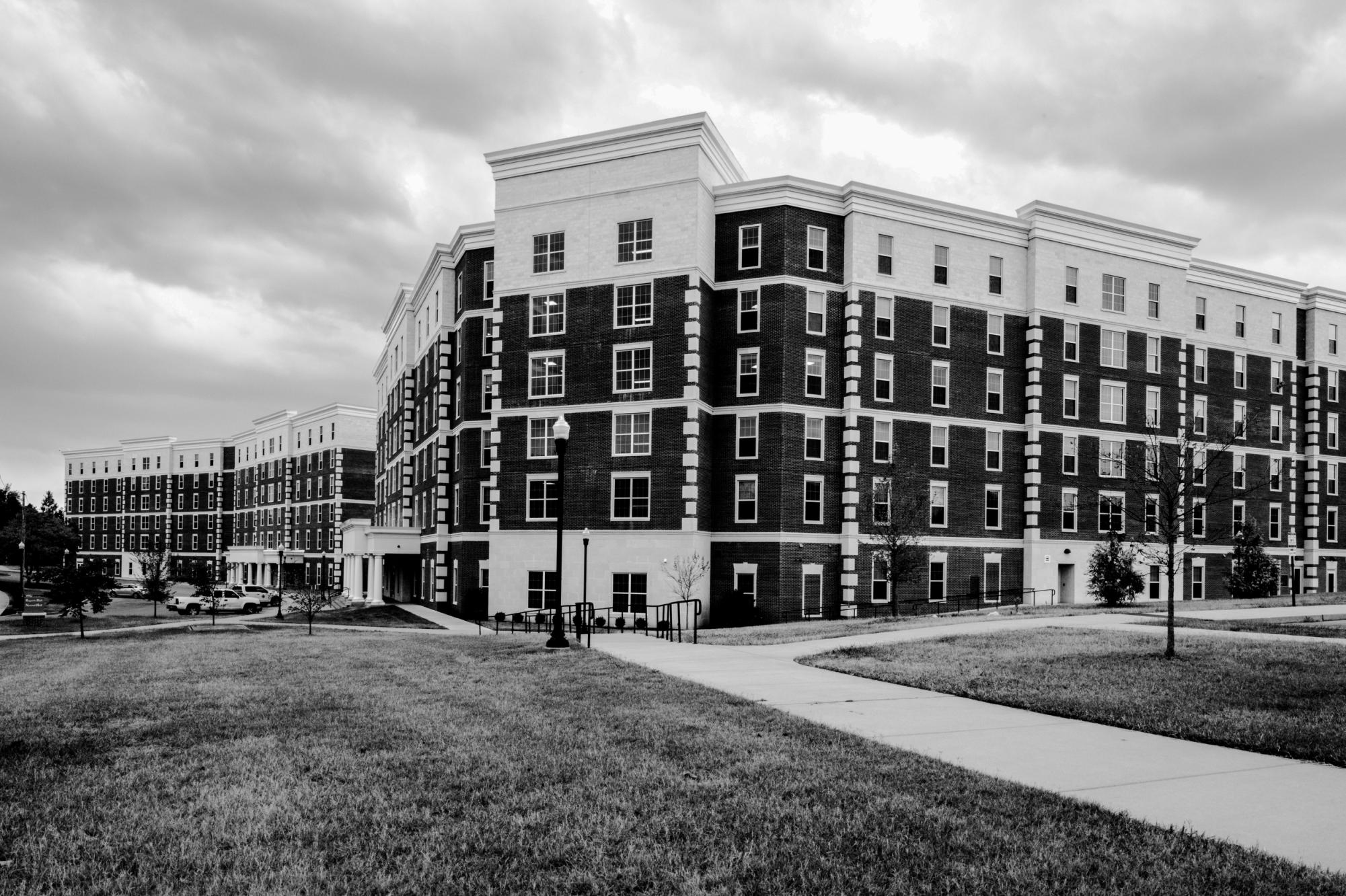
S.E. Engineering, owned by Stoneburg, was the engineering firm for Hilltopper Hall, but is not named in the lawsuit the SLF is in with the architecture firm Sewell & Sewell and contractors Scott, Murphy & Daniel. The Herald has reached out several times to Stoneburg over the phone and on Facebook, but has not gotten a reply.
S.E. Engineering is not listed in the lawsuit with SLF because the two are in a “tolling agreement,” Pardue said.
Jill Dutmers, a Florida-based attorney specializing in construction-based litigation, said a tolling agreement is a formal agreement that gives both parties more time to enter a potential lawsuit.
The SLF is currently exploring a potential lawsuit over Normal and Regents halls, according to Pardue. SLF hired Sewell & Sewell, S.E. Engineering and Builders by Design for the construction of Normal and Regents halls.
Pardue said Normal and Regents were inspected because they had the same project engineer as Hilltopper Hall and “the extent to which he was involved in that project.”
S.E. Engineering also has a 2008 contract with the SLF for “Construction Management Services.”
Hilltopper, Normal and Regents halls all underwent state inspections. However, Kentucky state inspectors do not inspect the structural integrity of buildings.
“Under state law, the HBC (Department of Housing, Buildings and Construction) does not perform structural analysis,” Ricki Gardenhire, a now-retired state information officer, said in an email to the Herald.
“At the conclusion of construction, the Department receives a final statement of special inspections from the design professional that documents the special inspections and structural tests that require expertise outside of the HBC.”
The Herald filed an open records request to HBC for all structural analyses filed with the state for Hilltopper, Normal and Regents halls.
Paralegal consultant for the state, Megan Howard-Whitt, returned to the Herald with documentation that said, “After a diligent search, the Department was unable to locate responsive records.”
When asked about structural analyses, Pardue said the only structural inspections conducted at the request of the SLF were the inspections that led to the closure of each building.
“I cannot speak to any analyses that might have been done during construction, but those that led to the recent closure of the buildings have been the only structural inspections done at the request of the Student Life Foundation,” Pardue said in an email.
Under the “Standard Form of Agreement Between Owner and Construction Manager” contract agreed to between the SLF and S.E. Engineering, structural inspection must occur at the SLF’s expense.
“The Owner (SLF) is responsible for structural, mechanical, chemical, etc. tests, inspections, and reports,” Dutmers, who reviewed the contract for the Herald, said in an email. “So this squarely puts any liability for structural tests, inspections and reports on the Owner.”
S.E. Engineering, serving as the construction manager, was responsible for overseeing the architect and contractors for the SLF, according to the contract.
“The Construction Manager shall expeditiously review design documents during their development and advise on proposed site use and improvements, selections of materials, building systems and equipment, and methods of Project delivery,” states the American Institute of Architects “Standard Form of Agreement Between Owner and Construction Manager” contract.
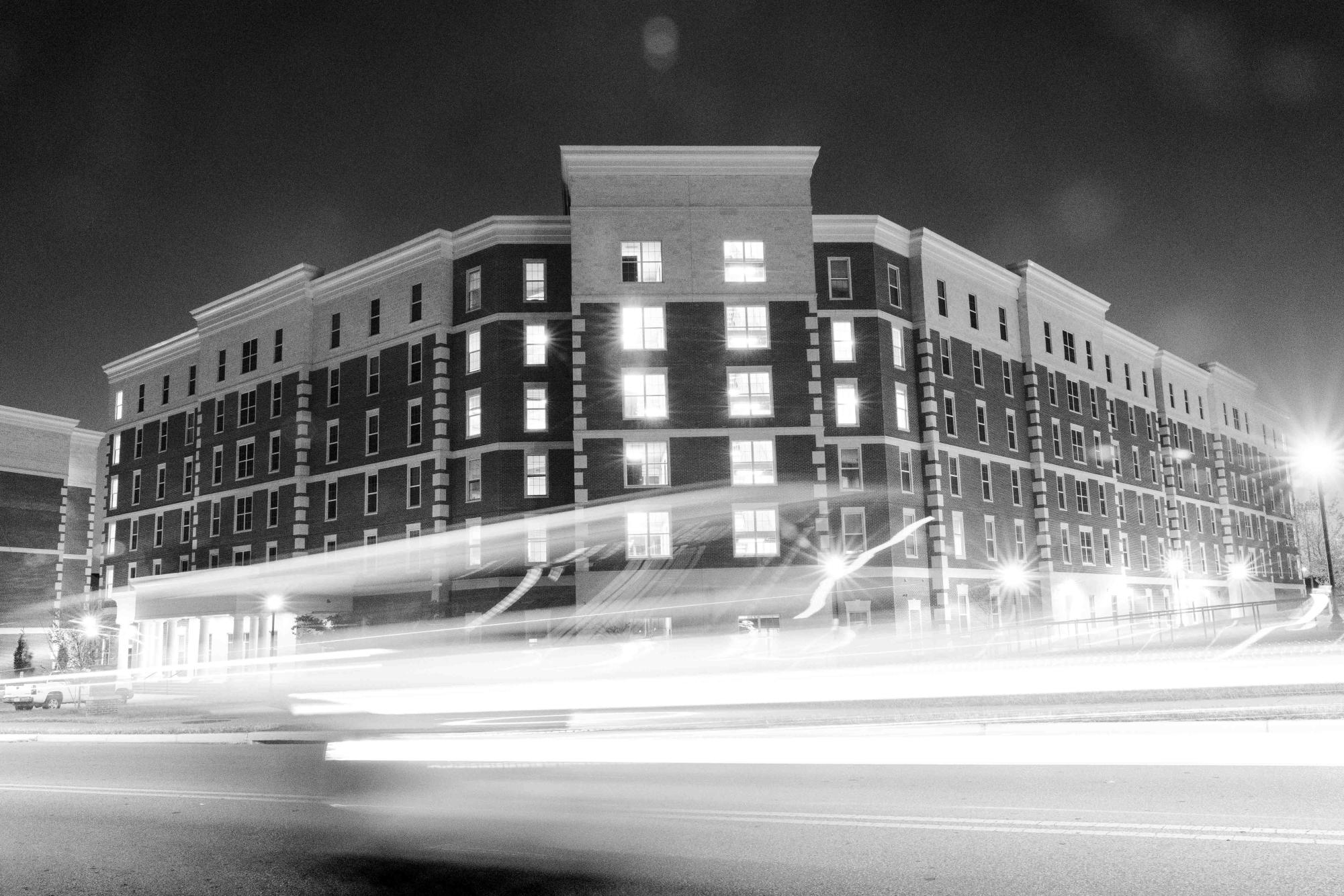
In SLF meeting minutes obtained by the Herald dated Aug. 23, 2023, Ken Branch, WKU’s director of facilities management, outlined Hilltopper Hall’s defects.
The issues listed in the meeting minutes included:
• Insufficient number of weight-distributing pedestals
• Missing galvanized backing steel.
• Missing joists.
• Concrete slab installed on irregular surfaces under pedestals.
• Drain system installation concerns.
• Irregular base material and absence of tile grouting, which allowed water to collect under the tile.
The SLF allocated $267,412 to address the issues, in addition to another $250,000 that was allocated in December 2022 to fix issues with the “Hilltopper Hall Patio Failure.”
The meeting minutes also reference shifting in the facade of Hilltopper Hall, which presented “a severe safety risk of falling stone.”
In a Jan. 17, 2024, meeting, SLF approved shutting down Hilltopper Hall just days into the spring 2024 semester, with a deadline to move out of just weeks later on Feb. 4, 2024. The move out was announced the next day.
Britt said she was never aware of any issues with Hilltopper Hall until the closure was announced.
“I’m sure they had to know about it way before they told us,” Britt said. “And it’s like, kind of worrying that I was living in those conditions, and I had no clue.”
For months, officials considered repairs of the building, but eventually determined it would be more cost-efficient to demolish Hilltopper Hall.
The demolition was announced in a May 16 news release from the SLF. Pardue, the SLF legal counsel, told the Herald he expects demolition to start sometime next summer.
Brown+Kubican Structural Engineers, a Kentucky-based firm, submitted its official report on Jan. 19, 2024. B+K found that structural errors resulted in the six-story Hilltopper Hall having as much as a 19-inch sway potential on the top floor in high winds.
The allowable drift for Hilltopper Hall was 2.8 inches.
Inspections conducted by Jackson Kelly PLLC, Larry Schwering Architect PPLC, Brown+Kubican Structural Engineers (B+K) and Rick Hawkins of Hawkins Construction found Hilltopper Hall was not up to Kentucky building codes.
“When subjected to the code-mandated load cases and various load combinations, many of the structural steel elements (beams and columns) fail to have the required strength,” B+K’s report said.
The problems didn’t stop there.
Normal Hall and Regents Hall opened in 2021 to create the new First Year Village.
On Jan. 29, 2025, the SLF hired B+K to inspect Normal and Regents halls for a “cost of which shall not exceed $400,000,” according to SLF meeting minutes.
On March 28, the SLF allocated over $3.7 million for potential repairs, according to meeting minutes.
On May 16, the SLF announced the closure of Normal and Regents halls in a press release. The dorms were inspected by B+K, JRA Architects, UL Solutions and KFI Engineers and were found not to be up to code, with major issues in the steel beam framing.
The steel beams in Normal and Regents halls were found to be undersized “for strength, deflection, or both” by B+K.
The ceiling material used in both buildings was also found not to be compliant with fire codes, according to the report.
A memorandum to B+K from KFI, included in the reports, stated that they were also unable to locate up-to-code fire dampers in the ductwork during a visual assessment of Normal and Regents halls.
The reports of Normal and Regents Hall included a variety of “miscellaneous strengthening” suggestions.
• Weld steel reinforcement to the column splices at the fourth floor.
• Revise the connection details and add adhesive anchors at steel connections to concrete walls, including at all stair shafts.
• Apply new coatings and/or architectural wrapping of exterior steel framing to prevent corrosion that could weaken the steel.
Hilltopper, Normal and Regents halls were all built at the request of the WKU Student Life Foundation. The SLF also built the WKU Apartments on Kentucky Street, which have not been inspected for structural issues despite the problems in Hilltopper, Normal and Regents halls.
Pardue said he was uncertain as to why the WKU Apartments had not been inspected, but suspected they hadn’t shown a need for inspection. The apartments appear in the gallery on S.E. Engineering’s website.
The SLF is a nonprofit organization created under the administration of former WKU President Gary Ransdell in 1999. It was incorporated on May 21 that year under the name WKU Residential Life Foundation, which was soon changed to the current name, according to records filed with the Kentucky Secretary of State’s office.
Ransdell said that when he became president of WKU in 1997, there were several dorms in need of renovations. Traditionally, dorm renovations had to be approved and funded through the state, Ransdell said.
“At that time, we needed to do something rather pervasive and unusual in order to improve our residential community across the board,” Ransdell said.
Ransdell also said the SLF worked to take the debt of dorm maintenance and construction off WKU and the state’s books and onto the books of a separate entity. This gave WKU a larger bond capacity to take on debt for other properties, like academic buildings.
Ransdell said that transferring the dorms to a separate nonprofit organization allowed for a faster process because WKU’s dorms were no longer competing with other state-owned facilities that may need renovation or construction.
“It’s hard to do things expeditiously when you’re under the state umbrella because it’s a big, complex capital project approval process with the state,” Ransdell said.
Ransdell said he appointed the first SLF board, and when new members were added, he would “approve” or “endorse” the members he wanted on the board.
The SLF spent the first years of its existence renovating existing dorms. The WKU Apartments, which opened in 2014, were the SLF’s first new construction project.
The current SLF board consists of Brad Howard, the chairman, who is Warren County president and loan officer for Independence Bank; Mike Simpson, owner of Simpson Property Management and a member of the College Heights Foundation board; Brian Kuster, former vice president of enrollment and student experience; Savanna Kurtz, the vice president of WKU’s Student Government Association; Bowling Green resident Gerald Stephens; attorney Hamp Moore; Kristen Bale, a former member of the WKU Board of Regents and the wife of current Regent Phillip Bale; and Sandy Boussard, the former Bowling Green mayor, according to Pardue.
Catherine LaRoche, WKU’s assistant vice president for Housing and Residence Life, is also the executive director of the LF, but not a member of its board. Martha Sales, WKU vice president for student experience, is a non-voting member of the board.
Caboni said he was a non-voting member of the SLF board during the meeting with the Herald Editorial Board on Aug. 15, 2025.
Jace Lux, WKU spokesperson, said in an email on Sept. 9, 2025, that after speaking with Pardue, he confirmed Caboni was not a member of the SLF board.
“Based on my conversation this morning with Tad Pardue, the university president is not a member of the SLF board, and if the president stated otherwise, he misspoke,” Lux said. Lux was present at the interview where Caboni referenced his role with the SLF.
When asked about Hilltopper Hall’s closure at a meeting with the Herald Editorial Board, Caboni said, “You’d have to talk to the Student Life Foundation about that.”
“I appreciate what the Student Life Foundation has done for the university,” Caboni said. “They have constructed now three halls that are offline. And so from my perspective, that relationship between the university and the foundation is going to have to evolve.”
The Kentucky Supreme Court found in 2007 that WKU and the SLF were “alter egos” in a ruling on an unrelated lawsuit.
“… SLF acts as an alter ego of WKU for purposes of holding title to the dormitory properties and obtaining funding to refurbish them,” the Kentucky Supreme Court said in court documents.
“Every other operational function related to the dormitories has been ceded back to WKU through the Management Agreement.”
When addressing the decision to tear down Hilltopper Hall, Caboni said making the choice was “not our responsibility. It’s actually their (the SLF’s) responsibility.”
“I think that clarity in that description of the relationship is important, because these are not university choices,” Caboni said.
Caboni announced at a Board of Regents meeting on June 6, 2025, that WKU and the SLF are working with a Washington, D.C., consulting firm, Brailsford & Dunlavey (B&D), to craft a plan, a “5-10 year plan” for WKU’s dorms.
B&D are currently under a contract with the SLF that until December of 2025 which will pay a total of $280,000.
B&D will enlist a third-party partner to create a public-private dorm model. In a June 6 interview, Caboni said he has looked at public-private dorm models at LSU, his alma mater, and Eastern Michigan University.
Julian Sagatume of B+D said he hopes to have a potential partner picked by the end of September. The private partner, once chosen, will begin work on a three-step plan to overhaul WKU’s older dorms:
- First, repairing and reopening Normal and Regents halls and tearing down Hilltopper Hall.
- Replacing Douglas Keen and Hugh Poland halls with 1,000 beds in new buildings on that site to complete the First Year Village.
- Then, tearing down Gilbert, McCormack and Rodes Harlin halls in the Valley and building a 1,400-bed “upperclassman village” in the Valley and possibly other nearby locations.
Caboni said the university would eventually address its largest dorm, 55-year-old Pearce-Ford Tower, a 27-story hall housing 857 beds.
In the press release announcing the closure of Normal and Regents halls, it was also announced that the SLF would convert the Hyatt Place hotel into a dorm and name it Center Hall.
WKU Student Life Foundation will pay $125,000 to HPBG Investments LLC, and $25,000 to Prime Hospitality Management LLC per month for up to three years, according to lease documents obtained by the College Heights Herald.
The lease also has an $18 million purchase option that the SLF may take within the first two years of renting.