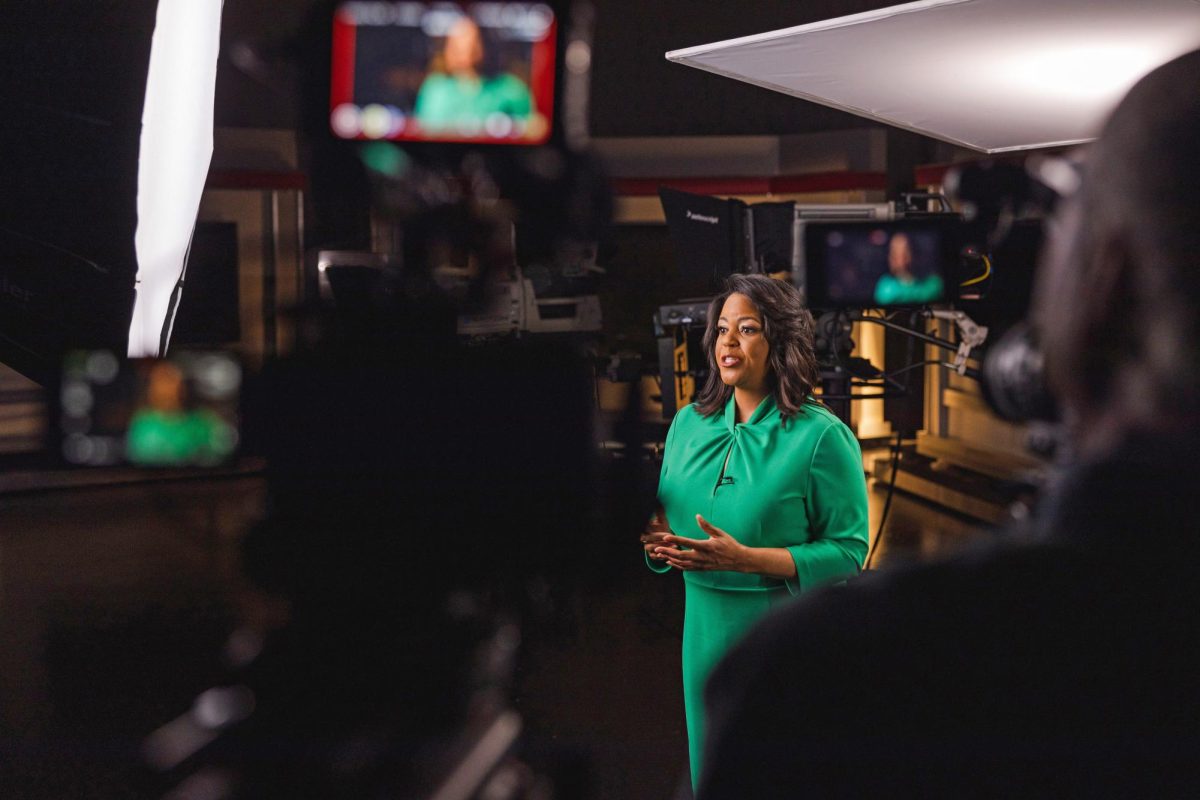
Members of the Bowling Green community attended a Know Your Rights presentation as mass deportation efforts continue throughout the United States.
The event sought to inform attendees on what to say and do in the presence of immigration agents and law enforcement, said Miguel Quintanilla, one of the paralegals with Catholic Charities who organized the event.
“It’s hard times for immigrants and refugees right now, and what we want them to be is informed and to be able to make the right decisions in all situations,” Quintanilla said.
When attendees entered the event, they received a red “Know Your Rights” card that acted as a reminder to express their rights in the event of an interaction with immigration agents or law enforcement. Handed out alongside the card was a booklet that summarized everything said during the presentation and laid out all necessary emergency contact information.

Susan Montalvo Gesser, the director of Catholic Charities Diocese of Owensboro and an immigration attorney, gave the presentation alongside two interpreters. Khaibar Shafaq, who is also a paralegal, spoke Dari while Yamal Haji Mohammad spoke Pashto. Dari and Pashto are the official languages of Afghanistan, with Afghans making up 461 of the 2,283 refugee arrivals in Bowling Green, according to the Kentucky Office for Refugees website.
Multiple scenarios were discussed throughout, as rights vary from location to location, including:
- In your home
- In the street or a public area
- In your workplace
- In your car
- In police custody/jail
- In an immigration detention center
Gesser and Shafaq acted out various situations throughout the presentation, demonstrating what to do and what not to do while diving into the intricacies of what needs to happen. Quintanilla said he hopes this calms the fears of attendees, given that they have rights as human beings.
“You must know the facts and your rights to best protect yourself and your friends and family,” Gesser said. “The time to act is now.”
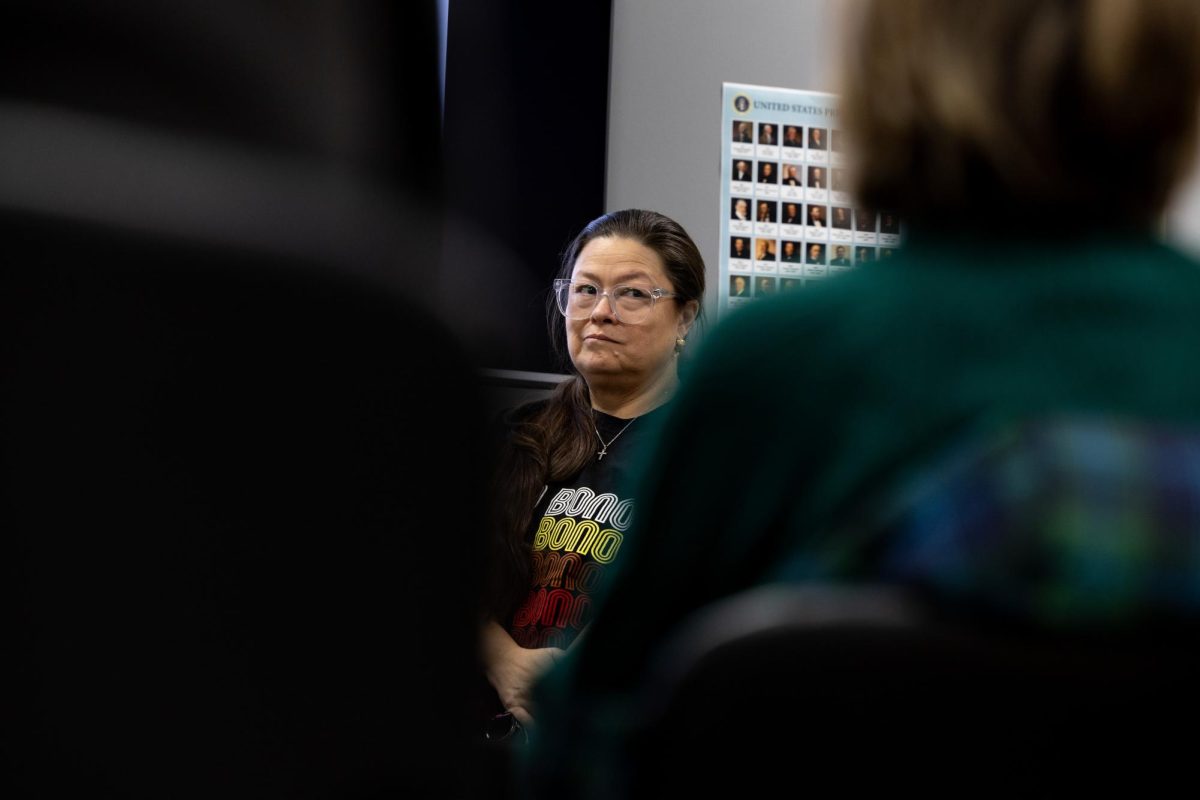
(Bradlee Reed-Whalen)
A table was set up in the back corner of the room, lined with power of attorney documents provided by the paralegals present at the event. Once the presentation concluded, attendees were able to go and fill out the document to entrust guardianship over their children in the event that they would become unable to take care of them. Gesser and Shafaq noted that if attendees wished to seek a more in-depth power of attorney that entrusted financials, medical or anything other than guardianship, they could do so one-on-one with Catholic Charities outside of the event.
This was one of three presentations. The other two both offered Spanish interpreters for the Hispanic communities in the area.