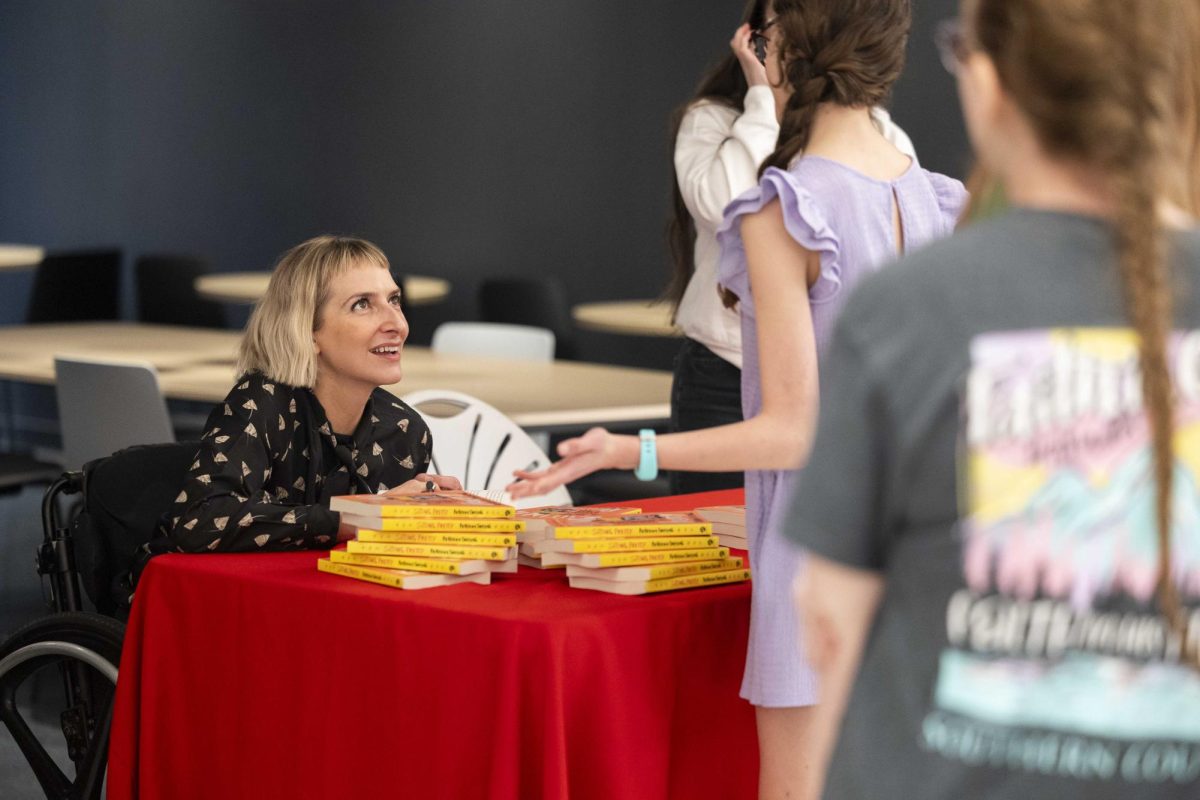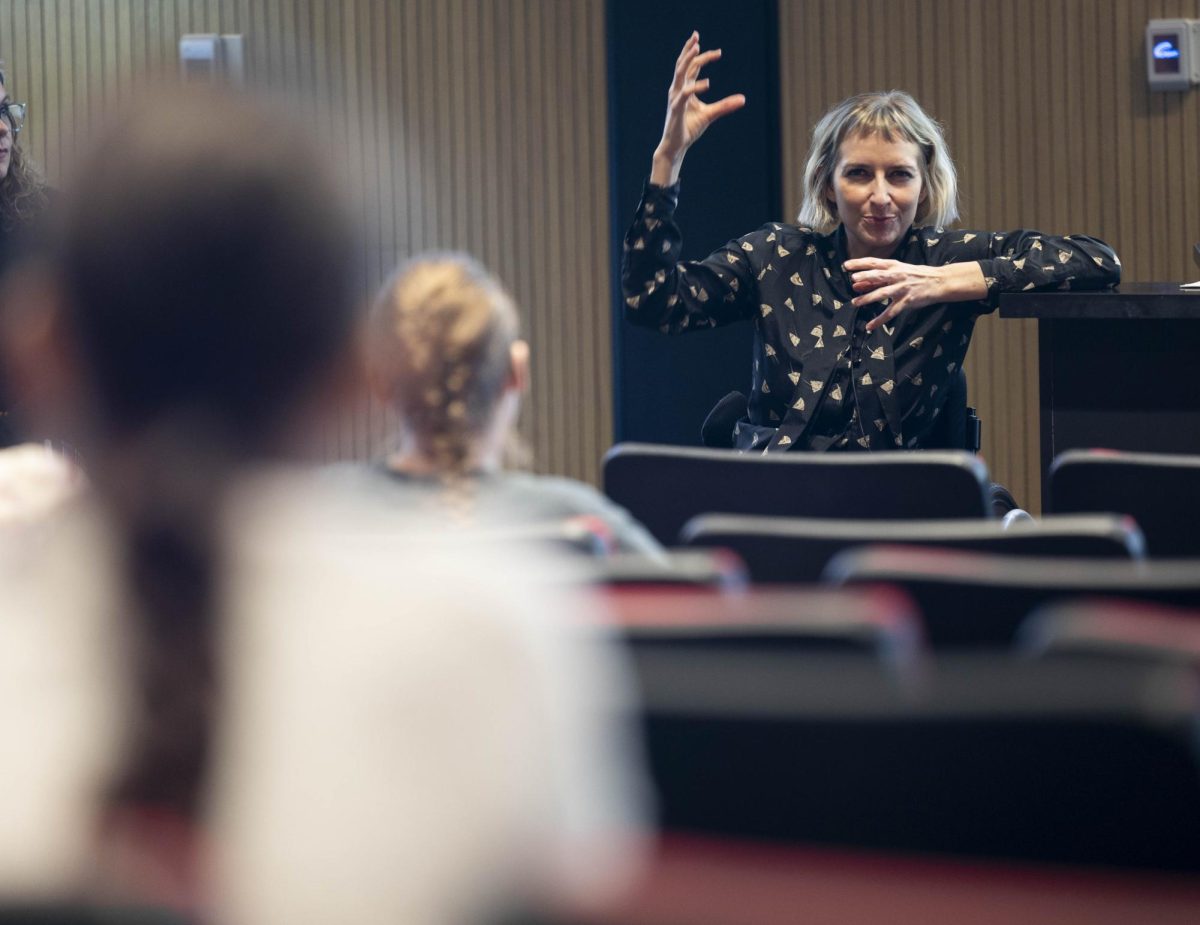
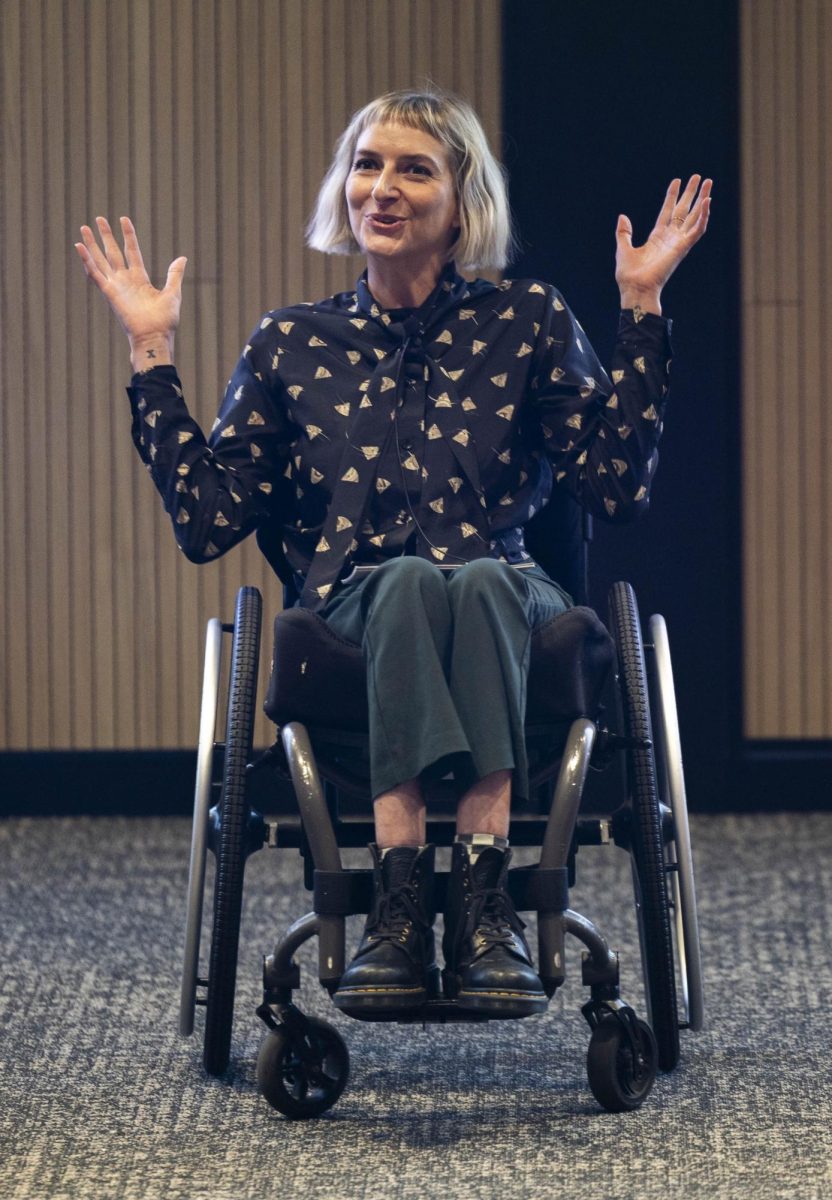
WKU’s Potter College of Arts welcomed Author and Disability Advocate Rebekah Taussig Thursday as a special guest for this semester’s Cultural Enhancement Series.
Taussig spoke to the community about accessibility and the importance of creating inclusive environments for people with disabilities. Her discussion focused on both architectural and technological accessibility, emphasizing how design choices in buildings and digital platforms can either create barriers or open opportunities.
Taussig explained that accessibility isn’t just about meeting the minimum requirements but about recognizing the diverse needs of individuals in public spaces.
“I think it’s important to know the umbrella of disability is very wide,” Taussig said. “There are a lot of experiences that fit underneath that need to be represented.”
Throughout the presentation, Taussig also reflected on the emotional aspects of living with a disability and how those experiences shaped her life.
At the age of 3, Taussig lost the ability to walk after contracting a viral illness that affected her spinal cord. Although the change was life-altering, she explained that her disability often went unspoken of by those around her.
During her teenage and early adulthood years, Taussig experienced both shame and moments of personal growth. The erasure of her disability was common, and she often struggled to understand her identity in environments where it was rarely acknowledged.
Taussig recalled a moment when she was carried up and down the stairs of an apartment by her friends because there was no accessible entrance. At the time, moments like that often made her feel like a burden to the people around her.
However, while she was apologizing about the inconvenience, a friend responded in a way that surprised her
“I’m sorry that apartment building didn’t have a good way for you to get inside,” said Shane, Taussig’s friend.
It was a simple comment, but for Taussig, it was impactful. Rather than placing responsibility on her, it shifted the focus to the building’s design.
This interaction challenged the narrative that Taussig had internalized for much of her life — that the problem was her body rather than the environment around her.
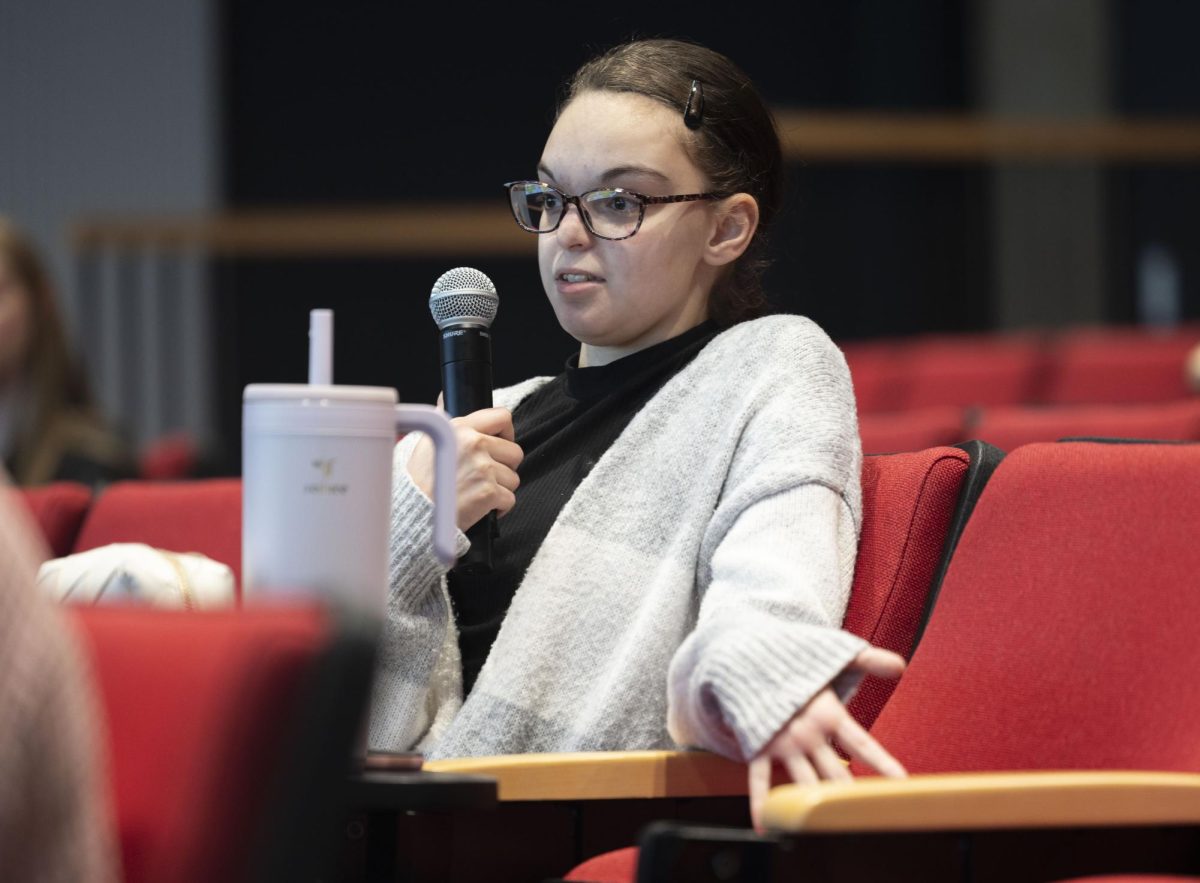
At the end of the presentation, audience members asked questions and left comments.
Madison Duncan, a former WKU student majoring in recreation, appreciated Taussig’s insights.
“I do adaptive recreation, so being able to take what I heard and apply it to what I do for work, but also in general life,” said Duncan. “It’s a lot of shared experiences between her as a wheelchair user and myself as a wheelchair user.”
Department Head and Professor of English Dr. Alison Langdon was touched by Taussig’s presentation and enjoyed listening to other disabled people talk about their perspectives.
Dr. Langdon said she previously served on PCAL committees and that inviting Taussig as a guest speaker had been suggested several years ago, so it was nice to see the idea come full circle.
“I think it’s incredibly important for people to hear the voices of disabled folks as a source of wisdom and insight,” Langdon said. “In ways that see us as actual human beings, not as a category and the fact that my experience as a disabled person is not going to be the same as anybody else’s.”