Editor’s Note: This story was originally published in volume 101, issue 5 of the Herald magazine. The story has also been updated to clarify the reason for the start of the NAMI program and the status on NAMI on WKU campus.
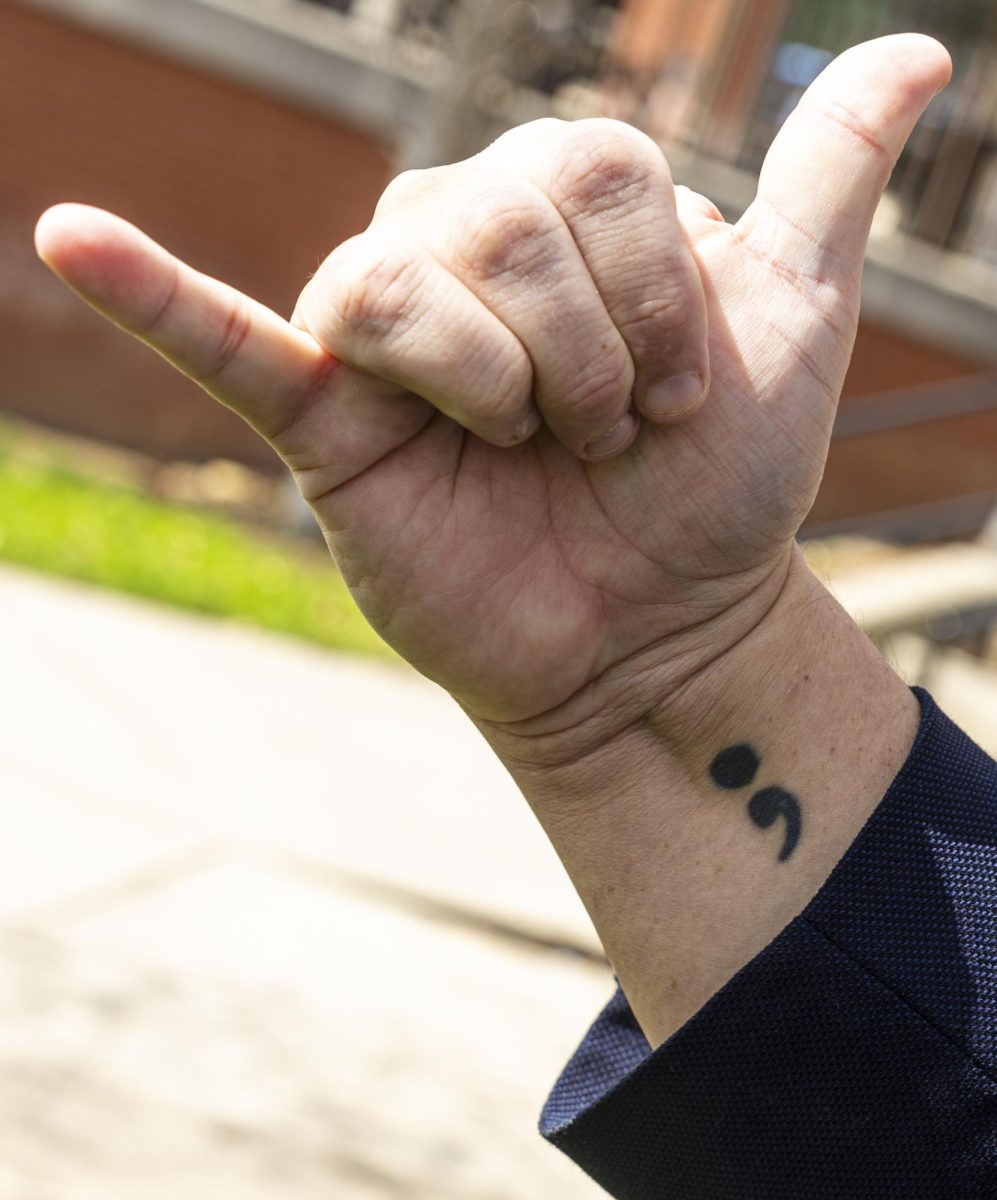
At WKU, students in a peer-led support group encourage one another to speak up about mental health challenges.
The National Alliance on Mental Illness came to campus a decade ago after a student suicide prompted Social Work Professor and NAMI Facilitator Jay Gabbard and his colleague Deborah Weed to form the NAMI-sponsored student support group. The group operates with oversight from the Bowling Green and state NAMI offices.
“We’re not therapy, that’s the Counseling Center,” Gabbard said. “What we provide is a safe place for students to be able to talk to other students who are struggling with things like depression, anxiety, PTSD, eating disorders and suicidal ideation.”
Mia Fisher, a junior social work major, dealt with lifelong mental health challenges and hoped to find a sense of belonging after transferring from community college. She was encouraged when she first heard about the support group that Gabbard advertised in his class.
“He was really welcoming,” Fisher said.
So she decided to try it.
“I think the most challenging part of attending the support group meetings was having the courage to go for the first time,” Fisher said. “I remember walking in and feeling really nervous, but as the meeting went on, I was made to feel welcome and comfortable.”
Fisher looked forward to the meetings because she felt heard and able to be herself. There, she found a sense of belonging and connection to others she had been missing.
“Some knowledge I have gained is that struggling is normal and that mental health does not have to be a taboo topic,” Fisher said. “Talking about your struggles can create meaningful change if you find the right people to listen.”
Fisher has always wanted a career in mental health, and her experience with NAMI has reinforced that determination.
“My advice to another student thinking about joining is to do it and see what happens,” Fisher said. “No one will judge you for trying it, seeing if it works for you.”
NAMI was founded in 1979 in Madison, Wisconsin, by Harriet Shetler and Beverly Young, two mothers who were frustrated with the lack of support for their schizophrenic sons.
Early versions of NAMI began with local self-help groups and grew into a national organization focused on education, support and public policy. The organization later changed its name from the National Alliance for the Mentally Ill to the National Alliance on Mental Illness.
Gabbard said his journey with NAMI began as someone simply looking for help.
“I was inspired to join NAMI through their outstanding advocacy efforts for individuals like myself who struggle with mental illness,” Gabbard said.
After attending support groups, he became a certified group leader and eventually served as vice president of NAMI Bowling Green. From there, he helped launch the NAMI support group at WKU. He also presented research at NAMI Connection — the organization’s national conference — and served on the state mental health policy advisory group.
“Over time, NAMI gave me a platform to share my story and support others,” Gabbard said.
NAMI Bowling Green President Rebecca Coursey said she connected with Gabbard in a support group around 2012, when they were both attendees.
“Later, we joined the board and began volunteering,” Coursey said.
For Coursey, the work is rooted in personal loss and a long relationship with the organization. Her path to NAMI began when her sister died from an overdose in 2010. Coursey was so overcome with grief that she had to be hospitalized.
After grieving for about a year, she wanted to help others who may be struggling by volunteering. Over time, that simple step evolved into a leadership role with NAMI.
Coursey said that there are not many college NAMI groups. “The groups make a difference because students find that connection they are missing.”
Coursey said she believes today’s college students are carrying unique burdens, especially in the aftermath of the COVID-19 pandemic.
“I believe any young adult, whether in college or not, has lived through a time where they lost valuable social events,” Coursey said. “They missed prom, in-person graduation, sports… all the things that connect young people. I’ve found that young adults don’t know how to make connections with others. Our groups connect people.”
NAMI is a complement — not a substitute — to counseling services, but provides a “two-way street” for referrals between peer support and professional treatment. If a student needs something more, NAMI often refers them to the WKU Counseling Center or the Talley Counseling Center.
“Absolute confidentiality: what is said in the room stays in the room,” Gabbard said. “Now there’s an exception to that… If somebody threatens to harm themselves, we have an obligation to follow up.”
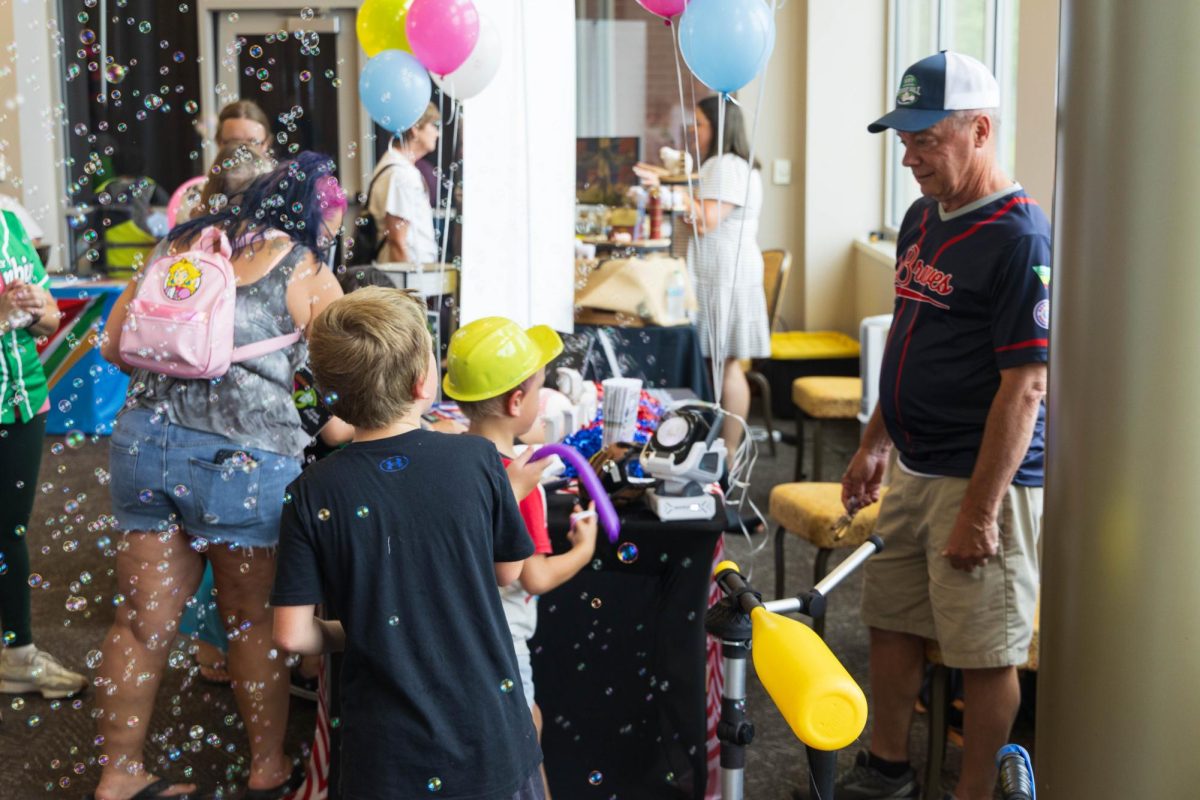
Beyond regular meetings, NAMI activities on campus intend to reduce stigma around mental health through outreach, tabling and guest speakers.
NAMI meets twice monthly in Academic Complex Room 118. The next meetings are scheduled for April 13 and 27 from 6 p.m. to 7:30 p.m. and are free for everyone, regardless of diagnosis.
“People are often going through similar things, but don’t judge your pain as less than anyone else’s,” Coursey said.