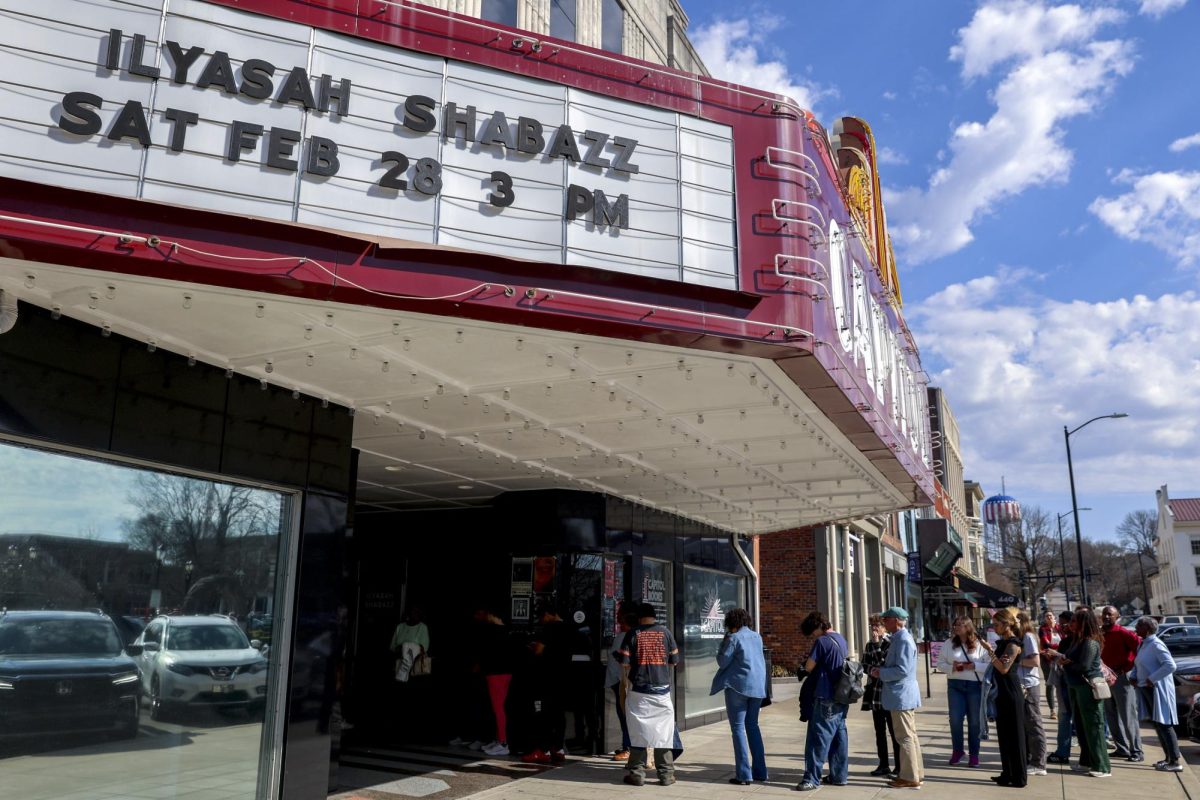
Outside of the Capitol, the Bowling Green community lined up waiting to hear the words and wisdom of Ilyasah Shabazz.
On the last day of Black History Month, the Capitol Theater invited Ilyasah Shabazz, one of six daughters of Black revolutionary Malcom X and civil rights activist Betty Shabazz. Ilyasah Shabazz spoke about her experience growing up around the work of her parents and its impact on her, connecting it to the Black community in Bowling Green.
Ilyasah Shabazz is an award-winning author, activist and educator who dedicates her work to keeping the beliefs and experiences of her parents alive. She serves as Worcester State University’s Human Rights and Impact Fellow and board chair of the Malcolm X and Dr. Betty Ilyasah Shabazz Memorial and Educational Center.
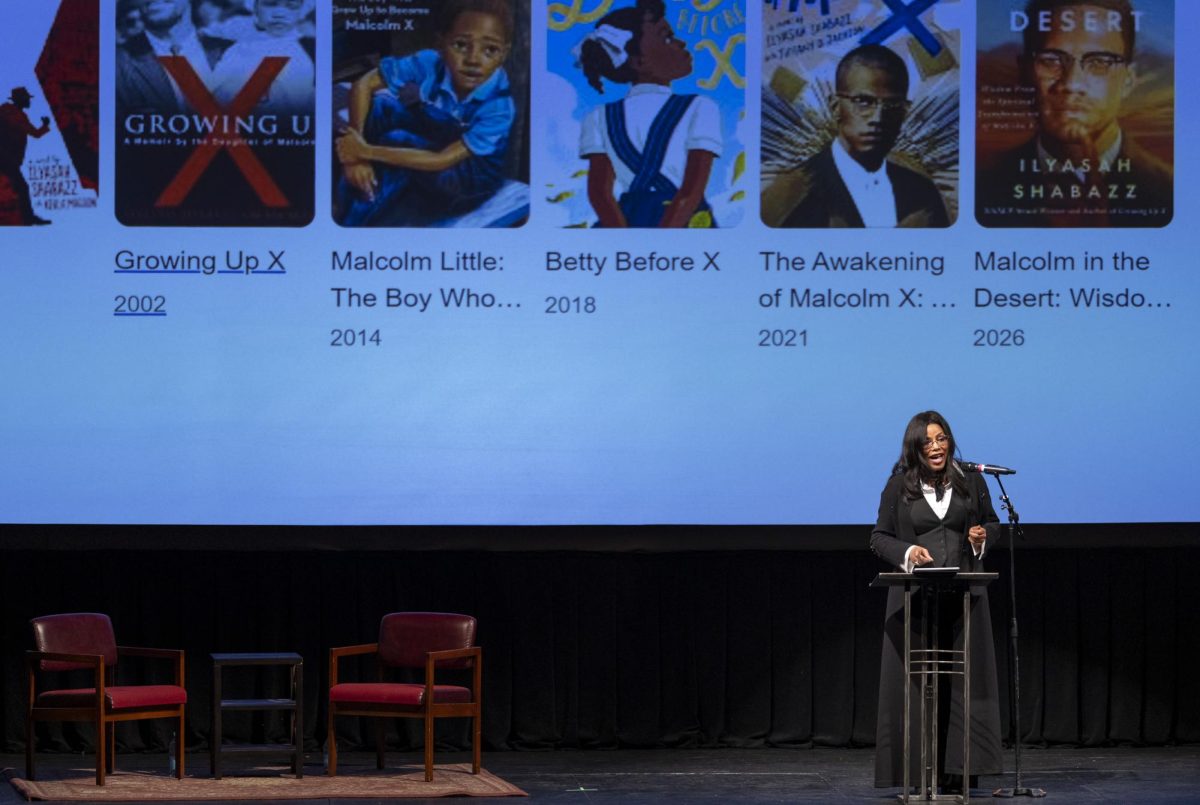
During her talk, Ilyasah Shabazz touched on topics she discussed through her 2002 autobiography “Growing Up X”, which was signed and given away to the first 200 attendees. She discussed her father’s legacy through the lens of her experiences with him, from his beliefs and work throughout the Civil Rights Movement to the impact his teachings had on her.
“Contrary to what has been said about the legacy of Malcolm X, my father never spoke violence,” Ilyasah Shabazz said. “He spoke truth, he spoke power, he spoke love, the kind of love that defends, the kind of love that protects, the kind of love that builds brotherhood.”
Ilyasah Shabazz interlaced the discussion of her father with the impact of Black people in Bowling Green, calling attention to and honoring the Jonesville and Shake Rag communities.
She said that the families who built Shake Rag and Jonesville understood that community is the foundation of freedom, like her father.
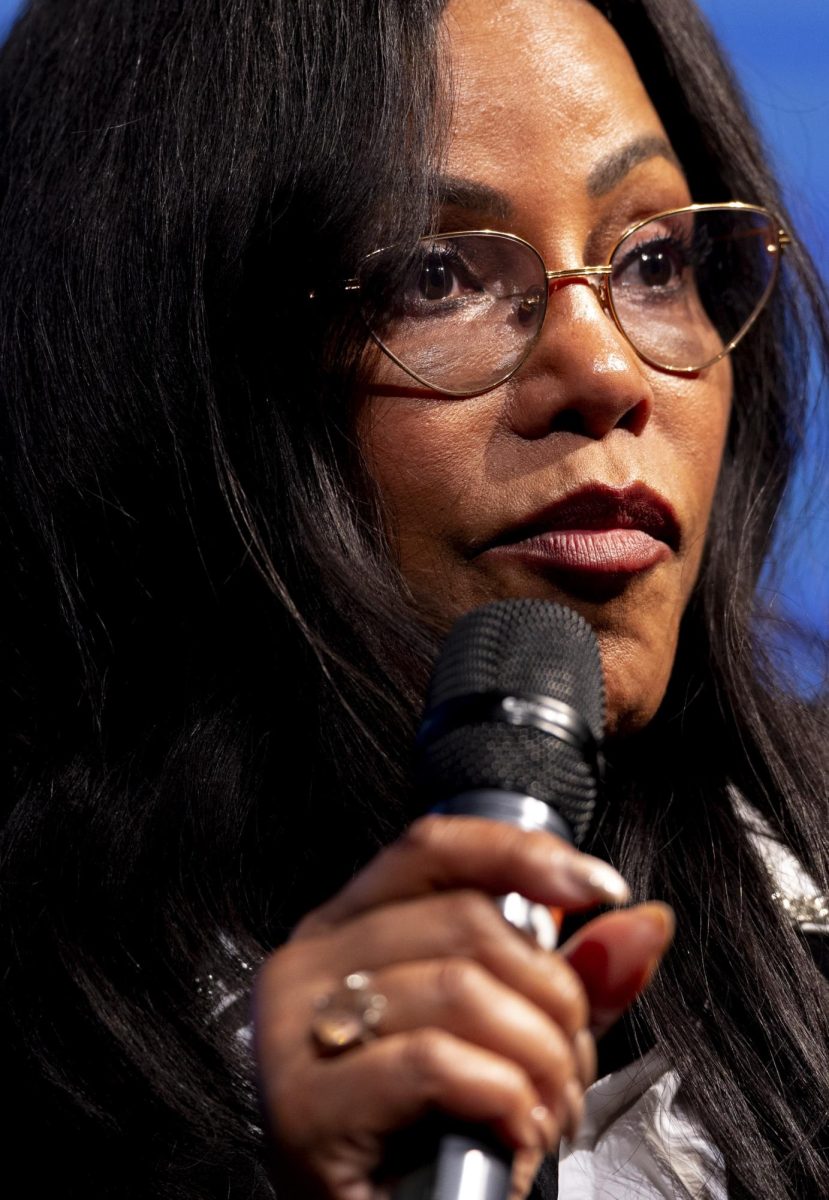
Ilyasah Shabazz also called a moment of silence for Black advocates in Bowling Green, such as families who fought to desegregate schools in the area and the first Black mayor, Joe Denning, elected in 1975.
“It is part of the history of this community, and the history of this community is incredible and worth sharing,” Ilyasah Shabazz said. “I think sometimes people are inspired when they know the history of people who were here before them, and those people who built the community that’s here now.”
Victor Hollowell, a long-time follower of Malcom X, said he appreciated the information Ilyasah Shabazz presented that hadn’t been mentioned in the media.
He said that he plans to take Ilyasah Shabazz’s words and experiences and show others through his informative presentations, which he does across Kentucky libraries regarding local and state history.
“She showed simply that he was a kind, compassionate, caring person,” Hollowell said. “One of the things I’d like to also (share with) people is that he’s misunderstood in so many ways and hated because of that.”
Ilyasah Shabazz also talked about the “bubble of love” her mother raised her in, following her father’s death, and how it shaped her beliefs on the importance of self-love.
“Self-love and activism were paramount in my household, because without it, we get caught in these manufactured cycles of division and self-destruction,” Ilyasah Shabazz said.
Attendee Krystal Onyekwuluje said Ilyasah Shabazz’s discussion of growing up around love resonated with her childhood experiences. As a scholar who works with matters of diversity and inclusion and has faced repercussions for it, she said the talk inspired her to keep working in the face of resistance.
“When systems rise up against us to try to stop or stall the work that we do, it’s important that we find new, creative and innovative ways to continue to spread love,” Onyekwuluje said. “I think love is the precipice of all of this work, and love is something that cannot be contained.”
Following Ilyasah Shabazz’s talk, WKU History Professor Selena Sanderfer Doss asked Ilyasah Shabazz questions in front of the audience. She asked about her parents’ impact and how she has conversations with children about violence, as well as her connection to her faith.
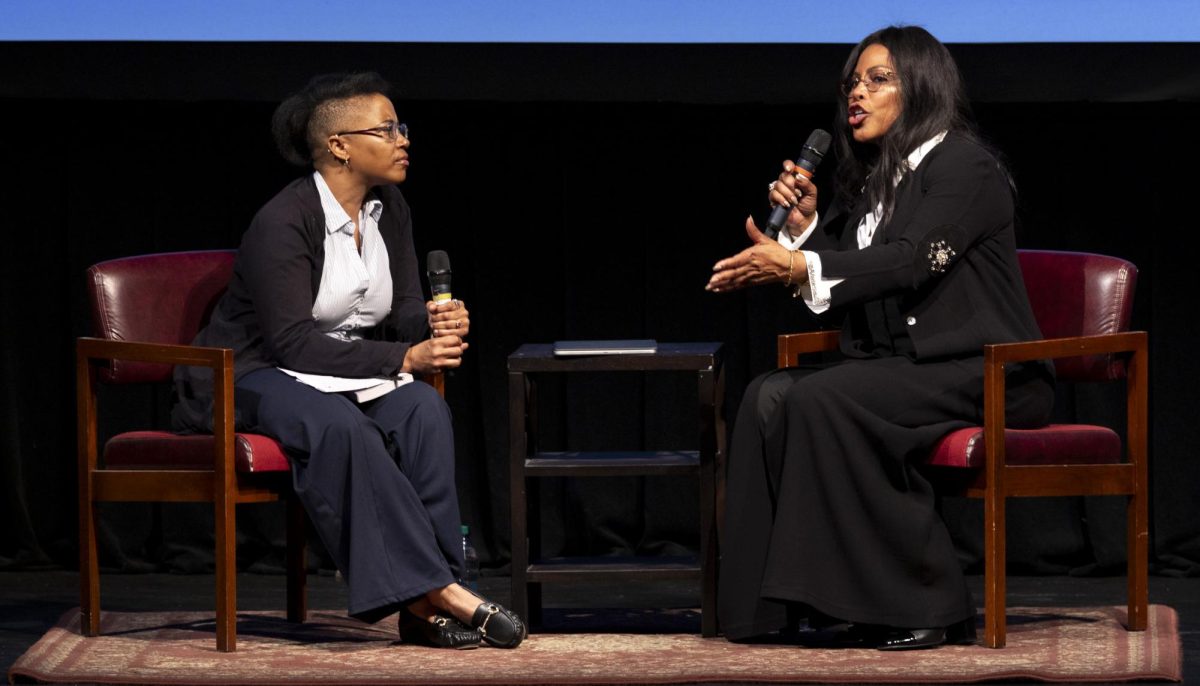
Doss said that through her work, Ilyasah Shabazz focuses on her father’s devotion to “gaining light” from all the people of African descent.
“I think the impact is going to show that (this is) a more suburban community and yet it still has a commitment to diversity and the promotion of human rights,” Doss said.
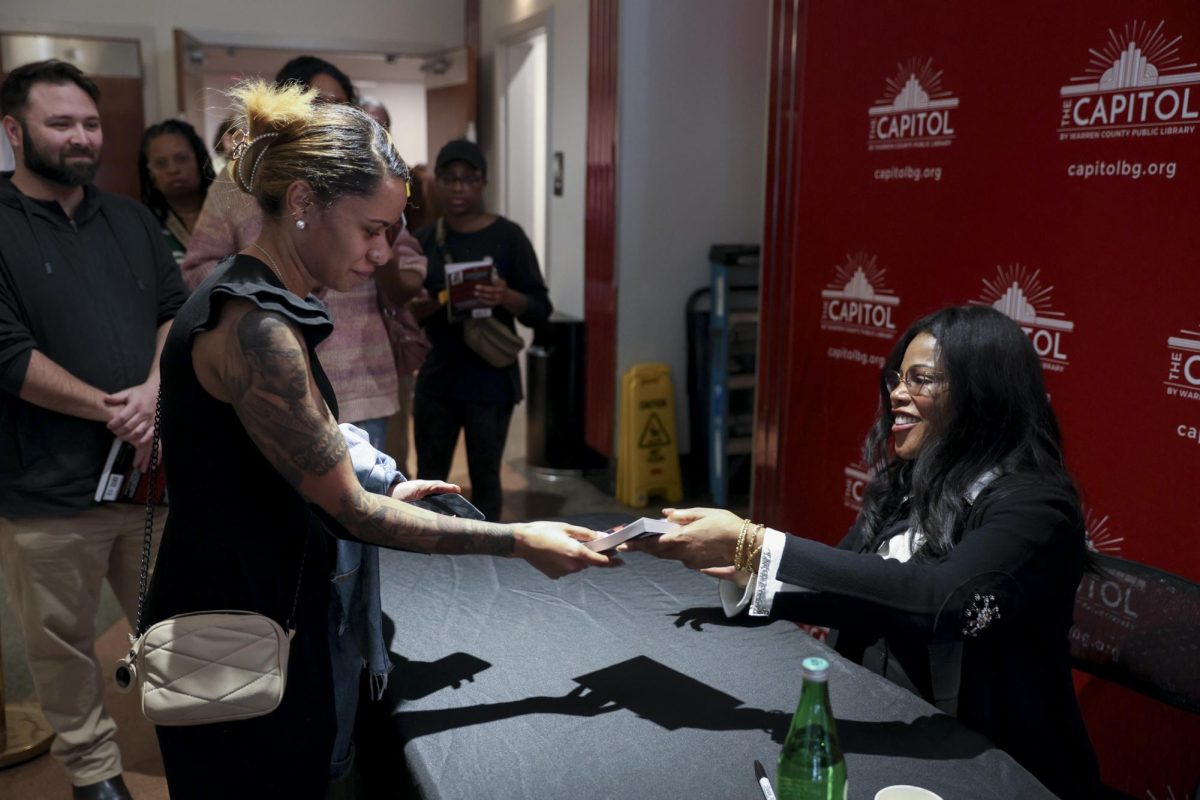
After the event, Ilyasah Shabazz opened up the lobby of the Capitol to speak with and autograph books for audience members.
She said that it was refreshing to be together in a space with others where “you feel seen and you feel safe.”
“It was really warm, encouraging, it was really beautiful,” said Ilyasah Shabazz. “You can feel the sense of community.”