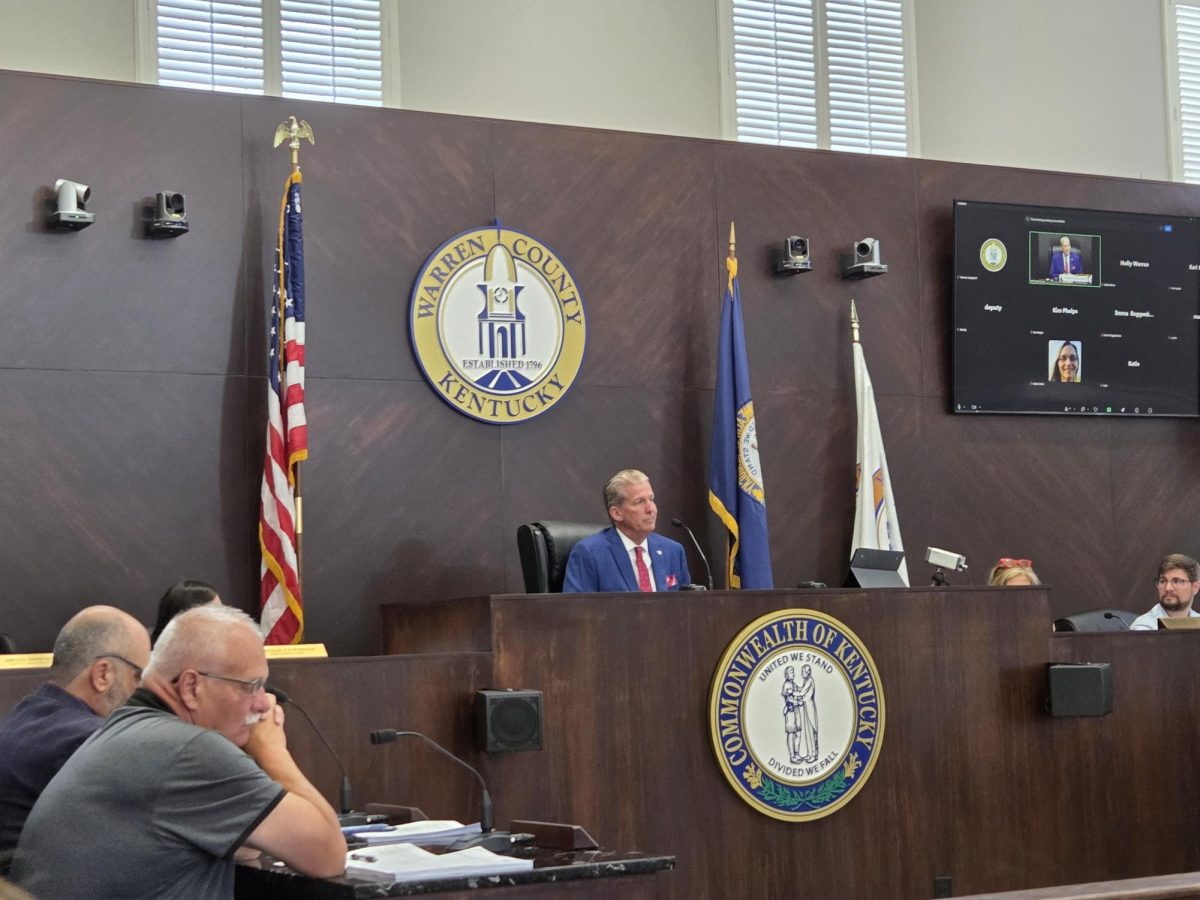
The Commonwealth of Kentucky and the City of Bowling Green declared April 28, 2026 as “Bike4Alz Awareness Day.”
Members of the WKU community and government officials gathered in Centennial Mall on Tuesday to celebrate the Bike4Alz non-profit and proclamation. Patti Minter, on behalf of Governor Andy Beshear, and Mayor Todd Alcott presented the respective proclamations.
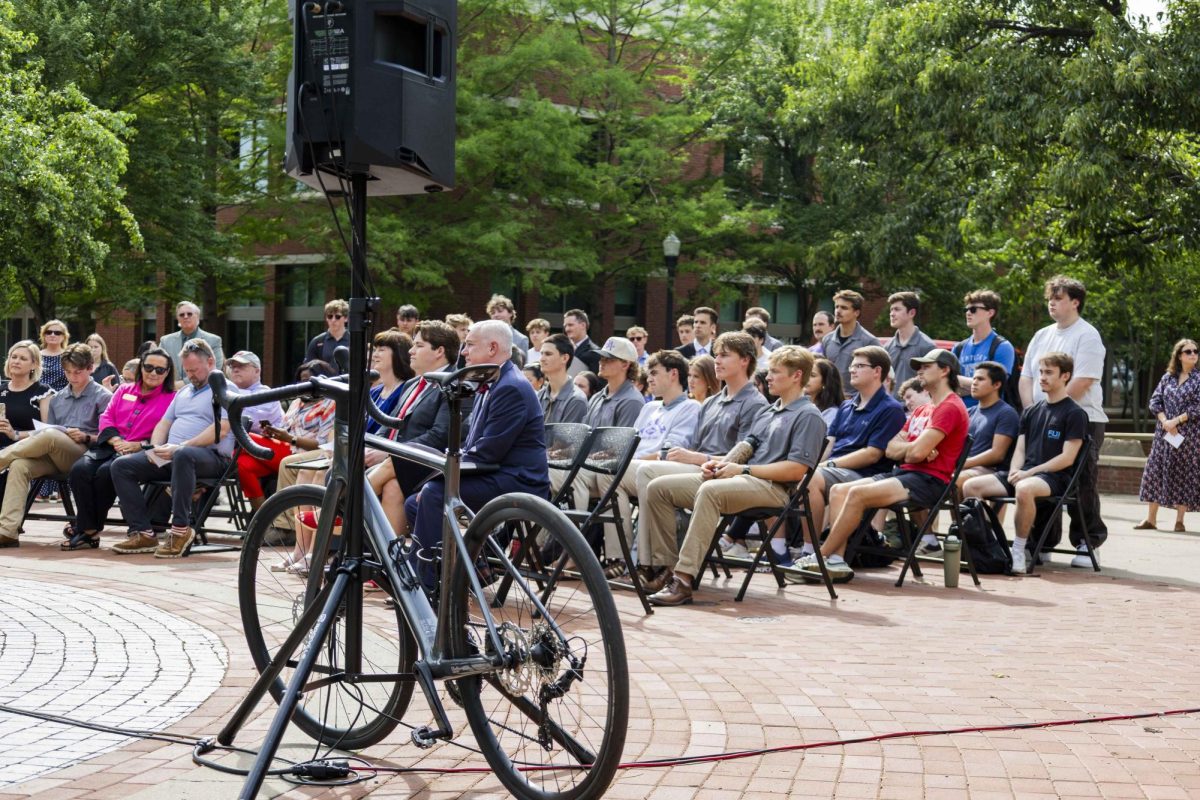
“Every mile you ride, every time you turn those pedals, you’re getting us closer to the day that we stand here and celebrate the end of this scourge that takes people from us,” Minter said.
Bike4Alz started in 2010 and was founded by Tyler Jury, an alumnus of the WKU Chi Eta chapter of the Phi Gamma Delta fraternity. The creation of the non-profit followed Jury’s grandfather’s passing due to Alzheimer’s, according to the Bike4Alz website. He, alongside five of his fraternity brothers, biked from San Diego to Yorktown, Virginia, and raised $60,000 for Alzheimer’s research that summer.
Each team following 2010 has had the same mission and the non-profit has raised over $600,000, according to the State of Kentucky proclamation. Team XIV, led by Bike4Alz Director of Ride Operations Miles Harvey, will set off on June 13, 2026 from San Francisco and bike to Virginia Beach, Virginia. Their tires will start dipped in the Pacific Ocean and end by entering the Atlantic.
“So many people throughout the nation are affected by this horrible disease,” Harvey said. “We’re really just trying to make an impact on those people.”
Members of Bike4Alz Team XIV and the WKU community shared their stories relating to Alzheimer’s, dementia and neurodegenerative diseases at the event.
Harvey lost his grandmother to Alzheimer’s in 2018 and witnessed her lose the memories of her family members and loved ones. He said it left an impact on him, his family and everyone who knew her.
He said the passing of his grandmother is part of the reason he is riding this summer, alongside ensuring that no other people have to go through the pain of Alzheimer’s.
Dean of the College of Health and Human Services Tania Basta’s father-in-law, William Basta, was a pulmonologist in Glen Cove, New York. He graduated as a first-generation college student and went on to ensure that his two younger brothers and four children attended college. Tania Basta recalled that he was always eager to learn something new and took to intellectual discussion.
William Basta’s wife, Martha Basta, received a call from the ER where he worked because they “thought he was drunk” and was acting erratically around a patient, Tania Basta said. He denied being drunk and was brought in for neurological testing. The tests confirmed that he was living with Alzheimer’s.
“While many were saddened, many were not surprised,” Tania Basta said.
William Basta’s mother lived with Alzheimer’s and lived “well into her 90’s,” though she never spoke a word the last five years of her life, Tania Basta said. Martha Basta went on to care for her husband at their home against the wishes of her children.
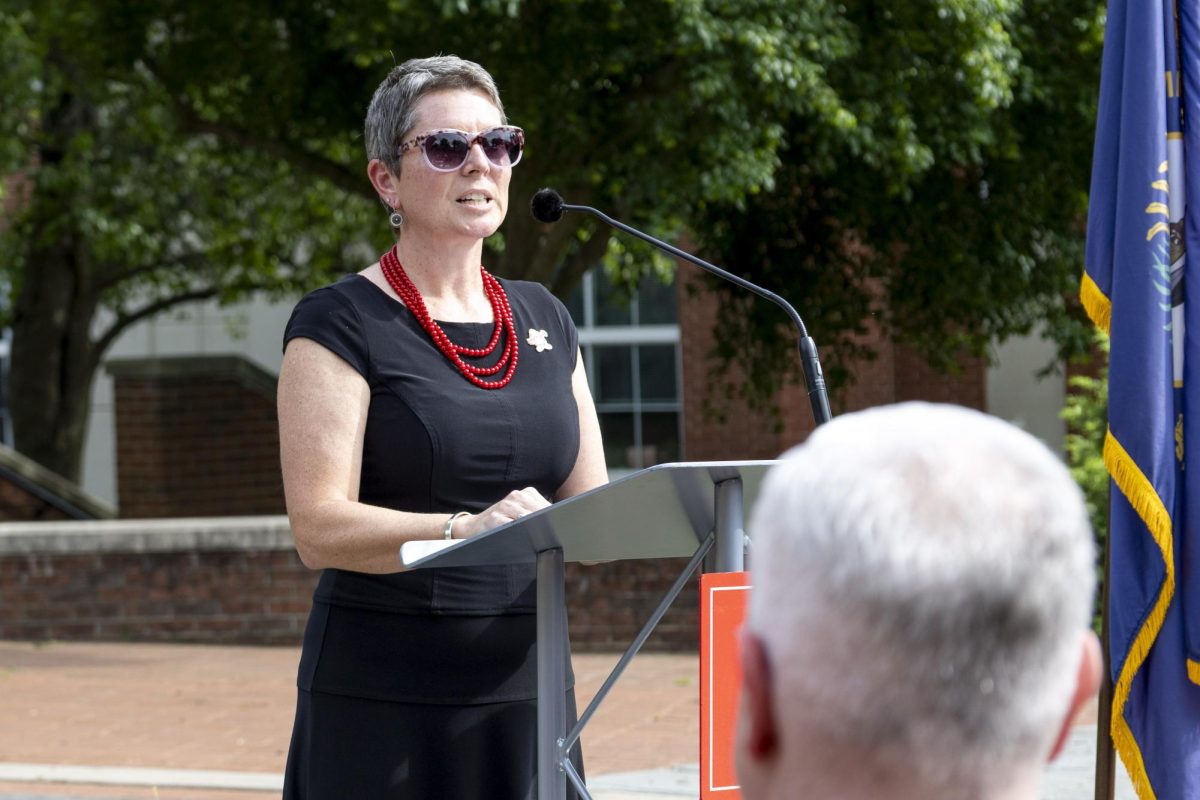
“It was just too much for one person to do alone, and yet she did it,” Tania Basta said.
Martha Basta stuck by her husband’s side as he would make scenes in grocery stores and often get confused, Tania Basta said. Many who knew him but not of his condition would see him in this state brought on by Alzheimer’s, and Tania Basta said it broke Martha Basta’s heart.
William Basta died at the age of 74 in August of 2019, stripping him of his intellect, dignity and ability to interact with others, Tania Basta said.
“It is equally and more challenging for their loved ones and caregivers, who often suffer from what’s called ambiguous loss,” Tania Basta said.
Tania Basta defined ambiguous loss as when their loved one physically looks the same, but not mentally. It results in “providing no closure for their loss,” Tania Basta said before thanking the Bike4Alz’s team for their efforts.
WKU SGA’s Student Body President-Elect and member of Phi Gamma Delta Caden Lucas took the stand following Basta’s remarks to share his experience with Dementia and Alzheimer’s.
Lucas’ grandfather was diagnosed with dementia in 2016 before passing in 2018. Lucas described the two-year time period as watching the man who helped shape his life slowly become someone he could no longer connect to.
Lucas’ grandmother was then diagnosed with Alzheimer’s three years later in 2021 before passing in 2025. Lucas said his family was then again forced to face the realities of slowly losing a loved one and has never been the same since.
“This is what this disease does,” Lucas said. “It doesn’t just take a person. It separates them from the people who love them most and creates a barrier that feels insurmountable.”
Lucas said he watched his parents “learn how to parent” their parents and make “impossible decisions” that would carry emotional weight. Lucas was “only a kid” while his parents were making these decisions and didn’t always know what to say or how to help.
When people at his church or in the community would ask how his grandmother was doing, he said the answer never changed: “about the same.”
“Not because nothing had changed, but because, with Alzheimer’s, there really isn’t any getting better,” Lucas said.
Lucas recalled a “slow, gradually painful” adjustment to a “new normal” instead. Lucas now remembers who his grandparents were before the disease: “full of life, full of love and as the people who built our families.”
“While I’m not riding, some of my greatest friends in the entire world — all of them my fraternity brothers — are riding for me,” Lucas said. “That means more than I can put into words.”
Bike4Alz Team XIV Events Coordinator Jakob Barker gave the closing speech for the proclamation event and spoke of his grandmother.
Barker’s grandmother was born in Kenya in 1933 and went to school at the Rift Valley Academy where her parents served as missionaries. She went on to spend time in Africa, England and the United States — among more — and “set the standard” for servant leadership, Barker said. She went on to settle in Tokyo, Japan alongside Barker’s grandfather and raised Barker’s father.
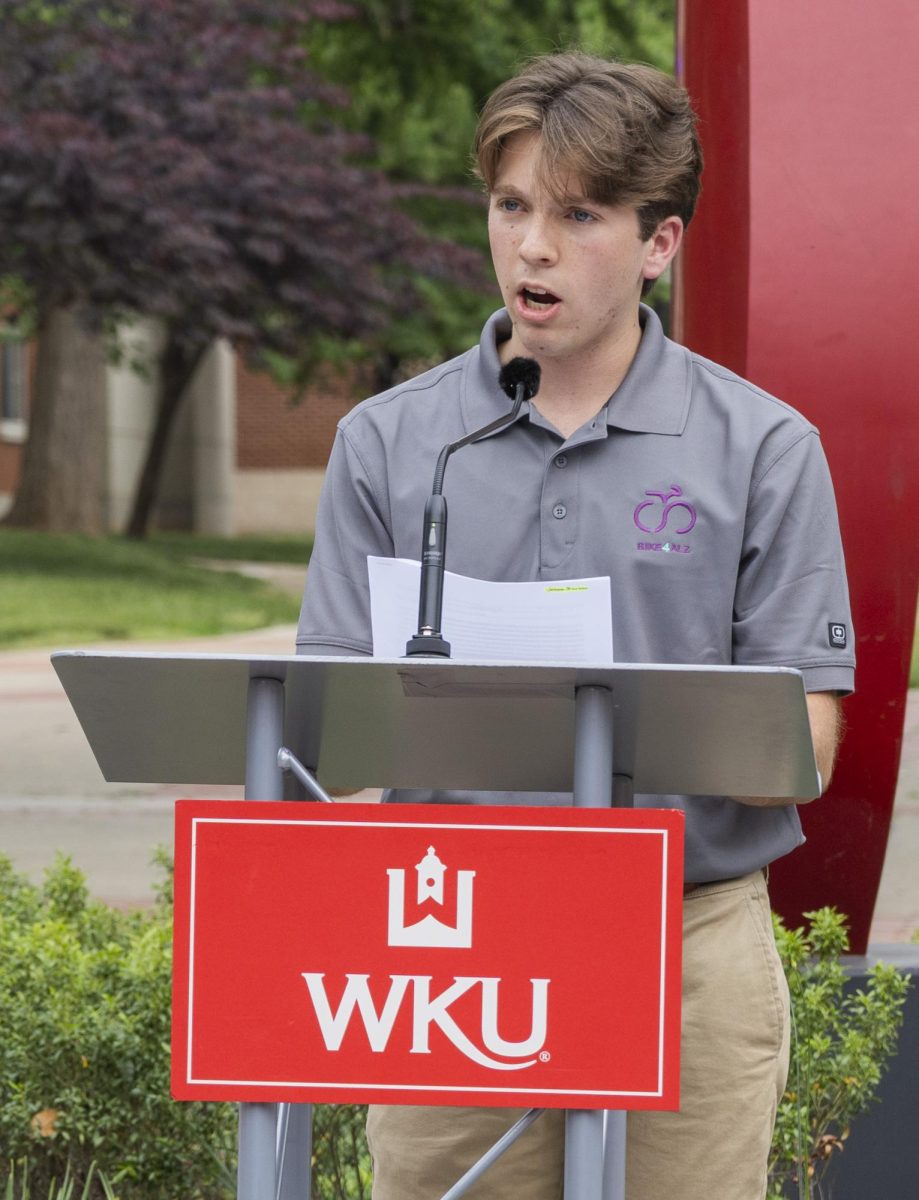
Barker’s grandfather passed away in 2021 and since then, his grandmother has developed a white matter disease that has impacted her ability to remember the small details. The disease worsened recently and she no longer remembers some of her children’s names. She often forgets Barker’s.
However, Barker feels fortunate that his grandmother has remained “pleasant and gentle” despite the disease, but recognizes that is not always the case.
“Someday, the work that we do in our lives will be forgotten — even by ourselves,” Barker said. “Bike4Alz is on a mission to change that.”
Barker, alongside Bike4Alz Team XIV Events Coordinator Alex Compton, will be responsible this summer for organizing the events that take place along the team’s trek. The team plans to table along the journey and visit care centers across the nation to share their story, spread awareness and raise money for Alzheimer’s research.
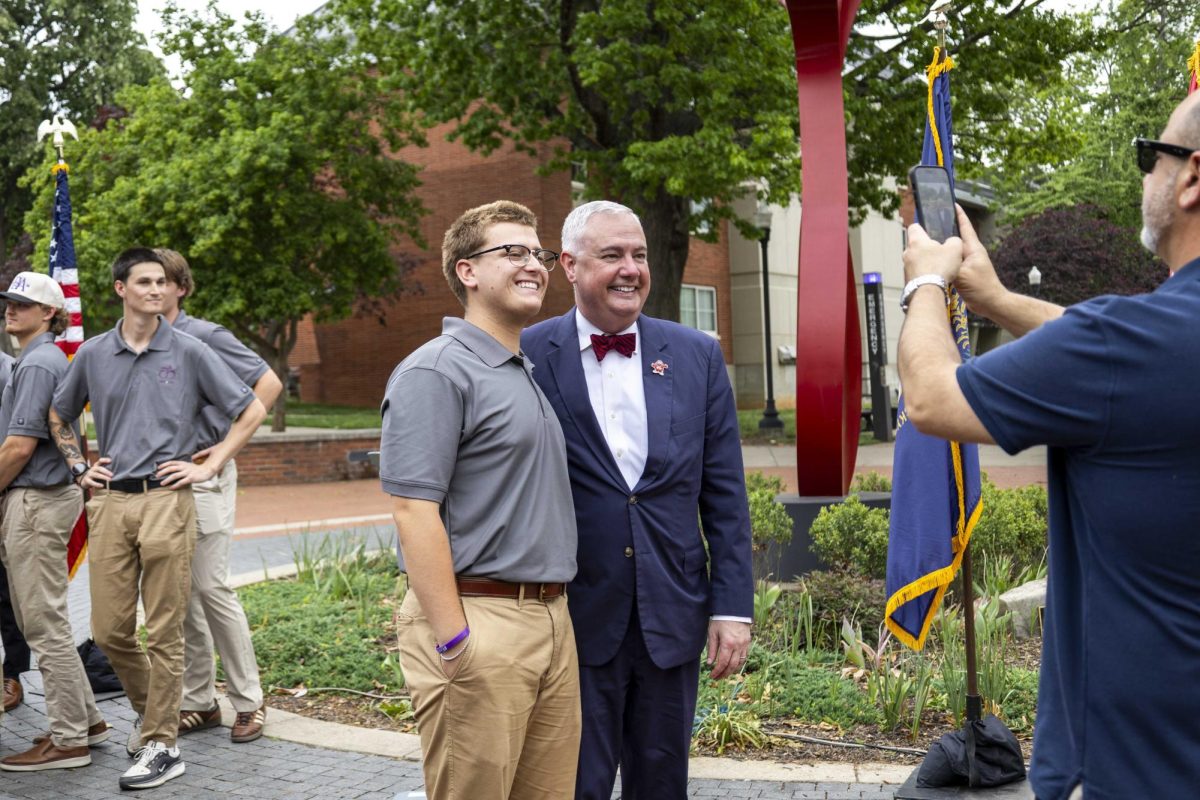
Barker said the goal this year for the non-profit is to raise $150,000 for Alzheimer’s research.
“To see so many people here and to see the community that’s been built up, it really shows that this is not about biking across the country,” Barker said. “It’s about changing lives.”