Editor’s Note: The story has been edited to correct the clarification in parentheses at the beginning of Barry Brown’s quote from data centers to the regulations.
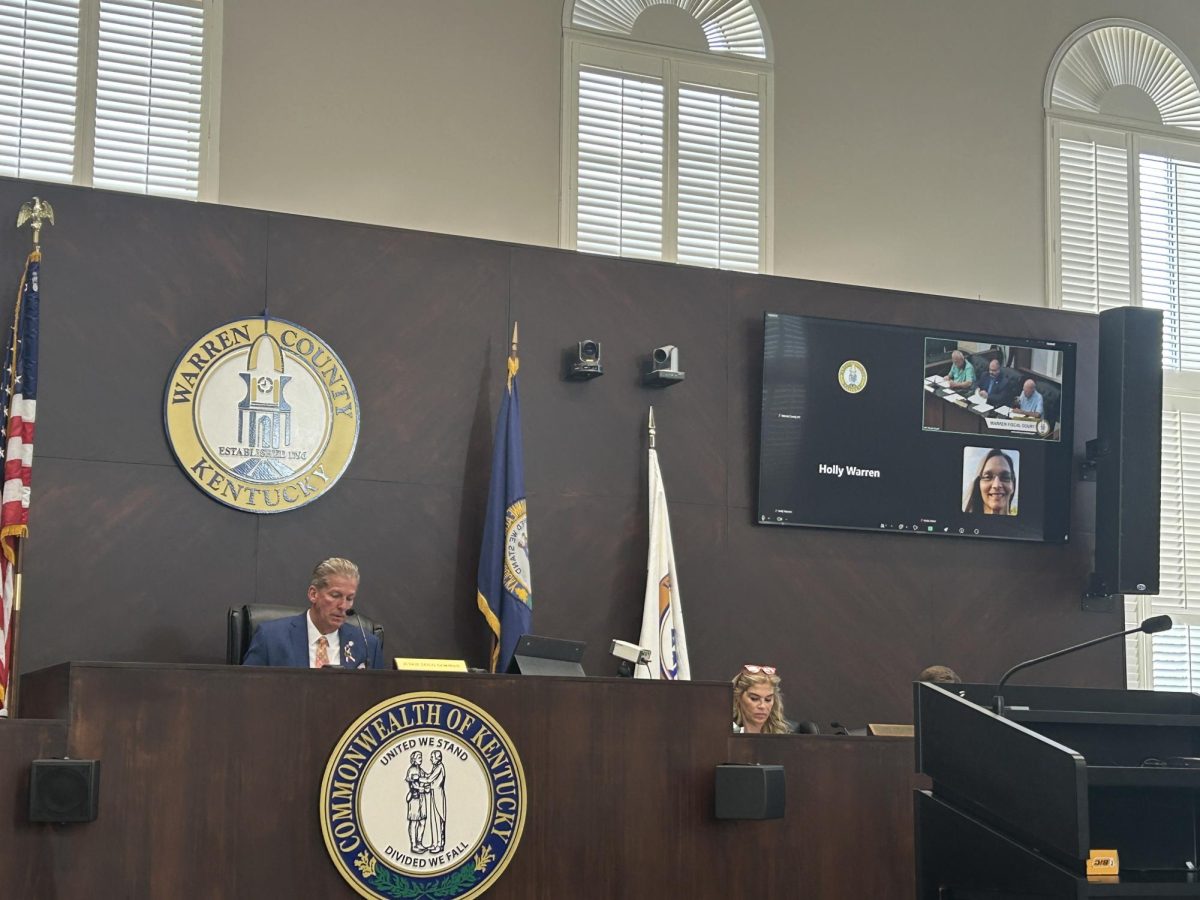
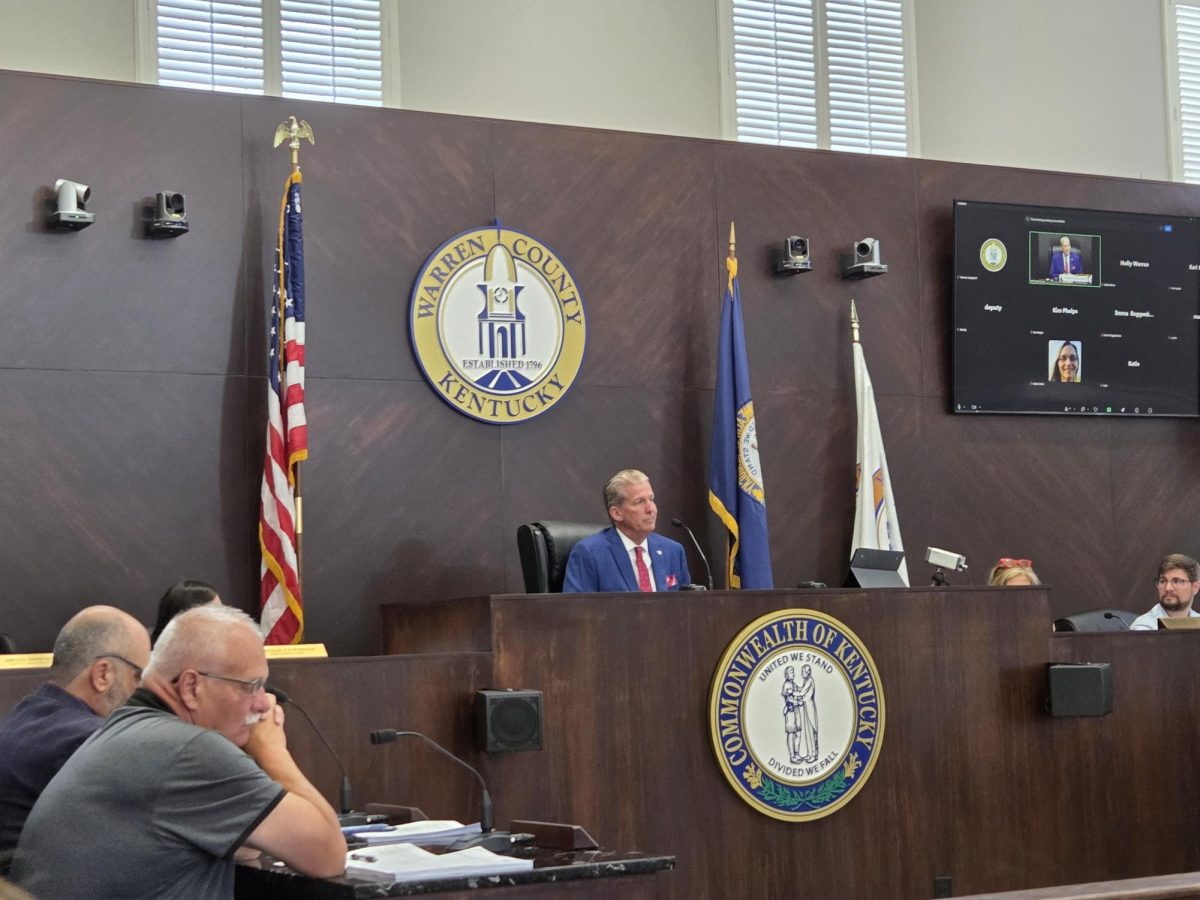
The Warren County Fiscal Court approved the first reading of a zoning ordinance aimed at discouraging data centers from setting up shop in Warren County.
The ordinance, drafted by the City County Planning Commission over the past eight months, was first brought up at the June 2 Bowling Green Board of Commissioners meeting alongside a proposed six-month moratorium on data centers. While the moratorium was voted down by three members of the board, both the city board and the fiscal court unanimously voted in favor of the ordinance.
“The goals of this event, from day one, were not only to protect the residents, but also to protect our infrastructure,” said Warren County Judge Executive Doug Gorman. “There’s a finite amount of anything, and the last thing we’re going to do is affect future growth.”
The zoning ordinance was developed to regulate data center development in Warren County through restrictions on worries like design, location and water systems. While the moratorium would’ve prevented data centers in the area for six months, Gorman and other officials questioned if it could deter business and development while leaving the county open to further action by data center companies.
“We want to do it legally, we want to do that the right way, and I sure don’t want to go to court and lose,” Gorman said before the court, referring to the recent lawsuit between the city of Cave City and a potential data center developer.
Before voting, Gorman and the rest of the fiscal court took time to go over the proposed regulations, explaining the reasoning behind preferring it to the moratorium.
“Warren County is going to have the gold standard of ordinances for data centers in America, not just in Kentucky,” Gorman said. “There’s clear requirements for location, design, utility protections and decommissioning.”
Following the voting, audience members were welcome to ask questions and give comments regarding the ordinance. A wide variety of Warren County residents took the stand, many applauding the efforts of the committee and court while expressing continued worry and pushing for further restrictions on data center impacts, such as noise.
“You’ve come up with a great set of regulations, but we need to feel it too, we as a community,” said resident Ron Kistler, who received many claps from the audience during his speech.
Among those watching the speakers at the fiscal court meeting was Barry Brown, a candidate for third district magistrate. As a potential future elected official, he knew he wanted to be present to listen and learn about the ordinance process.
“I’m big on accountability and transparency,” Brown said. ‘“Today we found out they’ve been talking about this for eight months, but it hadn’t come to the public right until last week.”
Though he feels the regulations are a step in the right direction, the lack of public input and education regarding the ordinance was a concern of his.
“(The regulations) might be the best thing in the US, but if we’d educated the public over the last month or two, we wouldn’t be having this resistance that we saw last night,” Brown said.
The night before, Brown and other Warren County residents attended an urgent meeting held by SOKY Indivisible regarding the moratorium the city commissioners voted against.
Eileen Starr, a member of the SOKY Indivisible leadership team, was watching the Board of Commissioners, unaware that the topic of data centers would be contested. After seeing the outcomes of the meeting, she and other members decided to convene.
“We decided we needed to do something because of the harm that could come to the city or the county without the knowledge of the voters,” Starr said.
During the gathering on Wednesday night at the Bob Kirby Branch, attendants sat to watch the documentary “Exposing the Dark Side of the American AI Data Center Explosion” and discussed how to make their voices and opinions heard regarding data centers.
The documentary provided a look into the growth of data centers throughout the United States, explaining the logistics behind how they operate and touching on the impacts of centers on residents and the environment. As they watched, many people sighed and shook their heads at the images of box-like buildings behind suburban neighborhoods.
“I felt so sorry for that, that family that had the data center so close to where they lived in Virginia that they had to move their bedrooms down to the basement,” Starr said. “That’s wretched.”
Following the documentary, people were able to ask questions and discuss their thoughts regarding the board’s decisions on data centers. However, SOKY Indivisible wanted to use the meeting to do more than that.
“We don’t need that money bad enough to ruin our quality of life,” Christy Severns, a member of SOKY Indivisible leadership said during the meeting. “Let’s talk about what we can do.”
For the rest of the meeting, Severns helped organize sign-up sheets for volunteers ready to combat data centers. She asked for people interested in attending the next Board of Commissioners meeting in and outside of the city hall, as well as those wanting to pass out flyers, speak to the press and email elected officials.
Many were also encouraged to make their voices heard at the fiscal court meeting, with members showing up both in person and over Zoom Thursday morning.
Bowling Green resident Alison Forte, who decided to put her name down, said she decided to get involved after seeing the citizens of her former home Franklin fight against data centers.
“You have to incorporate the people in your decisions,” Forte said. “This is our land. It may belong to a company, but we’re the ones who live there and use resources.”
Although she is 71 years old, Forte considers herself to have plenty of time left to make sure her children and grandchildren don’t grow up in a place run by “big tech.”
“This is the bedrock of democracy right here,” said Forte. “This is having a community meeting with people who want to protect what we have together. It’s the most important thing.”