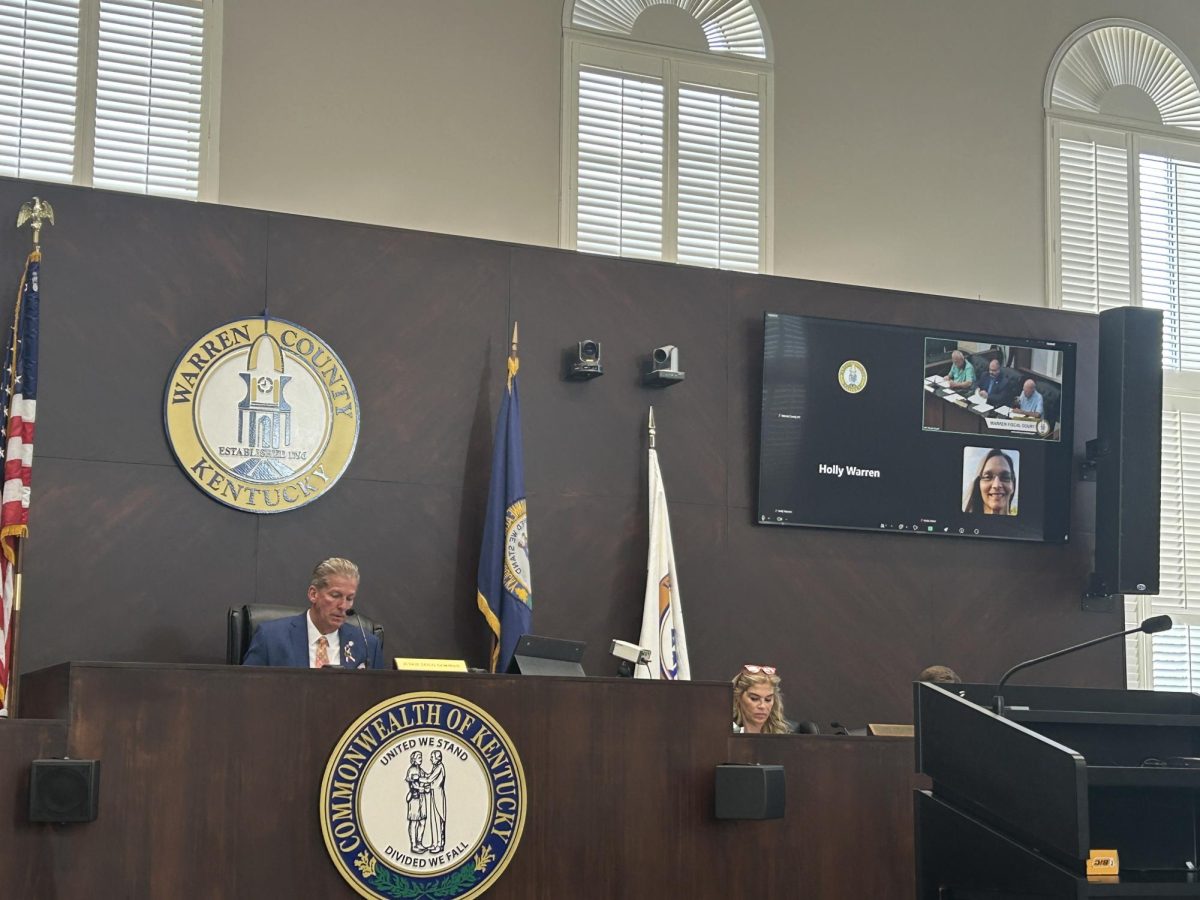
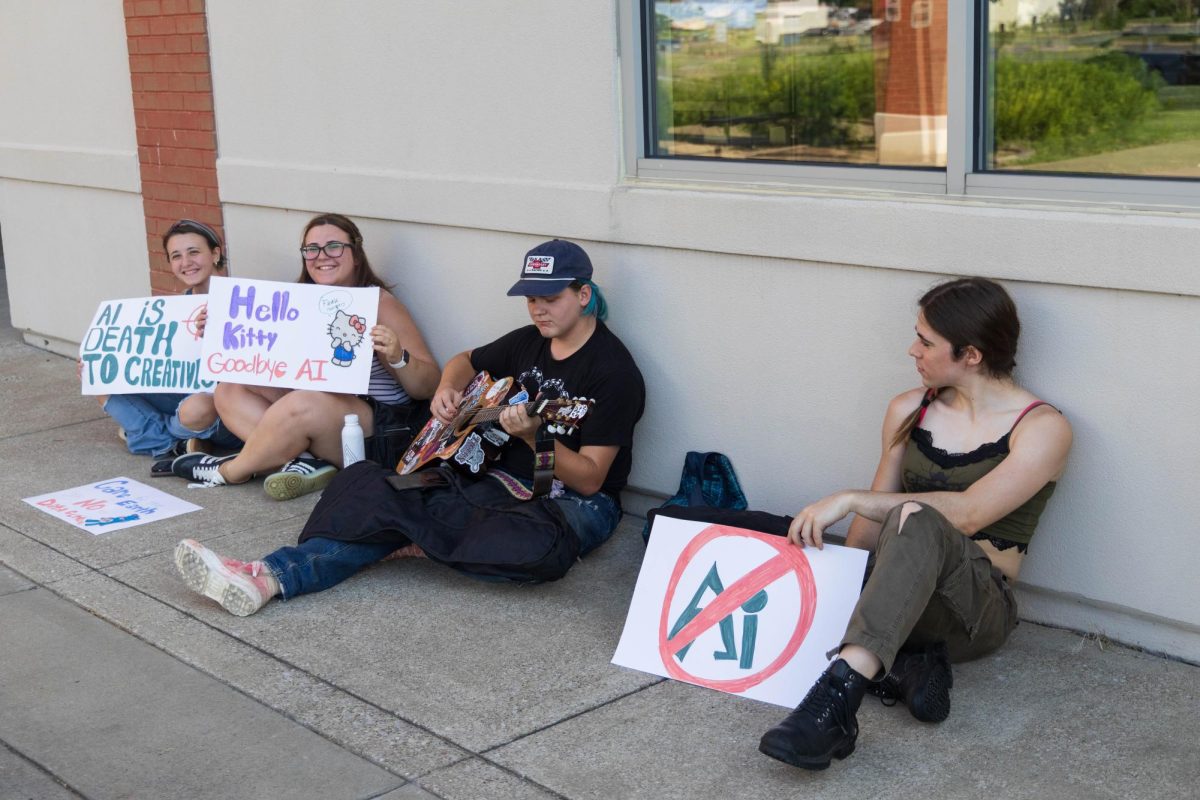
The sounds of chants and honking cars from protestors permeated into the Board of Commissioners meeting room as they discussed the future of data centers in Bowling Green.
The Board of Commissioners unanimously approved the data center regulations, which primarily restrict land and water use. Following public comments, Commissioner Dana Beasley-Brown asked for the moratorium to be put back on the agenda. Mayor Todd Alcott and Commissioners Melinda Hill and Sue Parrigin again struck it down.
A moratorium would be a six-month pause on any development or planning for a data center. Citizens of Bowling Green filled the meeting room to occupancy as over 34 community members spoke in favor of a moratorium and addressed their concerns with the newly approved regulations.
“Our responsibility is to not avoid decisions; it is to make them,” Alcott said following the commissioners’ comments on the regulations. “What we are doing is protecting our community by adopting clear ordinances that establish safeguards. The standard we are establishing is simple.”
So many community members came to the meeting that people had to watch on a television from the lobby of City Hall as the room was full.
“Everybody I know, across every demographic, age, political affiliation and religious affiliation, wanted that six-month moratorium, because they’re scared,” Patti Minter, former state representative and chair of the Warren County Democratic Party, said.
The regulations include restricting data center construction from happening at least 1,500 feet from a residential district and 500 feet from any property line. The regulations also require a closed-loop system that recycles water to limit use.
The regulations also require that data center companies must have a utility and infrastructure plan approved by utility companies that serve the site.
As it stands, no regulations directly address noise pollution, and many fear an increase in their energy bill due to the amount of electricity needed to run a data center.
Members of SOKY Indivisible, the Bowling Green chapter of the Indivisible grassroots movement that hosts public events for political activism, gathered outside.

“There may be a data center company that is a good fit for Warren County, Bowling Green, but as the ordinances stand now, there’s no protection for the community,” Brenton Hippler, a member of SOKY Indivisible, said.
Bowling Green resident Laura Millikin used her allotted three minutes to speak about three different places she’s lived in, all struggling with the negative effects of local data centers.
“They range from the poor African American community of Boxtown in Memphis, all the way to Loudoun County, which is the most affluent county in the country,” Millkin said during the meeting.
She said she decided to speak about the impacts of data centers on those communities to show the perspectives of those who have “walked this path,” using direct quotes from affected residents in her speech.
“I wanted them to understand when you come home from work, and you smell rotten cabbage, and then you can’t go to sleep because there’s too much noise outside, that’s impossible to live with,” Millikin said, referencing various effects of data centers observed by the community residents.
As someone who hadn’t previously attended a city commissioners meeting, Millikin felt that the energy was incredible. Throughout the meeting, claps, chants and boos could be heard by the community both outside and inside the room.
“Everyone’s passion and eloquence and research just made me so proud of Bowling Green,” Millikin said. “To see people come together, and for the most part, politely have civil discourse, it was really impressive. It made me like glad to be like an American (and) part of the process.”