Editor’s Note: This story was originally published in volume 101, issue 5 of the Herald’s magazine.
The Collegiate Housing Foundation will soon own all WKU dorms in a first-of-its-kind deal for both organizations.
The move is a milestone for the nonprofit organization, founded in 1996, which has never acquired all the housing on a single campus. The most dorms on a single campus owned by the Alabama-based Collegiate Housing Foundation are five of the 53 dorms at the University of California, Irvine. Of the 53 universities partnered with the Collegiate Housing Foundation, 42 host just one dorm owned by the foundation. Across the 53 universities, the foundation has completed 70 projects.
Legislation to formally approve the change in ownership is working its way through the Kentucky General Assembly.
If the acquisition is passed and the group completes its proposed construction plans — and assuming no other dormitories close in the meantime — WKU will be the third-largest entity in the Collegiate Housing Foundation’s portfolio, with 4,176 beds across 10 dorms.
UC Irvine ranks first with 7,681 beds across five dorms, and the University of California, Davis, comes in second, with 4,713 beds across two dorms.
A Feb. 20 WKU press release said the new housing plan would cost “approximately $350 million.” The project is listed on Gilbane’s website, WKU’s private dorm partner, at “more than $300 million.” Either figure would put WKU in the top five most expensive campuses for the nonprofit.
Currently, the three most expensive student housing developments owned by the Collegiate Housing Foundation are the University of California, Riverside, for $320.9 million, UC Irvine for $765 million and UC Davis for $794 million.
WKU’s three newest dorms were shut down in the last two years following the discovery of structural failures.
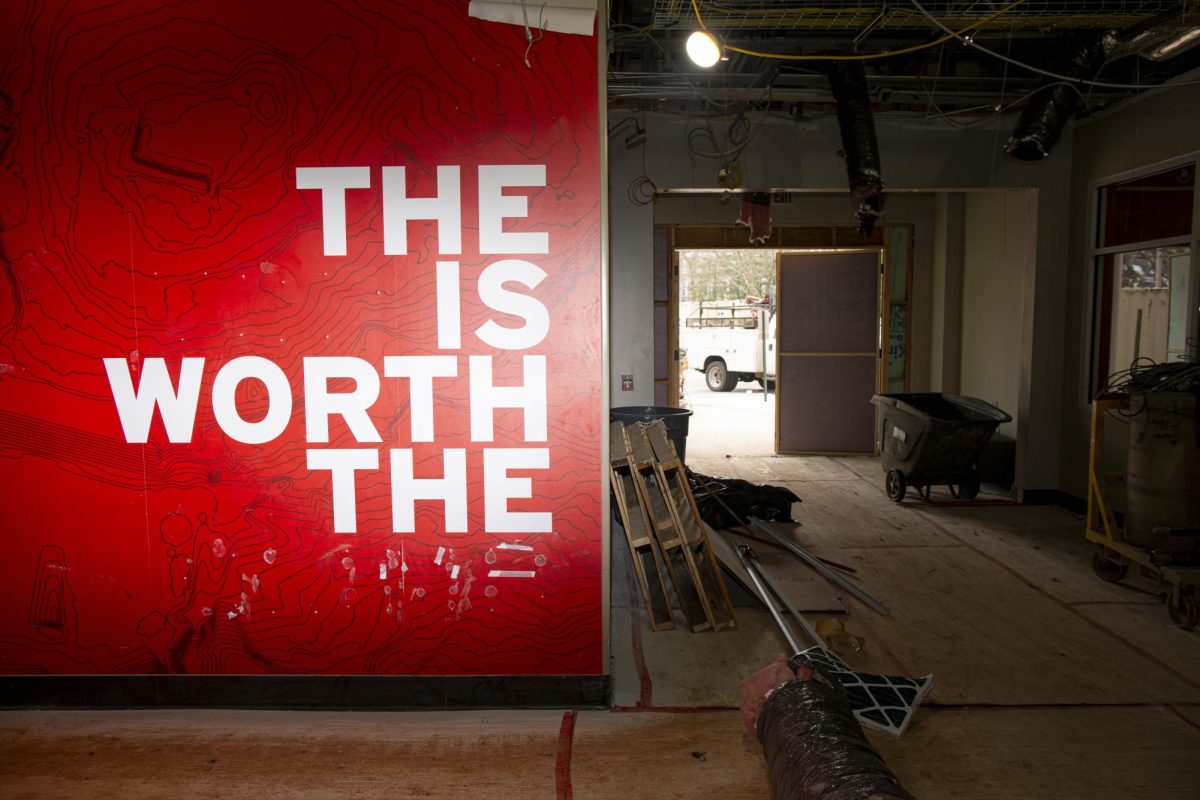
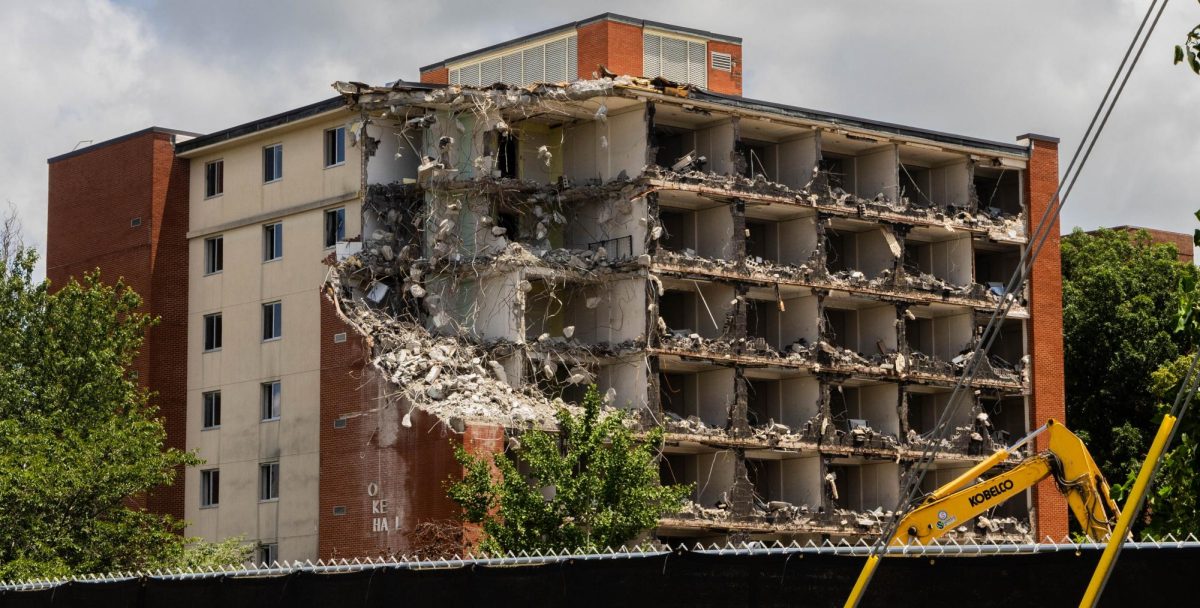
Hilltopper Hall was the first built and first to close. The 400-bed dorm opened in 2018 for $40 million. In 2024, it was abruptly shuttered and is set to be demolished “the day after graduation,” WKU President Timothy Caboni said at a Feb. 3 press conference. Demolition will cost an estimated $2.1 million.
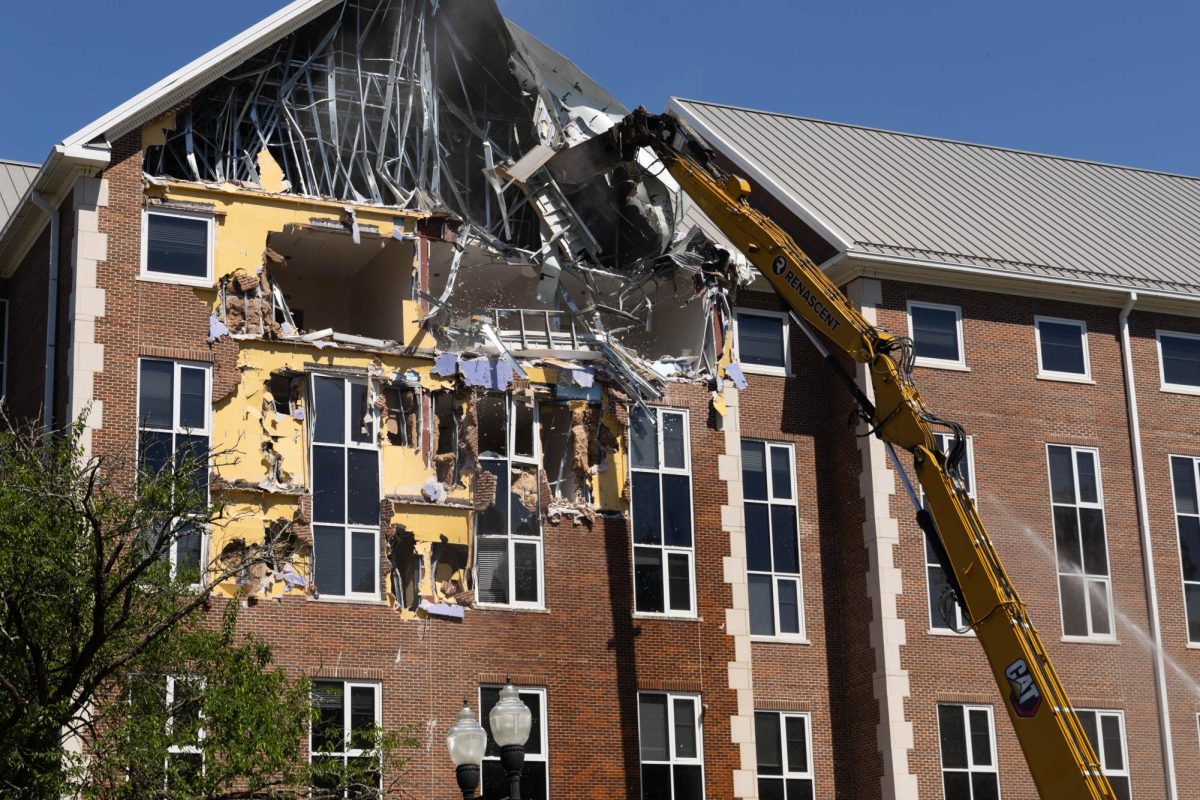
Normal and Regents halls, which house a combined 635 beds in First Year Village, opened in 2021 for $48 million. They shut down in May 2025 for repairs and are currently scheduled to reopen in fall 2027.
The Student Life Foundation, established by WKU in 1999, is the current owner of WKU’s dorms.
Former WKU President Gary Ransdell established the SLF to expedite the renovation of WKU’s aging dorms and keep the associated debt off WKU’s books.
The SLF also ensured money generated by housing was only used for housing, Ransdell said.
Ransdell said “most campuses” that needed to quickly improve dorms have made similar moves.
The SLF has been issued a $55 million bond with room for a 10% increasing adjustment for the repairs in Normal and Regents halls. The City of Bowling Green is acting as a conduit for the bond, and no debt will be reflected on the city, according to minutes from a Dec. 2 Board of Commissioners meeting.
All three dorms were closed after structural analyses — the first ever done on the residences — determined the buildings were uninhabitable. Hilltopper Hall was open for six years before its first analysis, and Normal and Regents were open for four.
In response, WKU entered a $5.8 million pre-development agreement with Rhode Island-based international real estate company Gilbane to operate, manage, renovate and construct all of WKU’s dorms. The contract was announced at the Dec. 11 Board of Regents meeting.
Gilbane was founded as a carpentry firm in 1870 and has grown into a multinational company that generated $7.7 billion in 2024, according to its annual report. Gilbane has public-private housing partnerships with 10 other universities.
Alongside the Collegiate Housing Foundation, Gilbane will collaborate with Inwood Management, Capital Markets, CenTrio, Mackey Mitchell Architects, Structural Design Group, Broeren Russo Builders Inc., Element Design and Keer-Greulich Engineers Inc. on the project.
Keer-Greulich Engineers is the only collaborator based in Kentucky. The firm has worked on Downing Student Union, Houchens-Smith Stadium and the Soccer/Softball Complex.
University Spokesperson Jace Lux said this is the Collegiate Housing Foundation’s first time working with Gilbane.
Vice President of Marketing for Gilbane’s development arm, Stephanie Handfield, said Gilbane chose the Collegiate Housing Foundation because “it is one of the nation’s most experienced nonprofit student housing organizations…”
At the Dec. 11 Board of Regents meeting, Caboni said that Gilbane’s “national expertise” and “good third-party oversight from outside organizations” factored into his decision to bring the company before the Board of Regents for consideration.
The agreement between the university and the foundation will last 40 years, after which the agreement can either be extended or the university can reclaim the dorms.
“Going the private developer route makes sense to me, and I would probably be doing the same thing if I were still engaged,” Ransdell said.
The Collegiate Housing Foundation’s President and Chairman of the Board, William Givhan, declined the Herald’s interview request and said he had “been asked to refer any questions to the university spokesperson, Jace Lux.”
The Collegiate Housing Foundation recorded $336 million in revenue and $3.21 billion in assets in fiscal year 2024. The foundation also reported $320 million in expenses and $3.39 billion in liabilities.
The two-phase dorm plan is slated for completion by 2030.
On Feb. 20, Caboni and representatives from Gilbane and Mackey Mitchell Architects unveiled renderings for phase one that depicted an over 300,000-square-foot facility with “over 1,000 beds,” across five floors, Caboni said. Gilbane’s website lists the project at 980 beds. The new dorm would replace Douglas Keen and Hugh Poland halls.
Phase two would replace Pearce-Ford Tower, McCormack, Gilbert, and Rodes Harlin halls with 1,400 beds. Construction is slated to begin in 2028.
Caboni said in an interview on Dec. 11 that the Collegiate Housing Foundation will take on the SLF’s debt and invest “$26 million or so in construction and renovation” as part of the initial $300 million to kickstart the dorm plan.
“SLF has pledged to cooperate and work with the University to complete the transfer, however it is ultimately arranged,” Tad Pardue, SLF legal counsel, said.