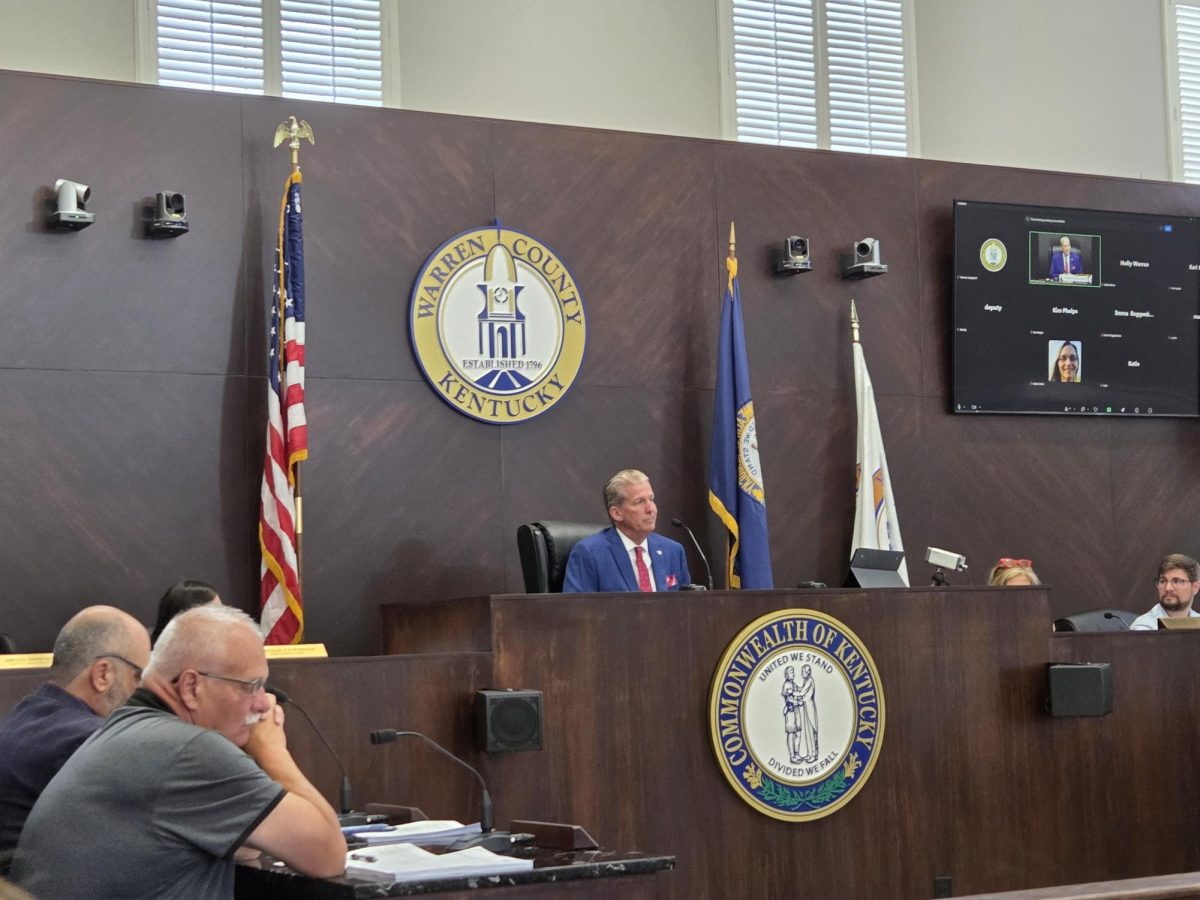
The Faculty Senate discussed questions and concerns related to House Bill 4 on Thursday with the WKU General Counsel and the Government and External Relations Officer.
HB 4 “prohibits a public postsecondary education institution from providing differential treatment or benefits on the basis of an individual’s religion, race, sex, color, or national origin,” according to the summary of the law.
Andrea Anderson, WKU general counsel, answered questions from faculty about HB 4 with Jennifer Breiwa Smith, assistant vice president of government and external relations.
Members of the senate raised questions and concerns about privacy and academic freedom in the classroom. Some faculty also had questions about specific language in the law, and how it could affect them and certain campus groups and organizations.
Anderson said the diversity, equity and inclusion related topics can still be taught in courses related to that content, but it must be taught neutrally and conflicting viewpoints must be presented. The university is not supposed to “indoctrinate” one idea over another, Anderson said.
Some faculty members had questions about this language during the meeting.
“I mean if you have something like slavery, slavery is bad,” a faculty member said. “Why would you have to present an alternative theory that slavery is not bad?”
Anderson said in that scenario, she’d might expect the faculty member to have some various readings on the topic of slavery.
Anderson said student organizations, aside from the Student Government Association, are specifically exempt from HB 4. She said “many student organizations are not affected at all” by the law.
SGA can still pass funds for organizations if the money goes toward a content-neutral group, Anderson said. She said the university is prohibited from providing any type of treatment for benefits to an individual based on race, color, national origin, religion or sex.
Anderson said HB 4 does not apply to recruitment in sororities and fraternities, athletic team eligibility, or shared facilities like the dormitories.
Anderson said religious organizations also are not required to allow “persons of any religious identity” to join.
Smith also talked with faculty about privacy concerns.
Smith said faculty should always be careful with sending messages because they can be used as public records. Emails are currently considered public records that can be requested by anyone, Smith said.
Smith said faculty text messages can not yet be requested as an open record. The Kentucky Supreme Court has been hearing arguments over whether public business conducted on a private device should still fall under the state’s open record laws, according to Louisville Public Media in September.
A lot of faculty members had questions about this law if it was passed. Some believed their personal devices and messages should be protected against open record requests.
Robin Ayers, senior mathematics instructor, said she thinks there is still a lot of confusion about the “dos and don’ts” of HB 4, due to the unclear language of the law. She said the faculty are told they have academic freedom, but it seems that academic freedom is still trying to be taken away.
“I think overall, there is still confusion because it seems like it’s still targeting certain groups of students,” Ayers said.
Ayers said she thinks those who presented to the Faculty Senate are doing the best they can to interpret the bill.
The Faculty Senate approved all committee reports.