Following the failure of Hilltopper, Normal and Regents halls, WKU plans to adopt a new public-private housing model, enlisting the help of a third-party organization.
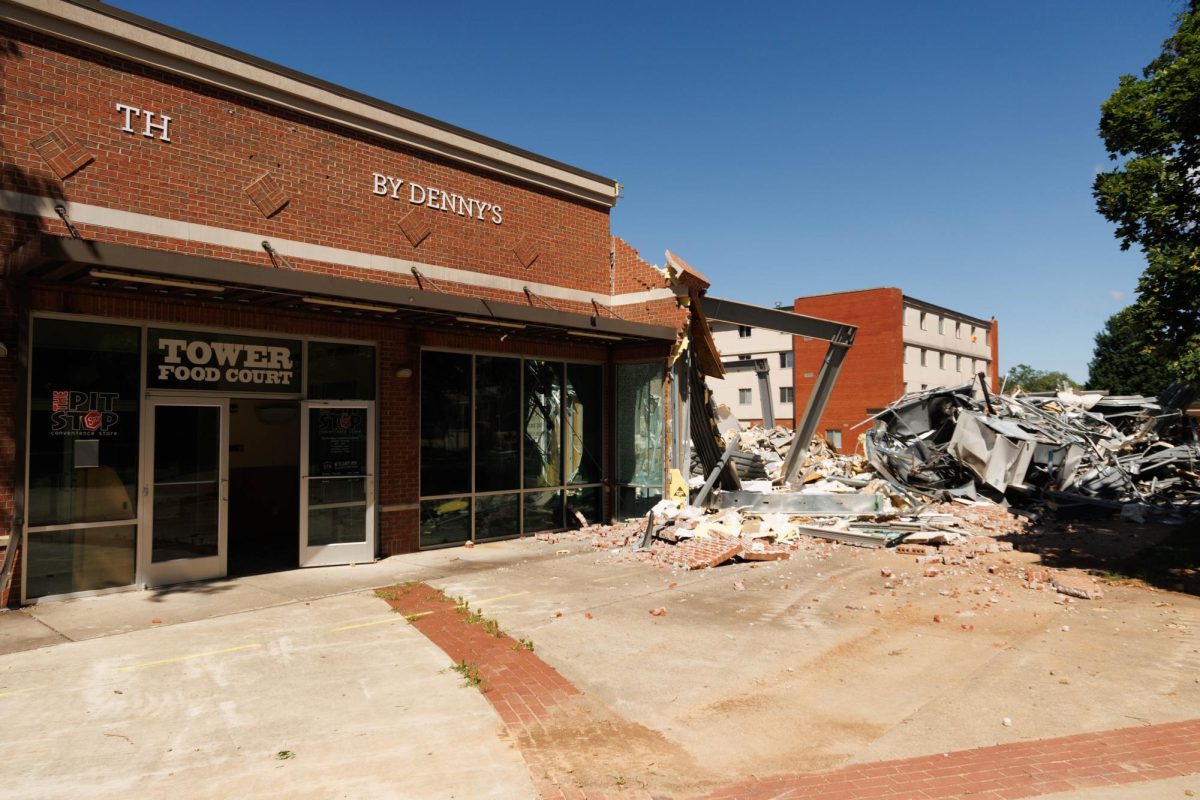
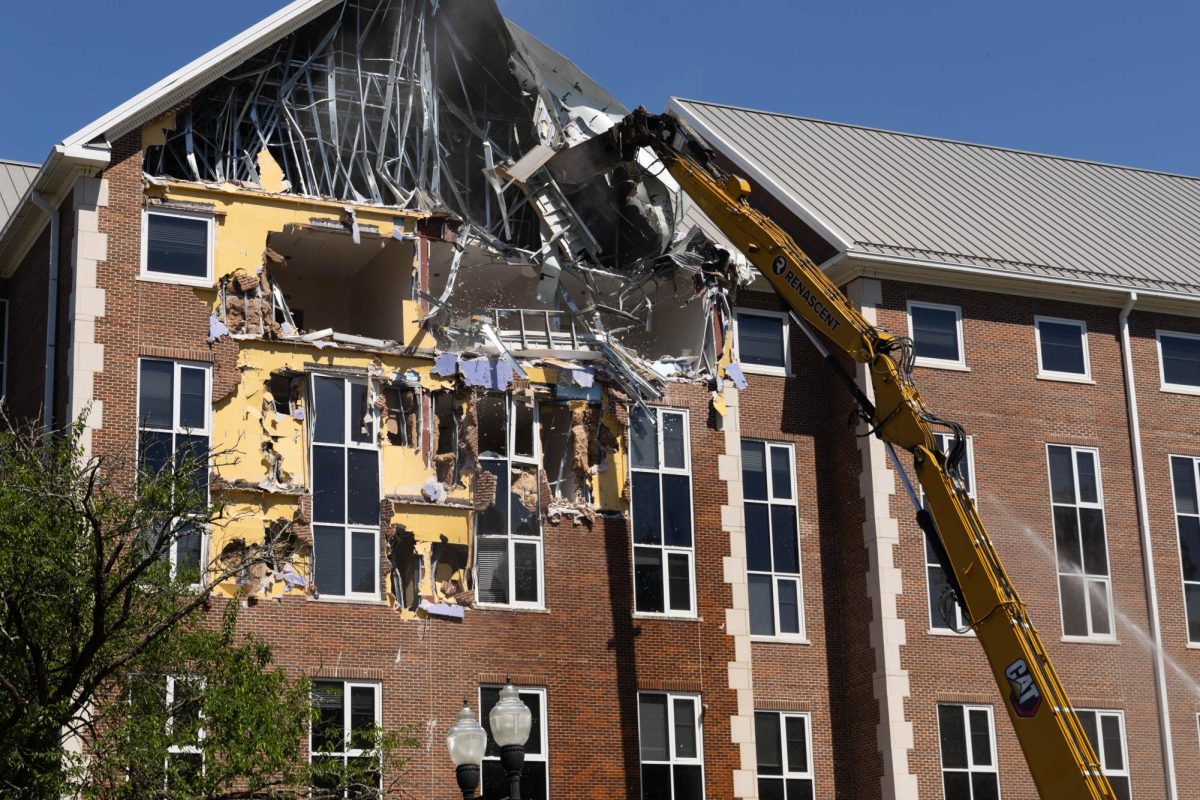
Hilltopper Hall, originally opened in 2018 for $40 million, was closed in 2024 and set for demolition as of May via a press release sent out by the Student Life Foundation.
The SLF is a nonprofit organization that was established under former WKU President Gary Ransdell. The SLF was established to take on the debt associated with dorm construction and renovation, as well as to expedite the construction process.
In the same May press release, the SLF announced the closure of Normal and Regents halls, which opened in 2021 for $48 million. The release also announced the conversion of the Hyatt Place Hotel to Center Hall.
Center Hall is on a lease of $125,000 to HPBG Investments LLC, and $25,000 to Prime Hospitality Management LLC per month for up to three years, with an $18 million purchase option.
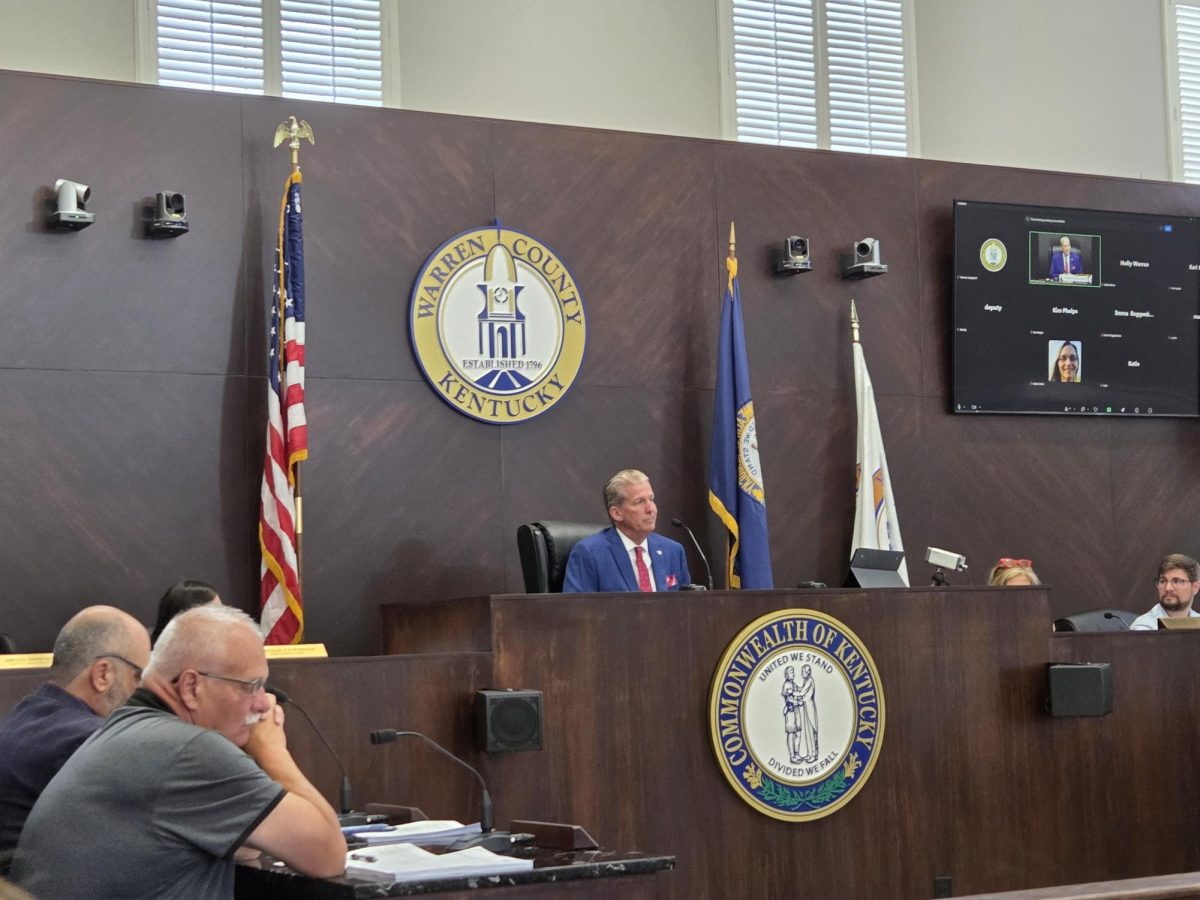
WKU President Timothy Caboni and Washington, D.C., based consulting firm, Brailsford & Dunlavey, Vice President Ryan Jensen and Senior Analyst Julian Sagatume announced the new housing model at a June 6 Board of Regents meeting.
“A large challenge requires an even larger solution, and we’re going to do that at this university,” Caboni said at the meeting.
B&D is currently under contract with the SLF until December 2025 for a total of $280,000 to help find a private partner who will assist in a 5-10 year plan to replace the majority of WKU’s oldest dorms.
The plan involves:
• Repairing and reopening Regents and Normal halls and tearing down Hilltopper Hall.
• Replacing Douglas Keen and Hugh Poland halls with new buildings, totalling 1,000 beds, to complete the First Year Village.
• Tearing down Gilbert, McCormack and Rodes Harlin halls and building a 1,400-bed “upperclassmen village.”
Beyond the initial 5-10 years, the university will address Pearce-Ford Tower, its largest dorm with 857 beds.
State Rep. James Tipton, a republican who represents Anderson and Spencer counties, serves as chair of the House Postsecondary Education Committee and said he has been in contact with WKU to stay updated on its housing situation.
He said he has observed public-private models as they work at other universities and he is not surprised it is something WKU would turn to.
“From what I can tell it is an effective way for universities to finance their dorm projects,” Tipton said. “I do believe they are more expensive for the students as most are much nicer than typical dorms.”
WKU has yet to choose a private partner; however, Jensen told the Board of Regents on June 6 that they are exploring partners with international expertise.
WKU Spokesperson Jace Lux said in an email to the Herald that the university hopes to finalize a contract by the end of the fall semester; however, “this process requires careful consideration, and we want to ensure it isn’t rushed.”
The University of Kentucky has used a public-private partnership since February 2012, when it entered a 50-year contract with Greystar, according to a report by the Kentucky Kernel.
Greystar is a Charleston, South Carolina-based real estate firm that operates “$300 billion of real estate in 250 markets globally throughout the United States, United Kingdom, Europe, Latin America, and the Asia-Pacific region,” according to its website.
Fourteen of UK’s residence halls are owned by Greystar. The other four are owned by the university, Lisa Williams, the acting co-director of auxiliary services at UK said.
Williams said the partnership with Greystar has worked well and allowed for more “creative” residence spaces.
Williams also said every institution she has spoken to with a public-private partnership does it differently.
When asked after the June 6 Board of Regents meeting, Caboni named Eastern Michigan University and Louisiana State University as two institutions with public-private partnerships he looked at.
Jeanette Zalba, EMU director of housing and residence life, said EMU adopted a public-private housing model in the summer of 2023 with Gilbane.
Gilbane is based out of Providence, Rhode Island, with $11.8 billion in development and 25,000 total housing units, according to its website.
Zalba said housing prices at EMU have generally increased 2%-5% every year to keep up with inflation and the economy. She said that after taking on a private partner, there was an initial jump of an 8%-10% cost increase.
Zalba said that over about a year, housing should go back down to the 2%-5% annual increase.
EMU has six residence halls available. All except one residence halls are doubles with an annual rate of $7,980.
Wise Hall on EMU’s campus has a double option for $6,180 and a single option for $7,900.
WKU’s annual housing costs are $6,090 for community style, $7,640 for hotel style and Center Hall for $8,836.
EMU had a fall 2024 enrollment of 12,663 total students and WKU had a fall 2024 enrollment of 16,293 total students.
Zalba said the public-private partnership has allowed for renovations and construction that EMU wouldn’t have been able to afford on its own.
She said a drawback of the model is that Gilbane, being a private company, is “very sensitive to the dollar,” and sometimes she must “negotiate” for repairs.
Zalba said the specifics of EMU’s contract with Gilbane are likely to be different from the specifics of other universities’ contracts.