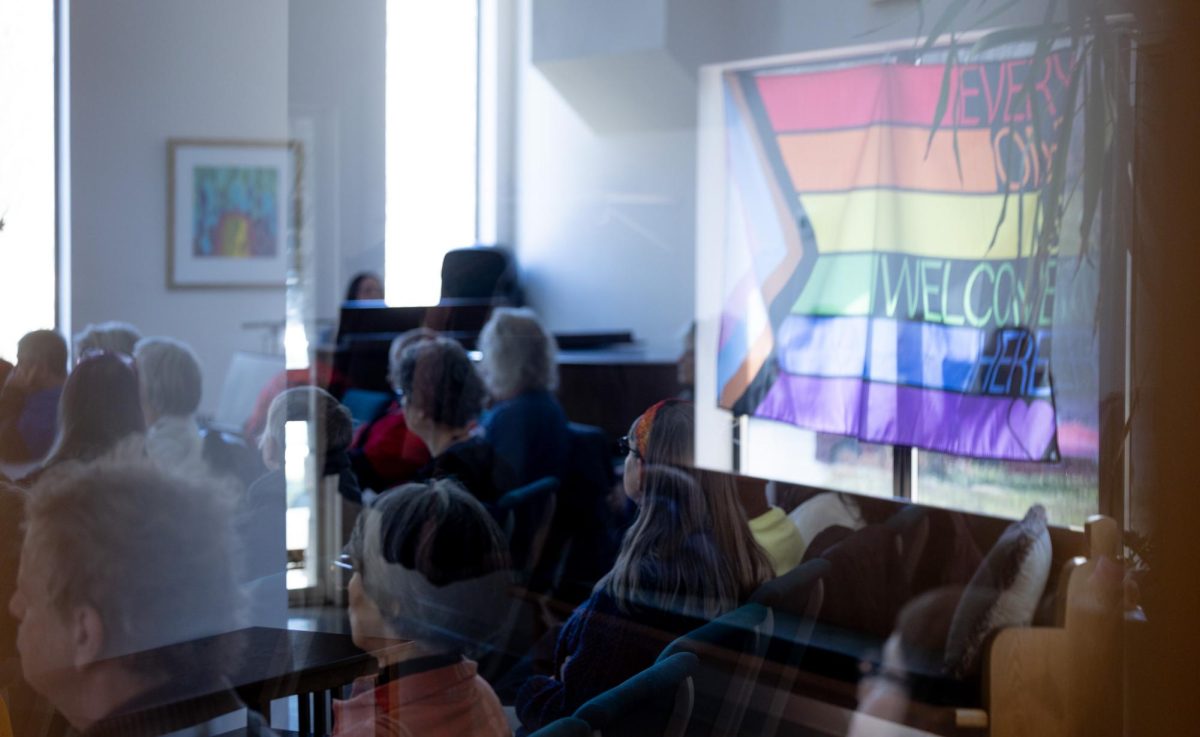
Bowling Green’s Unitarian Universalist church echoed prayers, songs and chants during the Poor People’s Campaign Moral Monday gathering Monday morning.
Organized by Kentucky’s chapter of the Poor People’s Campaign and SOKY Indivisible, the event aimed to organize and empower attendants to advocate through a “moral revival.” It bridged local religious and advocacy leaders with a congregation of community members.
The campaign is a national anti-poverty organization that focuses on fighting against interconnected injustices through a religious, nonviolent moral lens, such as systemic racism and ecological devastation. Part of the campaign’s protests are Moral Mondays, which bring together religion and activism.

Joyce Adkins, member of the leadership team for SOKY Indivisible, said the purpose of a Moral Monday is to give people hope, bring them together in community and send them to engage with local and state leaders to work towards policy change.
Adkins said that she believes political activism is important to “fighting fascism in this country.”
Kentucky had Moral Mondays in Louisville and Lexington throughout 2025, but none in Bowling Green. The city was chosen as the next location for Moral Monday due to the infrastructure of advocacy leaders, said Mary Danhaur, chair of Kentucky’s campaign chapter.
The event consisted of sermons and prayers by the Rev. Linnea Blakemore and the Rev. Josh Scott, calling the audience to recognize and fight against the actions of the current administration.
Blakemore said during her statement at the start of the revival that her reading from the parable of the persistent widow “reminds me of the world we live in today, one where our so-called leaders do not fear God or respect people. State-sanctioned violence threatens the existence of us all.”

(Hallie Stafford)
HuDost, a musical group created by WKU art professor Moksha Sommer and her husband J.W. Hines, played their music during the event, which has been used by the campaign in the past.
“Music is a really powerful tool of advocacy, and when it can be used in that way, it’s highly effective, and so that’s part of what we seek to do,” Sommer said.
During their performance, Sommer shared a personal experience of family friends who had been detained by Immigration and Customs Enforcement.
“They are good people, (the father) is a pastor,” Sommer said. “They are part of the community and have been for a long time. ICE showed up at their house and took the parents, leaving the children behind.”
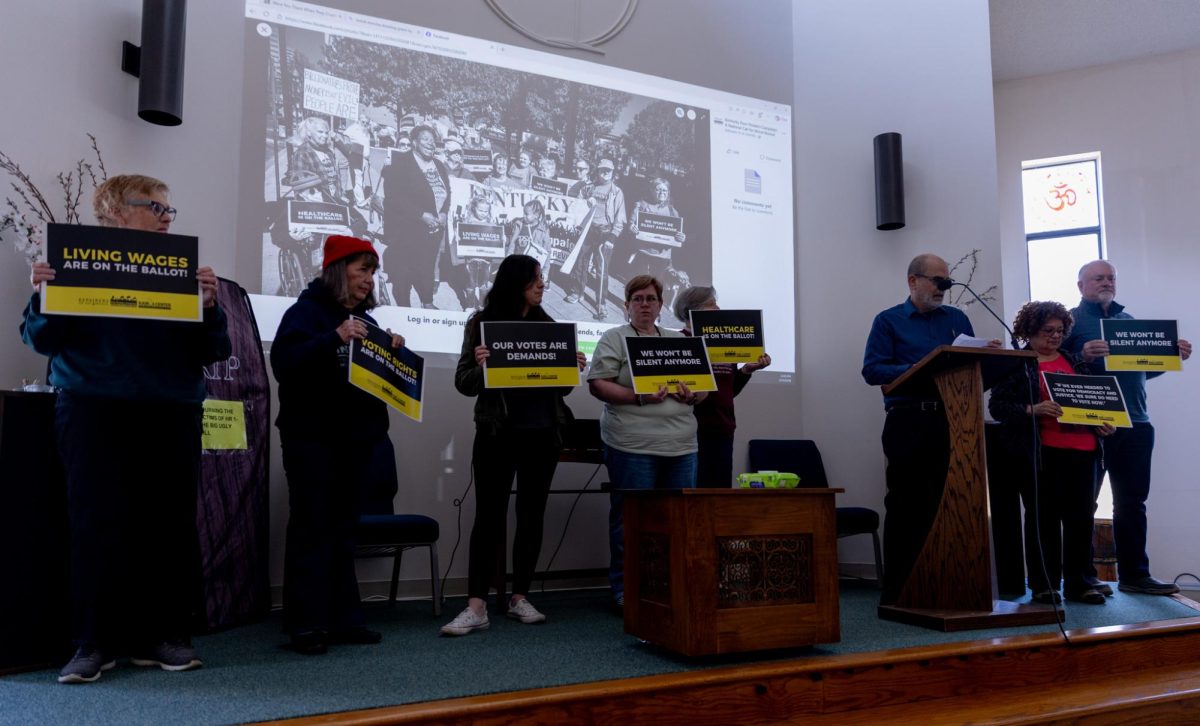
The event continued to highlight the experiences of immigrants impacted by federal ICE policies through reading excerpts of “‘I Have Been Here Too Long’: Read Letters from the Children Detained at ICE’s Dilley Facility.” The story detailed the experiences of children in an ICE detention center, from not having access to clean water and nutritious food to being denied continued education while detained.
“I think those stories are the ones that end up changing people’s hearts and really touched mine,” Danhaur said.
The event provided opportunities for attendants to get involved in their communities through organizations like Bowling Green Community Defense, which spoke about its services for recently detained immigrants.
“I was moved to tears,” Danhaur said. “With the people coming together and knowing what Bowling Green has done as far as organizing themselves to stand up and fight against ICE and the administration and the policies that are being enacted.”
Natalie Barmain, an Allen County resident and member of the Unitarian Universalist church, said the event taught her the importance of using her privilege as a white woman to help those in need.
“The gathering is about reviving our soul, because you can get down, you can get really depressed with what’s happening right now,” Barmain said. “Something like this revives that spirit of really working and helping others.”