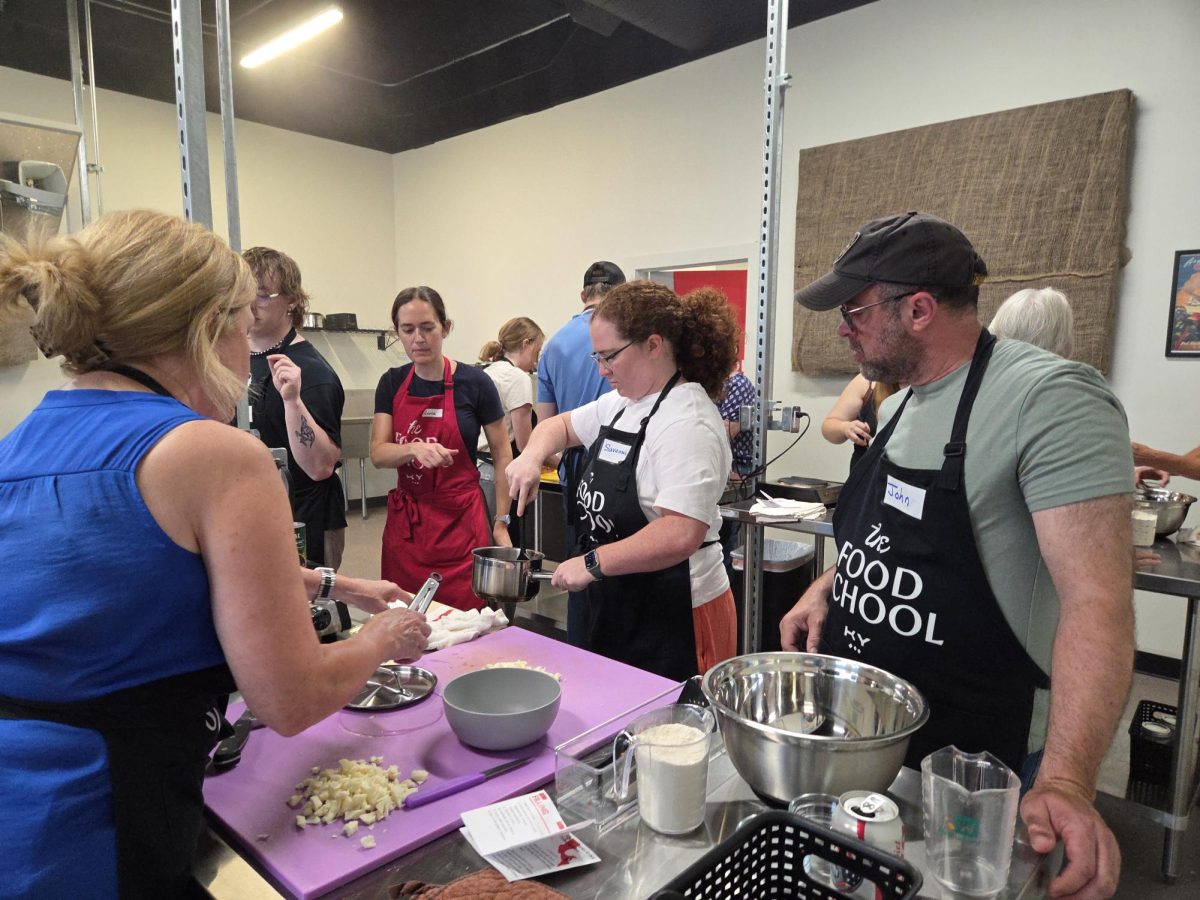
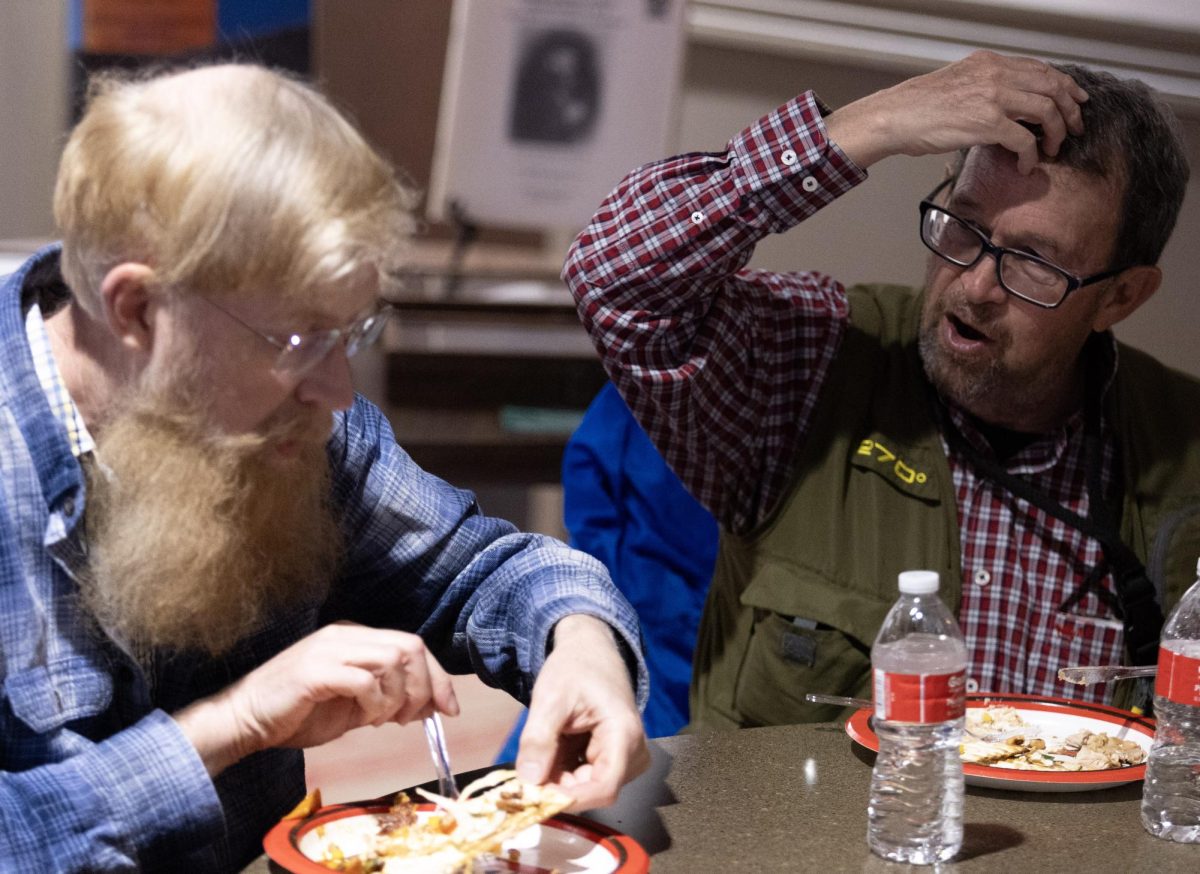
Food, photos and lighthearted chatter filled the air in the Honors College and International Center multipurpose room Friday as attendees gathered for “Cooking up Community: Jewish Cookbooks is the South.”
The WKU History department hosted its annual student showcase and guest speaker presentation. Each poster board of archival research collected and organized over the course of two semesters illustrated the life of a Jewish individual or family as they migrated to the United States in the 20th century, said the event’s organizer, History and Jewish Studies Professor Timothy Quevillon.
The images were sourced from large collections recently donated to the history department from two families, Quevillon said. Specializing in Contemporary American Jewish and Israeli history, Quevillon has spent years exploring the lives of Jewish individuals in America. Quevillon said that the research process was just as much of a learning experience for him as it was for his students.
“I knew a little bit about what was in them, but some of these photos I was seeing for the first time and I was like ‘Oh, this is an awesome photo,’” Quevillon said.
After selecting photos that most stood out to them, the students researched the stories behind them. Some, like senior history major Brooke Wilson, were also tasked with digitizing the photos and preparing the poster boards for the night’s event.
Wilson said exploring the lives of Jewish military members through the project hit close to home due to her own family’s experience serving.
“In a way, it’s personal whenever it comes to the military aspect of it because my dad was in the Air Force so I’ve always been fascinated with military history,” Wilson said.
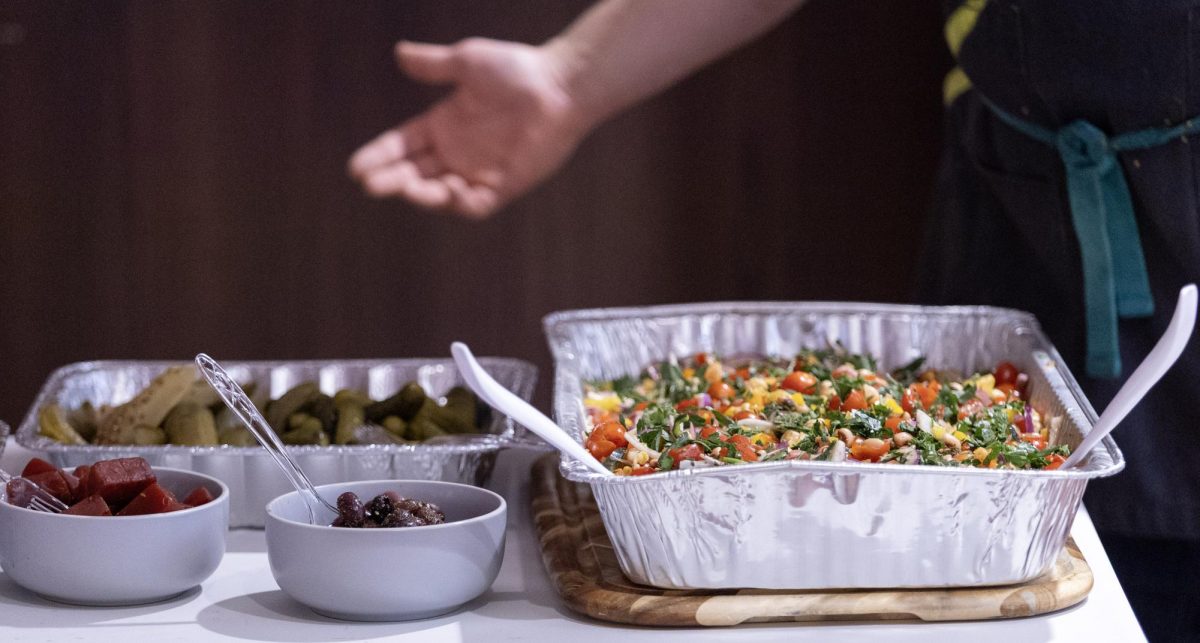
Another aspect of Jewish storytelling is through the art of cooking, especially in the case of the Nashville-owned business Jewish Cowboy, which catered the event. Originally from Texas, owner Wes Scoggins operates from his food truck in Nashville. Coggins said his food offers a unique blend of his Jewish and Texan upbringings that aren’t often thought of as complementary.
“Being one of those doesn’t contradict the other. There are a lot of cultural groups that make the South special, culinary-wise,” Coggins said.
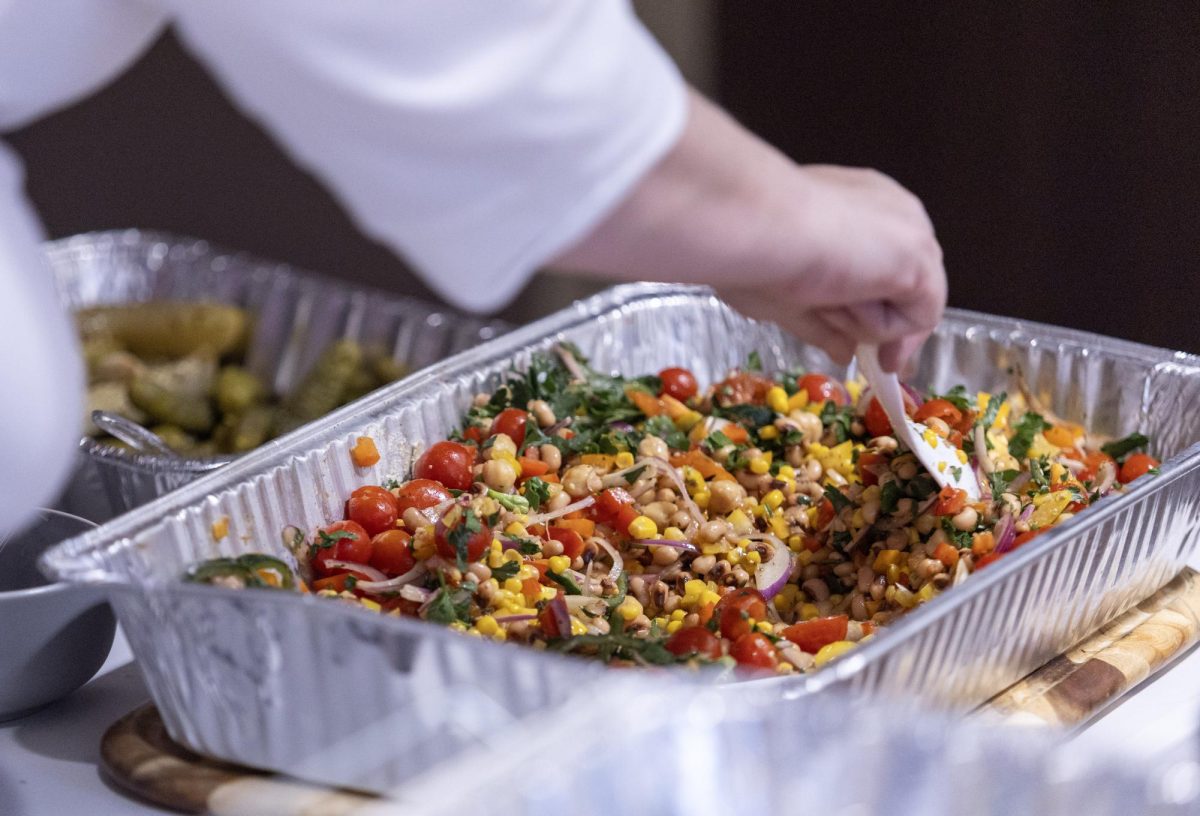
The Jewish-Southern fusion included dishes such as black bean and corn-based mix called Cowboy Caviar, traditional Jewish recipe Apricot chicken, and Kugel, a starch-based casserole. For dessert, Wes offered a spiced toffee pudding.
After dinner, third-year doctoral student at Auburn University, Jesse Plichta-Kellar, delivered a presentation exploring the intersection of southern and Jewish cooking culture that exists across the United States, spanning from Virginia to Georgia and Florida.
“My primary argument is that making a cookbook in itself is an act of community building,” Plichta-Keller said.
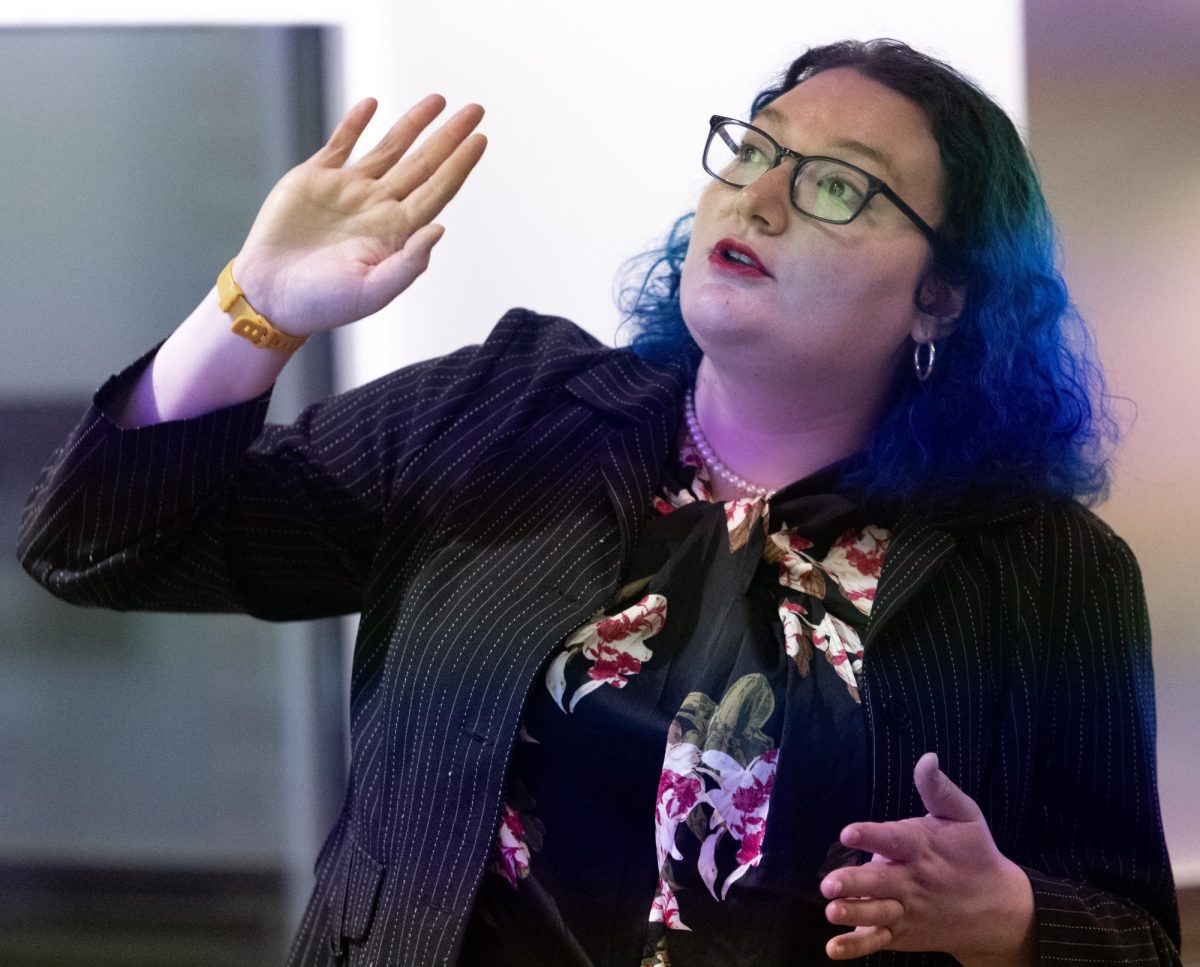
Recipes are just as much of an educational tool as they are a source of history and culture, Plichta-Keller said. The cookbooks, which often showcase recipes designed for specific Jewish holidays, typically include descriptions of the holidays as well as light-hearted anecdotes from its creators. Plichta-Keller said this information was useful for non-Jewish neighbors or friends who borrowed recipes or bought the books to learn something new about Judaism.
“It can be forgotten that Jewish life has been in the South for a long time, but we are here and we’ve been here,” Plitcha-Keller said.