At WKU, a small group of students is shaking up how the university treats reproductive health.
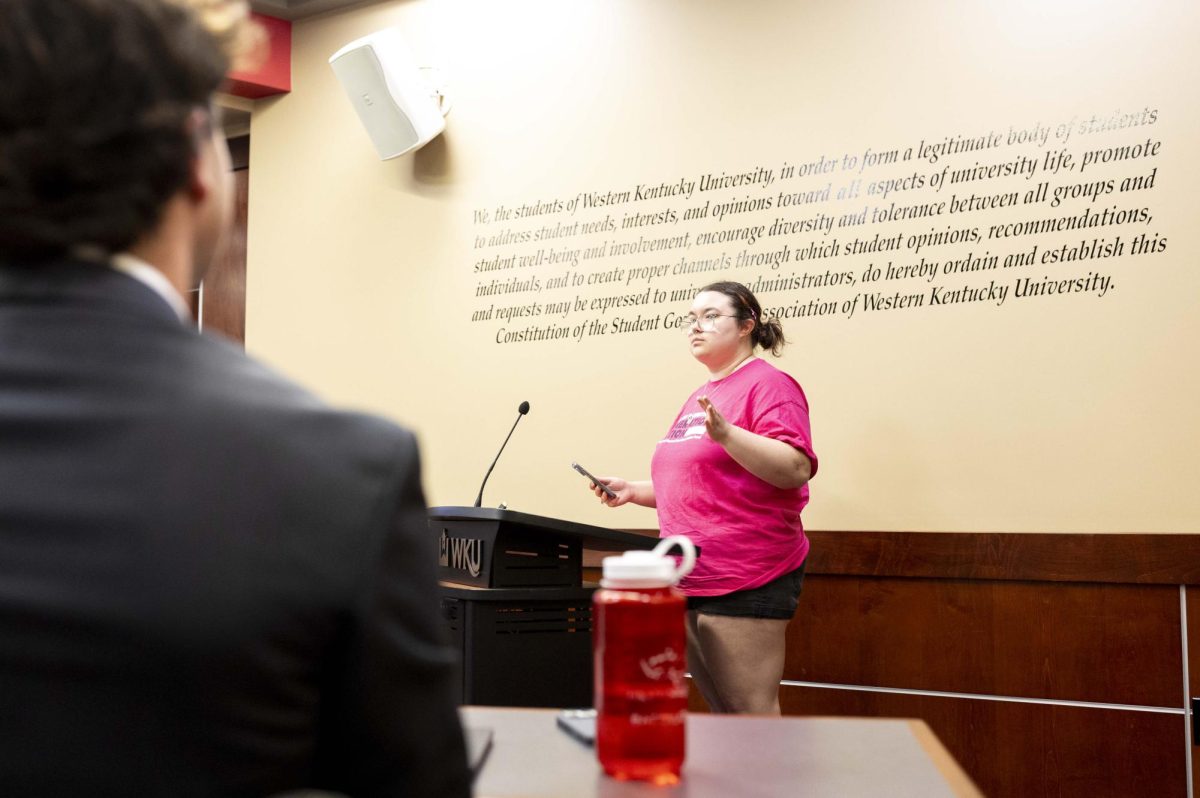
In one of the Downing Student Union meeting rooms on the afternoon of April 10, the students of WKU’s Planned Parenthood Generation Action chapter came together to discuss how to make reproductive health product vending machines more accessible on campus.
The chapter is led by sophomore Zee Brown, a psychology and social work double major with a minor in gender and women’s studies. Brown said they started the chapter after seeing how abortion bans and limited access to care hurt people in their home state of Tennessee, and then noticing similar gaps in Kentucky.
“I’m from Tennessee, and we have one of the harshest abortion bans in the country,” Brown said. “When I came here, and I saw there was such a lack of education and resources at Western, I knew that something needed to be done.”
Generation Action is still in its first year but is growing quickly. Brown calls it “up and coming” and members plan to “hit the ground running next semester.” For now, they are forced to focus on two tracks: getting physical resources into students’ hands and filling the education gap that many say began in high school.
At the meeting, members exchanged ideas about how to reach students who might be too shy, scared, or busy to attend meetings. Brown said that for students who are new to activism, the first step can be simple.
Brown encouraged students to start by talking to friends and inviting them along.
“Just coming to the meetings and learning about what we’re doing is enough,” Brown said.
The group has already hosted several tabling events, offering free condoms, lube, pregnancy tests and information. Brown said they want those tables to be a regular fixture on campus and a familiar resource.
Brown said they post before every tabling event and meeting and doesn’t expect people to do more than they can. If a student can only attend a couple of times or help by sharing posts and hanging flyers, “whatever you can provide,” they said, “I’m grateful.”
For some members, the work started long before they set foot on campus. Freshman film major and gender and women’s studies minor Lucy Gregory said her interest traces back home.
“My mom always kept me educated on this kind of stuff, and was a very big advocate for reproductive rights and being educated on your menstrual cycle,” Gregory said. “Hearing about this here, I want to join.”
College, she said, has turned reproductive health from an idea into something she deals with herself.
“It’s not just hearing it from other people, but experiencing it myself,” Gregory said.
Freshman psychology major Audrey Evans found her way to the group after years of trying to get doctors to take her pain seriously. She has endometriosis, a condition that took a long time to identify and still isn’t fully confirmed because diagnosis requires surgery.
“It was really difficult to find a doctor willing to take my concerns seriously,” Evans said. “Having a space where I can talk openly and raise awareness is really important to me.”
Students say the most basic needs still are not fully met on campus. Until very recently, many restrooms lacked free pads and tampons. Even with new “period baskets” that the Student Government Association has backed, Brown and others say the options are limited.
“Menstrual products are a big thing on campus,” Brown told the group in the meeting. “What they have out here, I think it’s just regular pads and then like regular and super tampons. Some people bleed heavier than that, and some people bleed much lighter.”
Beyond baskets, the group is eyeing bigger infrastructure changes. They researched Aunt Flow dispensers, wall-mounted menstrual product machines that cost hundreds of dollars each. They also looked into a separate model of vending machine that can dispense emergency contraception, pregnancy tests, condoms and basic medicine.
On her laptop, Brown pulled up Emergency Contraception for Every Campus, which shows machines already in use at other schools.
“I think it would be really good to have something like this on campus,” Brown said. “Some campuses have Plan B in these machines for $10 or under. The proceeds go straight back to the operating cost of the machine.”
Students talked through where such a machine might go: The Commons, which is open late, the Honors College, which is open 24 hours or Pierce-Ford Tower, one of the largest dorms. Location matters, they said, because transportation and cost are major barriers.
“Transportation is a big, big issue for a lot of college students,” Evans said. “They either don’t have a car or their car is broken down. Even when you can get off campus, Plan B at a drugstore can be really expensive. Having something on campus, cheaper, would be huge.”
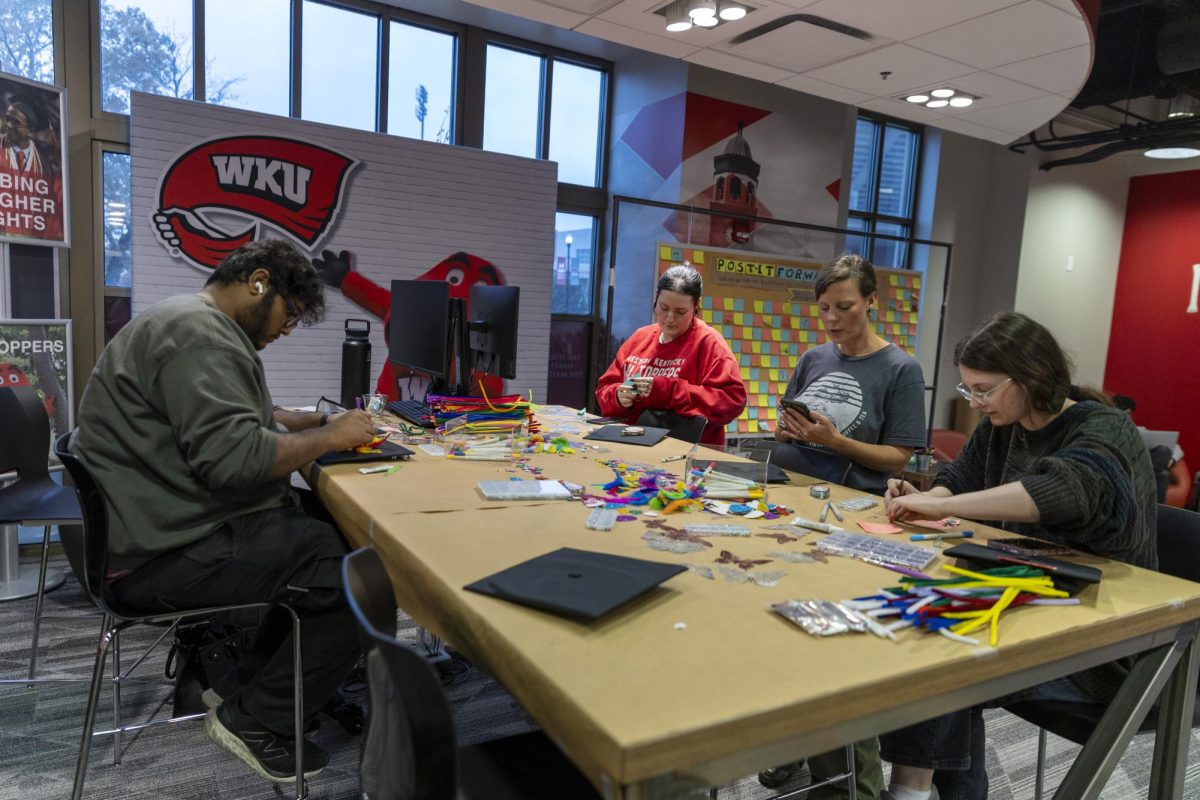
Members tossed out ideas for events: trivia nights where winners get care packages with condoms and Plan B, craft nights making “fake” pads and tampons out of paper, bouquet-making nights tied to themes of fertility and care. They also floated the idea of assembling period kits for local shelters.
Offline efforts will be paired with an education push online. Brown wants to use Instagram to share clear, simple graphics on basic topics that many students have never learned.
Evans said one idea is a myth-versus-fact series. Another would compare birth control, emergency contraceptives and abortion pills side by side and “point out the difference between each of those,” she said.
They said misinformation is one of the biggest problems, especially around Plan B and abortion pills.
“A lot of people don’t understand what Plan B is and that it’s not an abortion pill,” Brown said. “It cannot cause abortions. It just delays ovulation so the sperm cannot fertilize the egg. If you take it too late and the sperm has already fertilized the egg, it does nothing.”
Brown said similar confusion surrounds abortion pills and so-called late-term abortions, and that bad information is often used to attack people pushing for reproductive rights.
“There’s a lot of misinformation that people are using to weaponize and demonize certain people trying to fight for these rights,” Brown said. “Now there are women dying all over the country because they can’t access abortions, people dying in waiting rooms because doctors are too afraid to help them.”
The legal landscape, Brown added, makes their work feel urgent. They pointed to Kentucky’s abortion ban, the shrinking number of clinics, and recent proposals that target contraception.
“Right now they are trying to put legislation in to ban Plan B,” Brown said. “People in government have also talked about stuff like condoms and birth control. It’s trickling down from abortion to medication to Plan B to birth control and condoms. It affects you whether you think it does or not.”
The group is looking for allies. Brown said they have already talked with SGA, which could help fund more specific and inclusive resources than Planned Parenthood can provide alone.
Brown also wants to work with the Queer Student Union, Feminist Student Union and Black, Indigenous and People of Color student groups to ensure that events, flyers and materials are inclusive.
“Queer Student Union can help make our events more inclusive and help us with wording our flyers,” Brown said. “The Feminist Student Union can bring more history and education into our events, especially because this is a very feminist movement. And BIPOC organizations can help us educate students on how reproductive health has been started in very horrible ways, especially against people of color.”
Brown said they measure impact in small, steady signals: familiar faces at tables and meetings, messages from students with ideas, people who come back.
“I’ve had people come to all three of my tables and be like, ‘Hey, I went to the first one. I’ve been waiting for you to do more,” Brown said. “That’s how I know it’s making a difference.”
Despite backlash and the political climate, Brown said they believe students can still shape policy and culture on campus and beyond.
“Advocating is the biggest thing,” Brown said. “Reach out to your representatives, call them, email them, send them letters. If they’re not fighting for us, we need to vote them out and get someone in that is there for us. Every single person’s voice matters. Every single vote matters.”
For now, the work continues in small steps: another meeting, another table, another student who stops to grab a pamphlet or a pad and maybe learn something new.
“People are just uneducated and need to be educated,” Brown said. “We’re here for you, and we want to help you, and we want to continue to do this.”