Southern Kentucky community members donated blood to the American Red Cross Monday at the Bowling Green Police Department.
The BGPD partnered with the Red Cross to host the blood drive from 10 a.m. to 2 p.m. in its community meeting room. The BGPD hosted this blood drive to save lives using blood donations from community volunteers, according to the organization’s Facebook post for the event.
Nancy Scott, a Bowling Green resident, donated whole blood at the blood drive. Scott said she’s given about 15 gallons of blood to the Red Cross over the years. She said it’s important to donate a lot of blood for those who need it in critical situations.
“I had to have blood once, and somebody had to donate for me to get it, so I just wanted to return that favor,” Scott said.
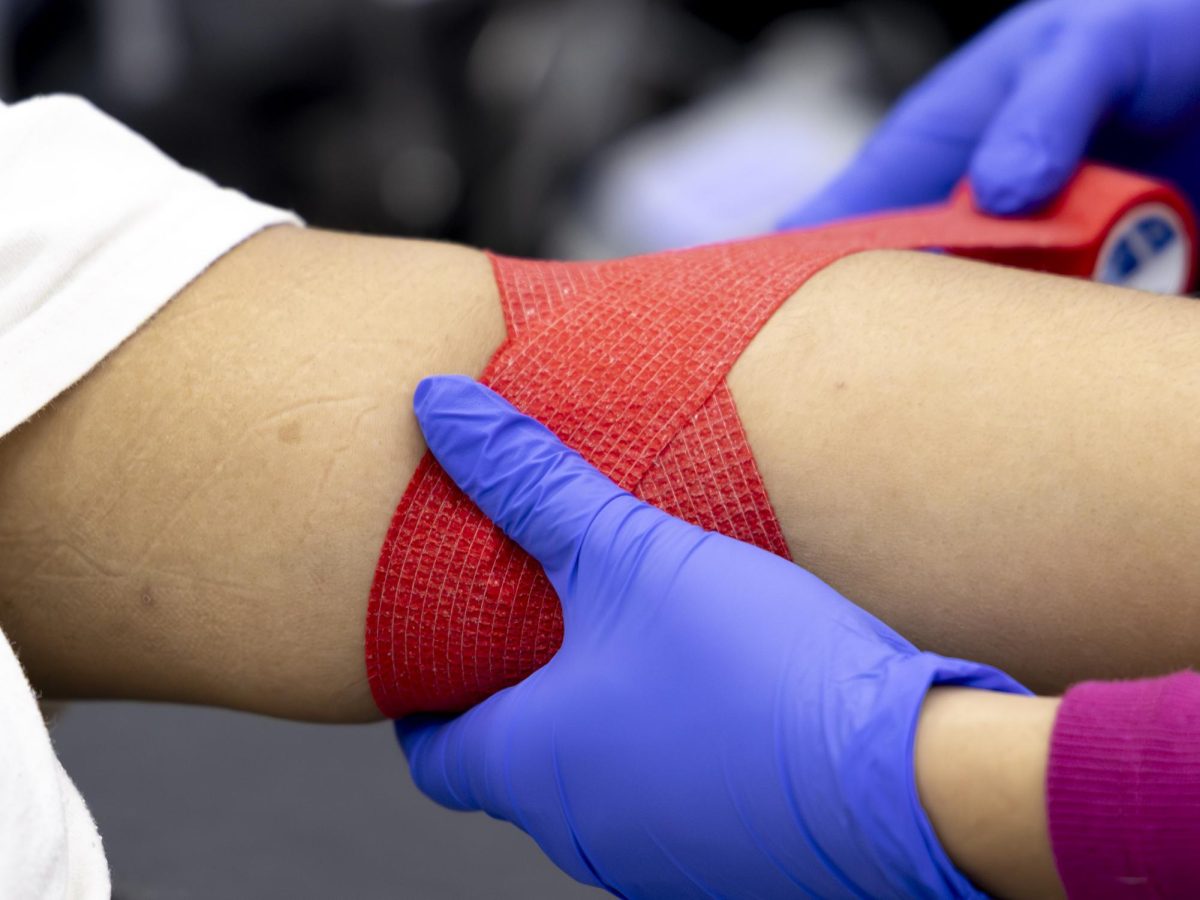
The Red Cross provides about 40% of the nation’s blood and blood components from volunteer donors, according to Blood Supply Statistics from the Red Cross’ website. Blood supply can’t always meet demand because only about 3% of age-eligible people donate blood yearly.
The Red Cross’ website states that an estimated 6.8 million people donate blood in the United States each year, according to Blood Supply Statistics from the Red Cross’ website. The organization also collects up to 13.6 million units of whole blood and red blood cells in one year.
Many volunteers, like Scott, donated whole blood at the blood drive. The Red Cross takes red blood cells, white blood cells and platelets suspended in plasma for whole blood donations, according to the Red Cross’ website.
Some donors volunteered to do a Power Red donation at the blood drive. Power Red blood donations are similar to whole blood donations, except a special machine is used to allow donors to safely donate two units of red blood cells during one donation while returning plasma and platelets to the donor.
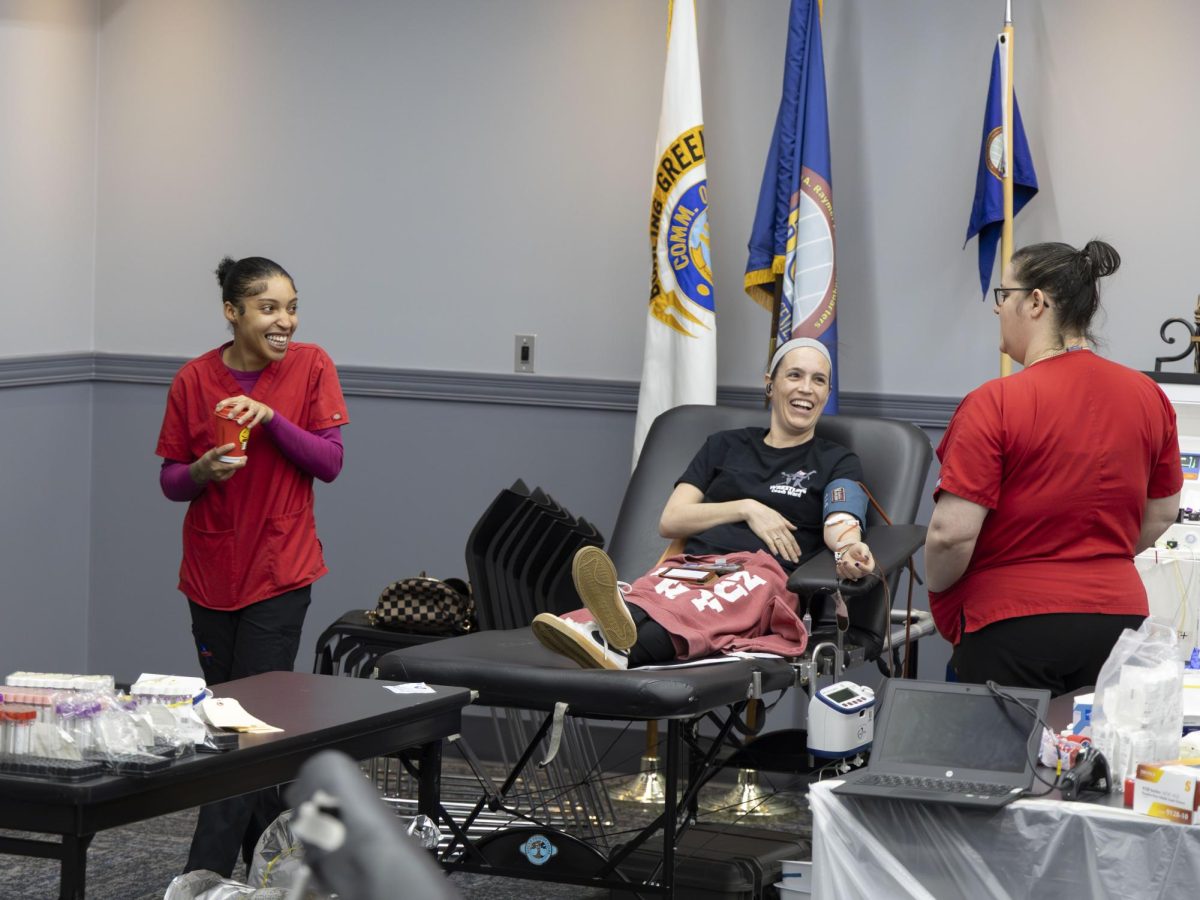
Wade Bentley, Bowling Green resident, volunteered to do a Power Red donation at the blood drive. Due to some past injuries, Bentley said this was the first time he was able to donate blood in a while.
Bentley said he has an O-negative blood type. Type O-negative is the universal blood type most commonly used for transfusions when the blood type is unknown, according to the Red Cross’ website.
“I’ve got the one everybody can use, so I might as well (donate),” Bentley said.
Courtney Riddle from Glasgow was inspired to donate blood after her brother had donated four units in the past week. Riddle also decided to give a Power Red donation for greater impact.
Riddle said people should come out and donate at local blood drives to “save lives” and help those in need, especially with the Red Cross experiencing a severe blood and platelet shortage.
“Without immediate action, patients face serious risk,” the Red Cross’ website states. “Your help is needed right now.”
Those interested in donating blood to the Red Cross can find a blood drive on the organization’s website.