Amanda Trabue, WKU vice president for philanthropy and alumni engagement, informed members of the WKU Sisterhood that additional information will come soon regarding recent regulations given to the Sisterhood pertaining to House Bill 4.
The WKU Sisterhood is an all-women member group that’s raised more than $900,000 for student and university organizations since it was founded in 2009. Leadership with the group received an email from Aarika Gunn, WKU assistant director of donor experience, on Tuesday informing the group that it must either “diversify or disaffiliate” under HB 4.
In an email sent to the Sisterhood’s general membership on Thursday, Trabue said that WKU Philanthropy will “provide additional information soon about what this means for the WKU Sisterhood.”
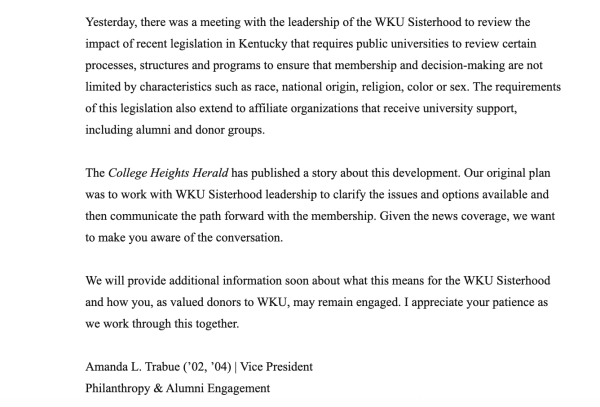
Trabue said there was a meeting between the leadership of the WKU Sisterhood discussing the impact of HB 4 on the organization. Trabue also said WKU’s plan to address the issue with the Sisterhood changed following the Herald’s original coverage on Wednesday.
“Our original plan was to work with the WKU Sisterhood leadership to clarify the issues and options available and then communicate the path forward with the membership,” Trabue said. “Given the news coverage, we want to make you aware of the conversation.”
The two options given to the Sisterhood in Gunn’s email earlier this week were to either become “inclusive to all genders” or to “operate independently.”
The inclusivity option states that the Sisterhood would have to diversify membership, change its name, and not award funding “based on race, religion, sex, color or national origin of the beneficiaries.”
The option to operate independently states that the Sisterhood would have to “operate without … (WKU Alumni Association)/WKU resources and clearly state that they are not affiliated with WKU.”
“HB4 (House Bill 4) prohibits programs/scholarships with identity-based performance/alignment,” according to the email.
House Bill 4, which was enacted by the Kentucky General Assembly on March 28, prohibits Kentucky’s public universities from providing a difference in treatments or benefits based on “religion, race, sex, color or national origin.”
The Herald reached out to Gunn Wednesday, who requested questions to be sent by email. The Herald is waiting on a response from Gunn.