Editor’s Note: This editorial was originally published in volume 101, issue 5 of the Herald magazine
The role of any university news organization is to cover all aspects of a campus and its community.
The Herald, at its very best, is a service to this community, accurately reflecting all walks of life that come through the Hill. At the forefront of that list is to cover the people making the most important decisions for the institution. This is our obligation as watchdogs on the powerful.
At a university so integral to its community, like WKU is to Bowling Green and Kentucky, someone has to ask the hard questions. It would be a failure as journalists not to.
Recently, WKU administrators have made asking those questions harder than necessary.
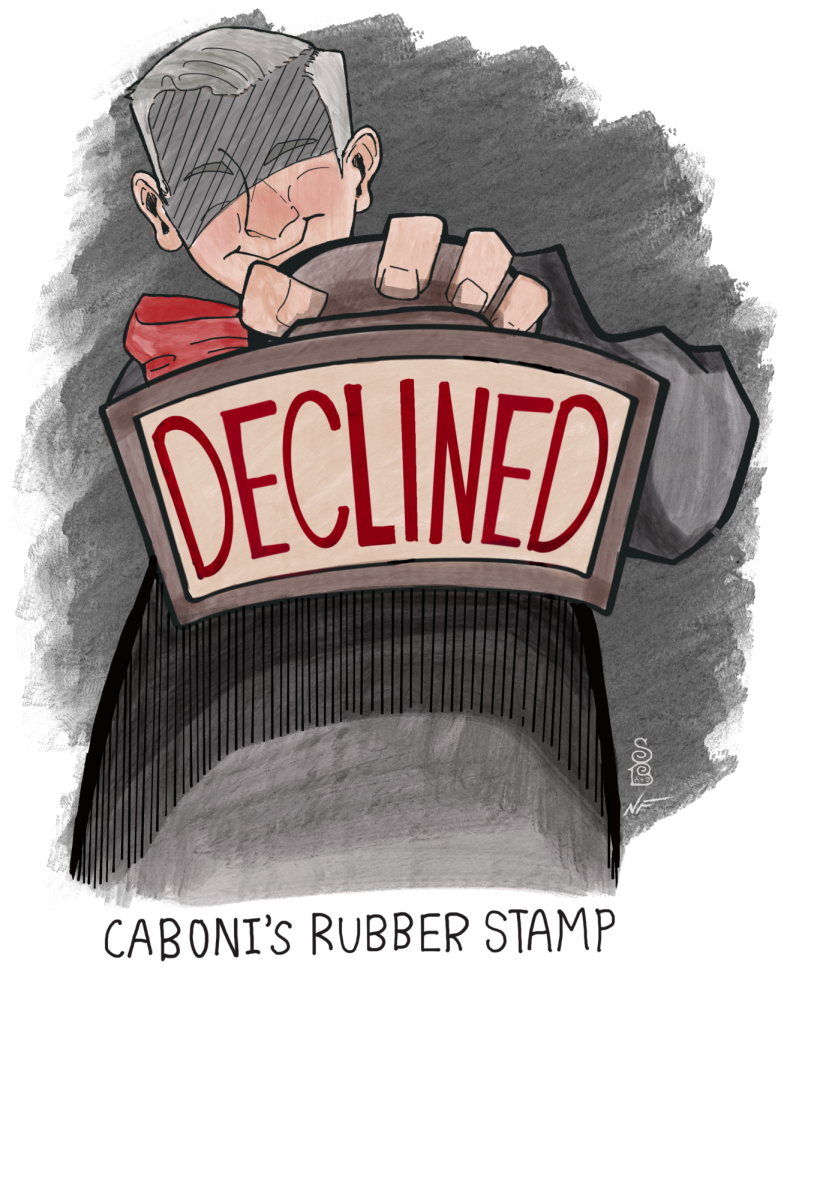
Herald reporters are often roadblocked by the university’s top officials while reporting on the campus’ most pressing issues. Our requests for interviews conducted in person or over the phone are denied, and our access is often reduced to PR-driven email statements.
Despite these roadblocks, we serve our community as the only publication answering questions on WKU’s dorms, enrollment, budget and all things integral to a university’s operation. That work could be more complete if the university’s top officials were more transparent in their access, providing straightforward answers to difficult questions.
There are a lot of pressing topics the university should address.
There are great things going on on this campus. New buildings opening, students achieving success and a historically high retention rate. WKU is more willing to talk about those, at least through press releases, and those are stories we tell every day.
But there are also challenges.
More than 1,000 beds sit vacant across three closed dorms that cost over $88 million. The university is performing $55 million in repairs to Regents and Normal halls. Hilltopper Hall, the most expensive of the three, is set to be demolished after this semester.
The university announced the temporary closures and the demolition in May. WKU has yet to make a public statement as to what went wrong — the only way the community knows is through our reporting.
For this issue of the magazine, we reported on the Collegiate Housing Foundation, the nonprofit corporation that will own WKU’s dorms as part of the university’s public-private partnership it hopes to be approved in the coming months. William Givhan, the CEO of the Collegiate Housing Foundation, told the Herald in an email statement that all inquiries must be directed to Jace Lux, the university’s spokesperson. Lux has no role in the Alabama-based group.
We experienced similar troubles this semester while reporting on the university’s enrollment.
In February, the state Council on Postsecondary Education made available data that showed Eastern Kentucky University surpassed WKU in enrollment, replacing it as the third-largest public university in the state by 49 students. To learn more, a Herald reporter had a scheduled meeting with John-Mark Francis, interim vice president of enrollment management. After the Herald’s initial story reporting the decline was published, Francis canceled the meeting.
“I noticed that the Herald ran a story about headcount without any additional institutional context,” Francis wrote in an email to the reporter. “Given that the article has already been published, I don’t believe there is a need for us to proceed with our meeting, and I will remove it from my calendar.”
We understand the focus of WKU has shifted from enrollment to retention, and retention for this academic year has reached a record 79.4% — a trend that the Herald included in its initial reporting. But if our story lacks “institutional context,” why cancel the meeting to provide the Herald, and in turn the community, with that context?
We don’t have time to wait to report the news. When WKU drops to fourth in enrollment, we have a duty to deliver that information to our audience as quickly as possible.
Without Francis’ interview, questions remain unanswered: How is WKU tackling enrollment challenges? What does it mean that WKU enrollment is falling while overall enrollment statewide is increasing?
Francis wasn’t the only university official to cancel an interview this semester. Lux informed the Herald in the fall semester that its three-decade-long tradition of meeting with the university president each semester was canceled.
Lux initially told the Herald that a press conference with multiple media outlets would replace the semesterly meeting with the editorial board. WKU President Timothy Caboni hosted the press conference on Feb. 3, which lasted 35 minutes, 28 of which were used for questions. Last semester’s meeting with Herald editors lasted more than 50 minutes. Before Caboni was president, the meeting often lasted up to two hours.
Caboni said during the press conference that he would continue to meet with the Herald editorial board. The Herald contacted Lux for clarification, and instead of directly answering the question, he said, “We will continue to explore opportunities for all WKU student media editorial/leadership boards – not just the Herald – to engage with campus leadership.”
“Nothing definitive is planned,” Lux continued. “At this point, it is just an idea based on ongoing internal conversations about ways to provide more opportunities for students who are pursuing careers in media.”
While the future of the Herald’s semesterly meeting is unknown, Caboni met with management from Revolution Radio, the newly revived student-run radio station, according to an Instagram post from Revolution dated Feb. 27.
We’re happy Caboni sat down with Revolution Radio, but all student media should be granted the same courtesy.
Access to the power players at this university is crucial. Without it, we fear of forming an incomplete picture to our readers. We aren’t asking for around-the-clock availability. We’re rightfully requesting a working relationship between the Herald and the university, one that has deteriorated in recent years.
This isn’t a stretch, and we don’t feel it’s too much to ask, because we’ve seen this relationship exist between the Herald and WKU. During the Gary Ransdell administration, Herald reporters and editors were given Ransdell’s phone number, access that is hard to imagine in our current situation.
During his Feb. 3 press conference, Caboni tried to establish a good relationship between the administration and student media, while also helping “grow folks in the direction of working through those media challenges.”
“As reporters, if you go to Fruit of the Loom, and just try to talk to folks, that’s not the process,” Caboni said. “You have to learn to work through media relations.”
WKU is a public trust funded by taxpayer money and tuition. Fruit of the Loom is a private corporation.
We cherish the ability to grow and learn as student journalists in the environment that a student newspaper offers, but our first priority is to deliver the best coverage possible to the people in our community.
Unfortunately, WKU has chosen to make that harder.