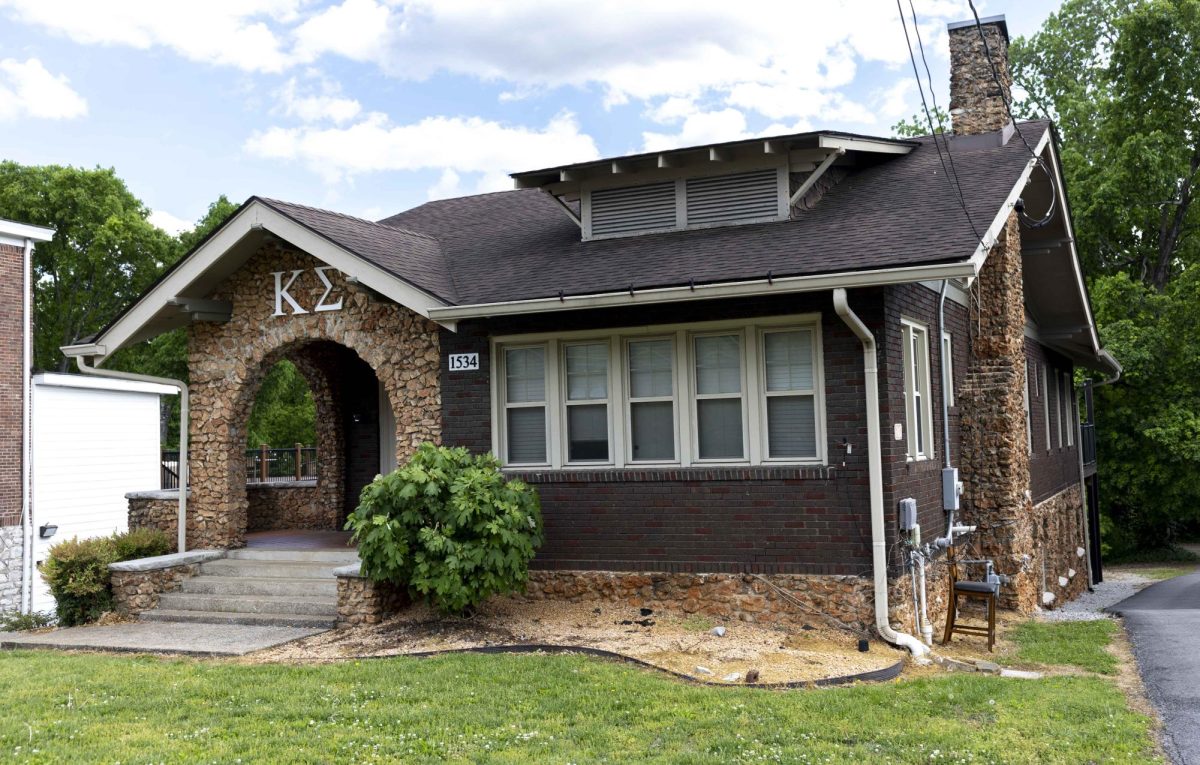
Police reports of the hazing at the Theta-Theta chapter of Kappa Sigma, which resulted in a five-year university suspension of the chapter, include reports of physical abuse, humiliation and drug use.
WKU’s disciplinary committee, composed of seven faculty and six staff, decided the chapter could not operate as an official WKU student group for five years in March, after it investigated the hazing that happened last fall. The WKU chapter of Kappa Sigma filed an appeal following the university’s decision, with support from alumni and the international chapter.
“The university maintains zero tolerance for hazing and will act swiftly when it determines that such conduct has occurred,” University Spokesperson Jace Lux said in an email to the Herald on April 2.
The College Heights Herald emailed President Bryson Martin and Vice President Aiden Pfeiffer of the chapter, but neither responded.
Lt. Colonel Quentin Hughes conducted an investigation through the WKU Police Department following a hazing report made last fall. The police report begins on Oct. 17, 2025, when someone, whose name is redacted in the report, brought their son and nephew to the WKU Police Department headquarters to record an interview about multiple incidents of hazing. The timeline of events discussed during the interviews spans the course of her son’s and nephew’s pledging experience during the fall 2025 semester.
Hughes interviewed 23 witnesses and the interviews lasted until Dec. 2, 2025. He reported to a redacted name on Nov. 24 that 60% of the 22 interviews he conducted had supported “some part of the hazing allegations reported.” The other 40% fully denied the majority of the allegations.
The two former pledges, the son and nephew, reported being subjected to physical abuse and humiliation, as well as witnessing drug usage, according to the police report. Both said quizzes on Kappa Sigma were given to the pledges, and incorrect answers resulted in punishments. According to the interview, the punishments spanned from being screamed at to dances where pledges were told to “touch each other’s butts.”
Pledges were also subjected to push-ups, wall-sits and calisthenic exercises where the person bends over, grabs their ankles and then does squats, often until exhaustion or failure. Sometimes, pledges would have to perform wall-sits with weights on their legs.
These “exercise punishments” were enacted for missing questions about the pledge book or not knowing answers regarding other pledge members’ personal information, according to the police report.
The second interviewee also stated he was sleep-deprived and lost 20 pounds during the pledging process. He said he does not feel safe at WKU and that he was withdrawing from the university.
At a party in September, intoxicated pledges who were cleaning up were subjected to verbal abuse, and six pledges were assaulted by fraternity members, according to the first interview in the reports. The first interviewee said he was slapped across the face and had videos from the incident of light bruising to his chest and shoulders.
At the same event, an “almost blacked out” drunk pledge was subjected to wall sits. The hazing continued for an hour and a half, according to the police report. A pledge was then let up from the wall and told to lie down on the floor while other pledges lay on top of him in a stack. The pledge said he could not breathe for about 30 seconds.
The interviewee said someone recorded the incident and reported the assault, but the recording was deleted.
Higher-ups within the fraternity texted the pledges on an unspecified night to meet at the fraternity chapter house at 11:45 p.m. during another reported incident. The interviewee said the pledges tied their ties across their eyes and were taken in groups of three or four down to the basement.
Once they arrived at the basement, the interviewee described a scene of bright lights that “circled” them. They were made to do jumping jacks while saying “I am a f—g r—d,” according to the interviewee, and later were told to lie belly-down on the ground, grab their ankles, and rock back and forth while repeating “demeaning” phrases yelled at them. It was also stated that they had to dance around a pole for 10 minutes.
The first interviewee later saw videos of the incident on group chats. The police report does not provide a specific date for this incident.
On Sept. 22, the pledges received a message on GroupMe that there would be a “sleepover” following their Shenanigans dance practice. The pledges got together to watch a “soft porn” movie, do a talent show and play a blindfolded game of hide and seek. Other pledges, interviewed later, stated they bought marijuana edibles for the sleepover. The first interviewee recounts being pushed down during the hide-and-seek game by unknown chapter members.
An intoxicated member came in later in the night, grabbed a pledge by the collar of his shirt and aggressively pulled him back and forth, according to the police report.
The first interviewee also recounted going into a room on an unknown date to retrieve something when he saw what appeared to be cocaine powder in a baggie on the table next to rolled up cash, according to the police report. The interviewee also stated that a friend of his father told his dad that the DEA was investigating the Kappa Sigma fraternity for drug trafficking, the police report said.
The second interviewee mentioned someone who was doing cocaine “around the fraternity” towards the end of his interview.
The interviewees told WKU police of other allegations of hazing, including:
- Pledges had to spend meal swipes on activities that were not reimbursed
- Pledges were told to buy fake Indiana Operator’s licences from a man in Owensboro to provide alcohol and nicotine products to members of the fraternity.
- The first interviewee had his backpack hidden and couldn’t find it for several days.
- Two people present on the fraternity’s formal trip to Panama City, Florida, appeared to be on cocaine, according to the first interviewee. He said one of the persons seemed angry and his eyes appeared “wide open.”
- Six pledges were “auctioned off” at a philanthropy event on Sept. 14, 2025. The members were taken to the house of the person who bought them to make them clean. Three pledges were made to do wall sits and the pledges were also blindfolded, made to dance, twerk and “do gay stuff.”
Hughes interviewed multiple people associated with the son and nephew. They stated they “did not feel the boys were safe” and then provided a copy of one of the fake Indiana operator’s licenses. The fake I.D. scanned as an actual ID card on a police scanner used by WKU police.
According to other witnesses in the police report, the mother of one of the two prior interviewees had entered the Kappa Sigma chapter house prior to the investigation. She accused the fraternity of hazing, selling drugs and forcing her son to do cocaine.
Hughes noted a pattern of information given from various members of the fraternity throughout the interview process. The stories “appeared rehearsed,” and Hughes brought this up on multiple occasions. He also noted how it made things appear more suspicious.
When Hughes questioned why the stories sounded familiar, interviewees said that a message was sent out in a fraternity group chat that they would be contacted by the University Disciplinary Committee or the WKU Police Department. One member noted how they were messaged to remain truthful throughout the process.
Only one interview, not including the son and nephew, mentioned witnessing the assault on the night of the party in September, and only one interview stated they heard part of the recording made that night.
On Nov. 24, Hughes met with the County Attorney’s Office to review the case for a search warrant, but the prosecuting attorney did not think there was sufficient probable cause for one, according to the police report. The lack of details regarding dates and times also posed an issue for subpoenaing the saved social media files related to the case. Hughes also reported the same day to a redacted source that sleep deprivation had not been proven during the interviews.
On March 12, 2026, some involved with the prosecution stated they no longer wished to pursue criminal charges related to the case.
![[FILE PHOTO] The City of Bowling Green holds its Board of Commissioners meeting on the 1st and 3rd Tuesday of every month.](https://wkuherald.com/wp-content/uploads/2026/04/IMG_1576-1200x762.jpg)