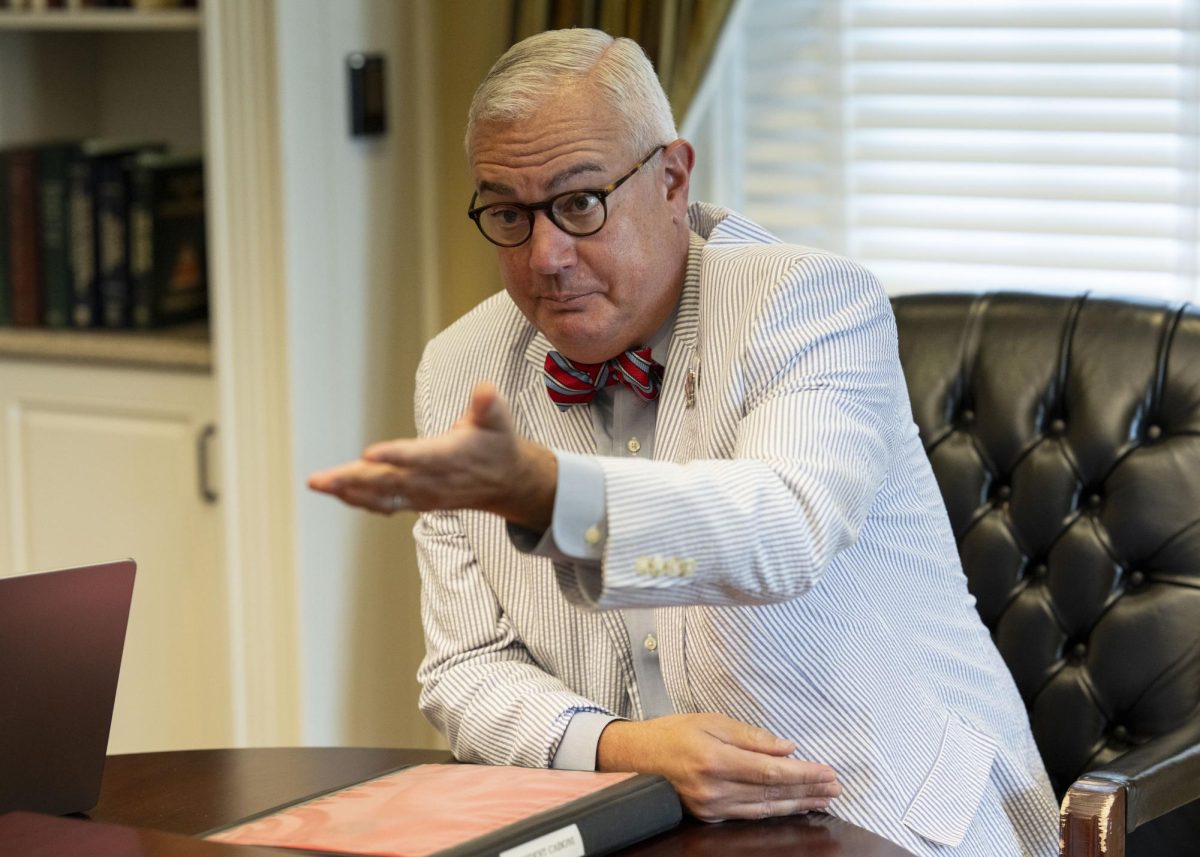
WKU doesn’t own its dorms, and the entity that does likely won’t be a part of the university in the future, WKU President Timothy Caboni said on Thursday.
The Student Life Foundation (SLF) has owned and operated dorms on the Hill since it was established in 1999. At the Herald’s semesterly sit-down with Caboni, he said that absorbing SLF into the university is not under consideration.

Caboni said taking in the foundation would not benefit the university.
“The Student Life Foundation is going to have to make hard choices,” he said. “Absorbing all that into the university doesn’t get the university anything, because the university does not have the ability to structure debt the way in which a… (public-private) partnership would.”
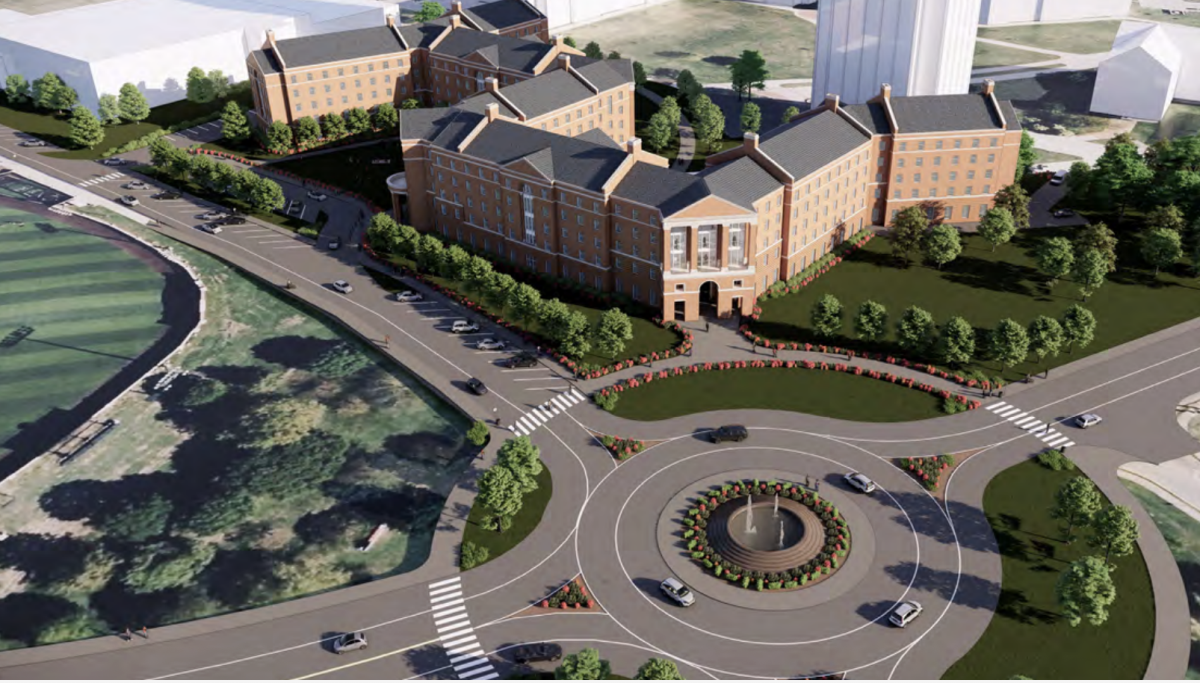
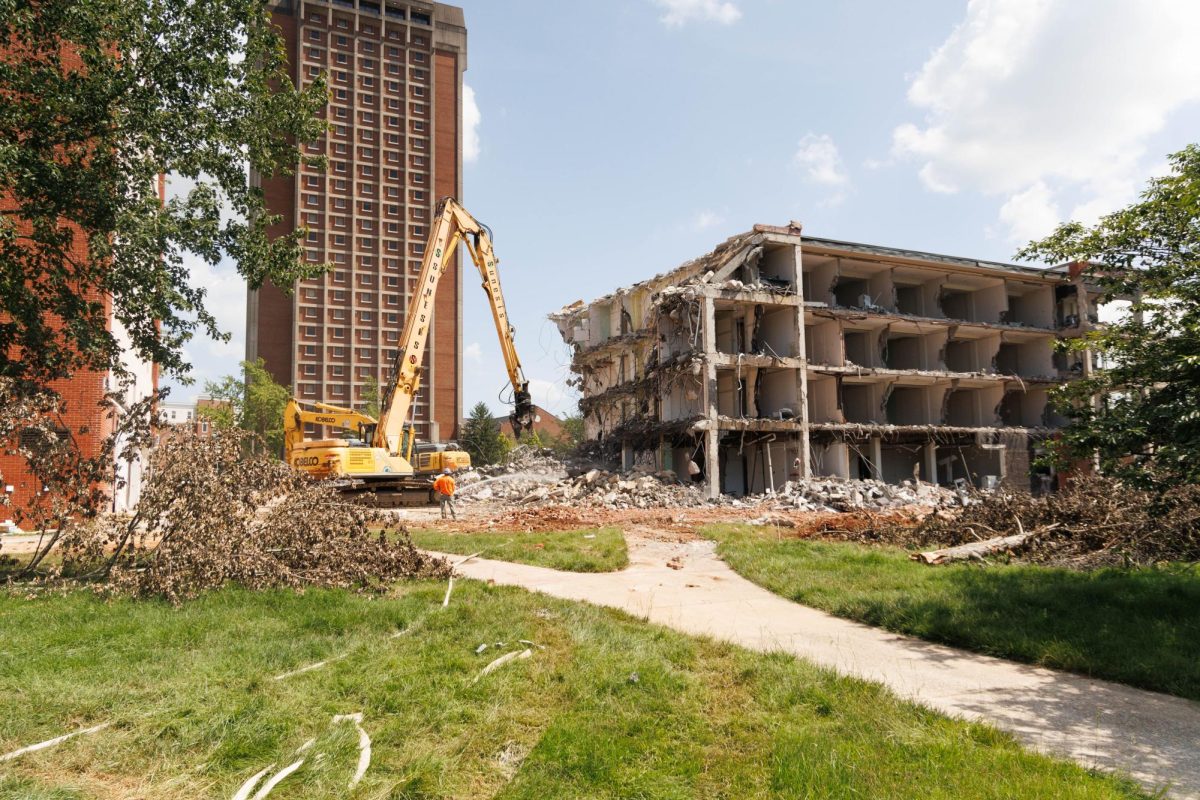
Caboni said the decision to tear down Hilltopper Hall, a $40 million dorm that opened in 2018, was “their (SLF’s) decision, not mine.”
“The outside perception is, I’m the president. I make the decisions,” Caboni said. “The reality is, we took all of our residential facilities (and) we gave them to the Student Life Foundation. They built the new facilities, the way in which they built them they’re responsible for.”
While they were built by SLF, Caboni said the dorm issues involving Hilltopper’s permanent closure, and the temporary shutdown of Regents and Normal, the two newest dorms on campus that opened in 2021, affect WKU’s recruiting and “what we do as a university.”
Caboni faulted the SLF in the construction of the three closed halls for not following the process the university uses, including hiring an independent third-party to ensure construction meets standards. The process, he said, was followed with the new Amy and David Chandler Hall that houses the Gordon Ford College of Business and other university-funded projects on campus.
He said the relationship between SLF and WKU is one that needs to evolve, and conversations regarding the relationship will happen over the next year. Caboni believes the best way to ensure the best people are working on campus projects, while at a comfortable “debt capacity,” would be to explore public-private partnerships.
WKU has hired Brailsford and Dunleavy, a third-party consulting firm from Washington D.C., to find a private sector partner to work with WKU and SLF to develop a plan to build new dorms going forward.
As WKU and SLF move toward a public-private partnership with a third-party partner, Caboni said dorm affordability is going to be part of the conversation.
Caboni said there was an obvious “economic dispersion” on campus between newer and older facilities and the people living in them. He said he doesn’t want financial reason to make people feel like they don’t have access to the “full experience.”
“I don’t care what your economic condition is. If you want to come to WKU, come to WKU,” Caboni said.
He hopes there is a replacement for Douglas Keen and Hugh Poland Halls by 2028, and a replacement for Rodes Harlin, McCormack and Gilbert Halls by 2030.
Academic Facilities
Caboni also updated the Herald on construction developments on campus.
He intends to preserve the history of Cherry Hall while renovating several components of the building. The released renderings for a redesigned Cherry Hall initially sparked chalk protests, criticism from WKU staff and an outcry from the local community.
“We will take great care to preserve the feel of that building and remain true to its heritage,” Caboni said. “But the heritage that people remember, unless they were going to class here in the 1950s, is not the building that Cherry Hall was built as.”
Caboni said tired “drop ceilings,” lights from the 1970s, “ugly” sound dampeners and random furniture throughout the building were among reasons for the redesign. The iconic front of the building will only be altered with the addition of an accessibility ramp.
“I’m passionate about this because I care about the building, but this notion that we’re just going to restore everything back to what it was is insane,” Caboni said.
Caboni also referenced the recent decisions regarding the Faculty House, which was on a path to demolition. The demolition was later paused, and Caboni announced Wednesday a committee will make recommendations by the end of the year to demolish, renovate or relocate the building.
“I want a group of folks who have objectivity, who care deeply about it, who have expertise to take a look at the challenge we face, to work it and to come back with a set of recommendations,” Caboni said.
Caboni said another recent project has turned out as “the nicest building we have on our campus” in his opinion. He said Amy and Chandler Hall, open to students on Aug. 18, was designed to maximize student engagement.
Caboni added no additional comment on the state of the academic complex. At the annual Faculty and Staff Convocation on Monday, he said planning continues to replace the building.
Student Success
In response to declining enrollment, WKU is focusing more on student success and net tuition revenue than “losing money and getting big,” Caboni said.
“I don’t care how big we are, I care how good we are,” Caboni said.
Caboni said the university is working on finalizing a goal of 80% retention from freshman to sophomore year and 60% graduation rate. He said graduation is a “lagging indicator” but he expects to see 60% achieved within the next 1-2 years.
Caboni said over the past eight years, WKU has been creating support systems catered to student success. Caboni used Living Learning Communities (LLCs), F1rstGen Initiative, the Hilltopper Guarantee and the newly centralized First Year Advising system as examples.
“There’s a significant difference between students who participate in LLCs and those who do not,” Caboni said. “Those who participate have a retention rate that could be a good 8 points higher than a non-participant.”
Caboni said he appreciates how enrollment fluctuates. When Caboni became president in 2017, he said WKU was admitting people who had about an 80% chance of not returning the next fall semester. The average debt load for those students was $4,000, leaving young people in debt who have “no chance of being successful in college,” according to Caboni.
“You can have fewer freshmen, but if you’re more successful at retention, you have more sophomores the next year,” Caboni said.